Four TASI-Listed Stocks Hit All-Time Lows June 8
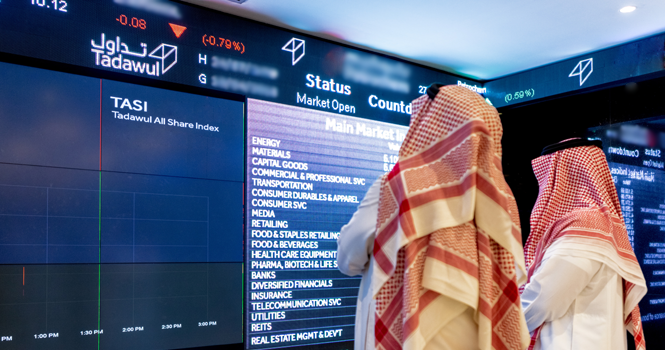
A rare cluster of four TASI-listed companies fell to all-time lows on June 8. The signal demands attention from Saudi equity traders. The prudent stance is to watch volume and reversal patterns before acting.
Alpha Score of 46 reflects weak overall profile with moderate momentum, poor value, moderate quality, moderate sentiment.
Four companies on the Tadawul All Share Index (TASI) fell to an all-time low during the June 8 session, according to exchange data. The event is a rare cluster of record lows within a single trading day on the Saudi Stock Exchange, where individual equities often trade with limited daily drawdowns relative to other emerging markets. For traders monitoring the Saudi equity market, a multi-stock breakdown to fresh lows signals a support failure that requires attention, even when the specific names are not identified.
The All-Time Low Cluster: Four TASI Names Break Down June 8
A stock hitting an all-time low means no prior price floor has held. Sellers are transacting below every previous point in the listing history, often in the absence of identifiable technical support until the next round psychological level. In thin order books – common for smaller TASI names – a single block trade or a cascade of stop-loss triggers can accelerate the decline, pushing the stock far below fair value estimates before buyers step in.
The liquidity risk increases sharply at these levels. Market makers widen spreads, and algorithmic strategies that rely on historical volatility patterns may not function correctly below a certain price threshold. For position traders, the all-time low creates a valuation trap: the stock looks cheap on a trailing basis, yet the lack of a proven floor means further downside is possible before a base forms.
Why a Multi-Stock Low Event Differs from Single-Name Weakness
A single stock hitting a new low can be dismissed as company-specific idiosyncrasy. Four stocks hitting lows on the same day raises the probability of a common risk factor: sector-wide pressure, a liquidity squeeze, or a macro catalyst that affects multiple names simultaneously. Without knowing the four companies’ sectors or market caps, the cluster alone suggests the selling is not random. It could indicate a rotation out of a particular industry, a repricing of risk premia in the Saudi market, or a reaction to a macro data release the market interpreted negatively.
TASI itself can remain relatively stable while individual constituents diverge. The all-time low cluster is a divergence signal: if the index is flat or rising, the weakest stocks are being left behind, which often precedes a broader correction. Conversely, if the index is also falling, the lows confirm a bearish phase. The first task for a trader is to check TASI’s own price action for confirmation.
The Price Discovery Mechanism at Record Lows
Common drivers of all-time lows in Saudi equities include:
- Earnings surprises: A quarterly miss that breaks a trend of stable profitability can trigger a re-rating.
- Dividend cuts or suspensions: Income-focused TASI names often trade on yield. A cut removes the valuation anchor.
- Sector headwinds: Real estate, petrochemicals, or banking could face regulatory changes or commodity price declines.
- Corporate governance events: Related-party transactions or board disputes can cause a permanent loss of investor confidence.
- Liquidity event: A large shareholder selling down a position in thin volume can force the price to a new low irrespective of fundamentals.
The common thread is that each cause removes a previous support – valuation, yield, or liquidity – and the market is still in the process of finding a new equilibrium.
For traders who did not hold these stocks, the all-time low is not yet an entry signal. The better market read is that the price discovery process is incomplete. The next decision point is the first reversal attempt: does volume spike on a subsequent up day, or does the stock drift lower on diminishing volume? A high-volume reversal that closes above the prior day’s range is the first evidence of absorption. A low-volume bounce with no follow-through suggests the selling pressure is not exhausted.
Traders should monitor the order book depth at the new low level. If buy orders accumulate at or just below that price, it signals a value-driven bid. If the ask side remains stacked with offers, further downside is likely.
What to Track in the Next 10–15 Sessions
Even without knowing the four stocks’ identities, the TASI cluster may be linked to global rate expectations or oil price moves, both of which affect Saudi equity valuations directly. The Saudi riyal’s peg to the US dollar means that US interest rate policy flows through to local funding costs. A hawkish shift in the Fed’s outlook can tighten Saudi liquidity and depress risk appetite. Similarly, a drop in Brent crude reduces Saudi fiscal revenue and can lead to project delays or spending cuts that hit domestically focused stocks.
Traders should cross-reference the all-time low cluster with the TASI index’s relative strength versus the MSCI Emerging Markets index. If TASI is underperforming, the lows may be part of a broader structural shift out of Saudi equities. If TASI is outperforming, the cluster is likely stock-specific and a potential opportunity to pick up high-quality names at distressed valuations.
The four TASI stocks hitting all-time lows on June 8 is a rare signal that demands attention but not immediate action. The core uncertainty is whether the lows represent a liquidity flush or a fundamental reset. The resolution comes from the next 10–15 sessions: volume patterns, sector-level data, and any corporate announcements. Until that evidence arrives, the prudent stance is to keep these names on a watchlist, not in a portfolio.
Drafted by a large language model from the source reporting linked above, then screened by automated publishing checks. It is not read by a journalist before publication. Some articles cite our Alpha Score. Verify prices and figures against the original source. Educational coverage, not personalized advice.