Stocks● Neutral
Founders Green Opens: South Downtown Atlanta's New Anchor
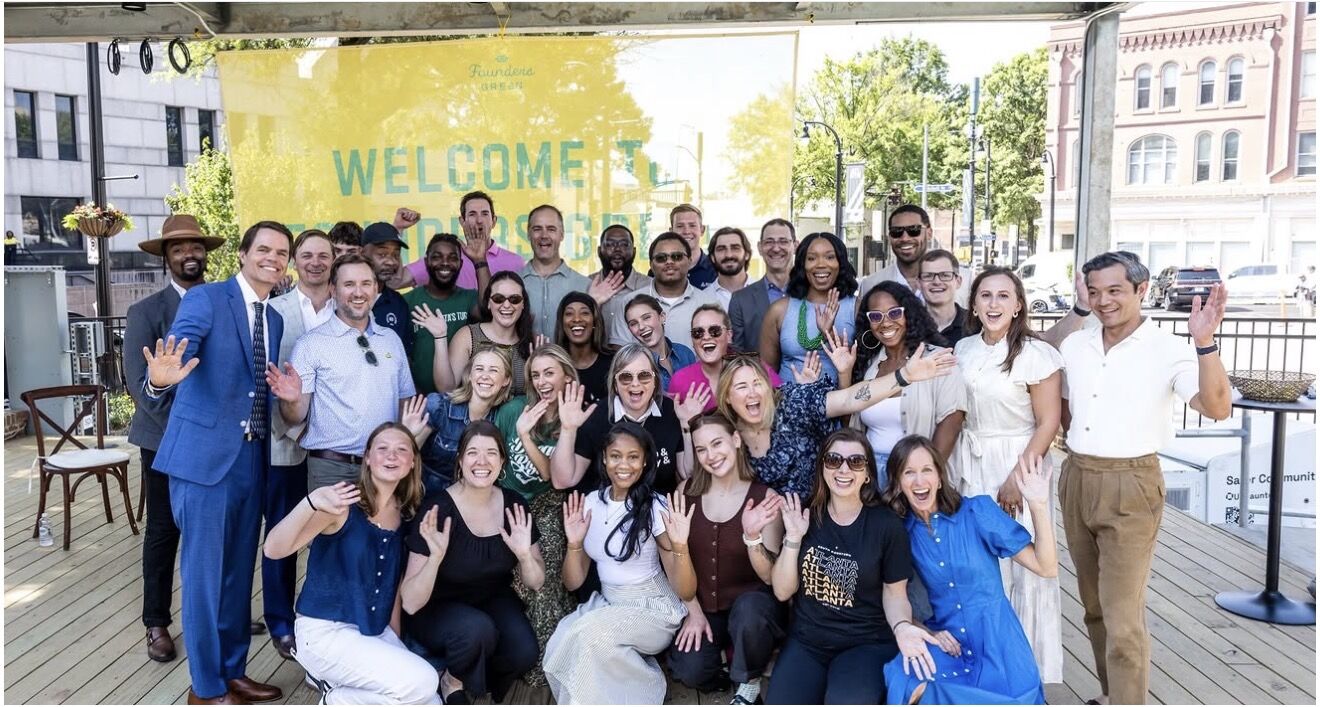
Founders Green opened in South Downtown Atlanta, replacing a 70-year parking lot. David Cummings' project draws Governor Kemp and Mayor Dickens. The park is an anchor for 100 entrepreneurs and a World Cup deadline.
Continue with
A parking lot that sat for 70 years in South Downtown Atlanta is now a public green space. Founders Green opened on Wednesday with a ribbon cutting that drew Georgia Governor Brian Kemp, Atlanta Mayor Andre Dickens, and AJ Robinson of Downtown Atlanta, Inc. The event was the formal launch of a neighborhood revitalization led by tech entrepreneur David Cummings, who has spent two and a half years working on the transformation.
For the prior century, the parcel held small businesses. Then it became a parking lot. Now it is a "front porch for entrepreneurs, neighbors, visitors, small businesses, and everyone who believes in the future of downtown Atlanta," Cummings said at the ceremony.
The Simple Read: A Park Opening in a Historic District
A casual observer sees a new green space in an old neighborhood. The ribbon cutting reads as a feel-good story. Government officials show up. Entrepreneurs celebrate. The narrative writes itself: South Downtown is coming back.
That take is not wrong. It is incomplete. Founders Green is the visible symptom of a deeper shift in how capital, political will, and entrepreneurial energy are aligning around one of Atlanta's oldest neighborhoods. The park is a signal. The real story is in the mechanisms that will determine whether that signal becomes a trend.
The Better Read: Three Mechanisms That Matter
Mechanism 1: Liquidity for a Neglected Zone
South Downtown is Atlanta's original commercial district, born from the convergence of three rail lines. For decades it has been a low-liquidity zone for real estate and business formation. Buildings were underutilized. The street grid was intact but neglected. Capital flowed to Midtown, Buckhead, and the BeltLine corridor.
Cummings' project changes that liquidity profile. He described the work as "investing in one of the most historic districts in Atlanta" and "supporting downtown, the economic front porch for the entire region." The green space acts as a city-scale anchor, the same way Tech Square did for Midtown or Ponce City Market for the Old Fourth Ward.
Mechanism 2: Political Alignment Compresses Execution Risk
Governor Kemp, Mayor Dickens, and the director of the city's development authority all appeared at the same event. That is not routine. The mayor, through Invest Atlanta and the Eastside TAD, championed new streetscapes and small business grants. Cummings acknowledged the "public-private investment that can help bring new jobs, new companies, new energy, and new opportunity to Atlanta's founding neighborhood."
Political alignment reduces execution risk. When the state, city, and a private developer coordinate on infrastructure, permitting, and incentives, the timeline for follow-on projects compresses. The World Cup deadline (2026) forces urgency. Cummings thanked "all the city leaders and their departments who helped us meet the World Cup deadline." That deadline is a catalyst accelerator.
Mechanism 3: The Entrepreneur Cluster Effect
Cummings said more than 100 entrepreneurs already call South Downtown home. These are not renters of last resort. They are founders who chose a neighborhood that lacked a signature public amenity until now. Founders Green gives them a shared spatial identity.