Dick's Sporting Goods (DKS) reported another strong quarter, and the headline number that will shift the narrative is this: Foot Locker comps turned positive for the first time since late 2024. The company raised guidance for both banners, signaling that the acquisition is generating tangible operating improvements rather than creating a distraction.
GlobalData managing director Neil Saunders put it bluntly. “The danger with the acquisition was that it would prove to be a distraction from the core business and would ensnare Dick’s in a long period of adjustment. This does not seem to be happening.” Saunders added that Dick’s “has got right to the heart of the issues at Foot Locker – focusing on the basics like writing-off old inventory, reducing styles to create clearer presentation, and rationalizing the store fleet.” His conclusion: “All of this suggests that Foot Locker wasn’t so much broken as improperly managed.”
Foot Locker Comps Finally Flip Positive
Foot Locker posted a 0.6% comparable-store sales increase and generated a small profit. That is the first positive comp since late 2024, a period that saw steadily worsening traffic and markdown pressure. The turnaround is not yet deep, the direction is confirmed.
Fast Break Stores Drive Double-Digit Comps
The specific mechanism driving the recovery is the Fast Break initiative, a store-refresh program that cuts footwear SKUs, increases apparel assortment, and improves merchandising clarity. Comps at Fast Break locations were up double digits in Q1, according to Dick’s management.
CEO Lauren Hobart cited the initiative as a key catalyst. “We’re right on schedule,” she said, noting that the company has cleared out stale inventory and repaired relationships with vendors who had become “disenchanted” with Foot Locker. The vendor re-engagement is a critical structural fix–without strong brand partnerships, Foot Locker could not secure the limited-edition drops that drive foot traffic.
Brand Relaunch Planned to Win Back Shoppers
Dick’s is planning a brand relaunch for Foot Locker, intended to re-establish the banner’s relevance with sneaker culture. While details remain sparse, the goal is to reverse years of brand erosion. Saunders described the overall turnaround as “impressive” given the short time frame. He warned that “there is a lot more work to do, especially on the international side of the Foot Locker operation.”
Dick's Core Business Shows No Signs of Slowdown
The Dick’s flagship banner continues to perform across the board. Hobart said consumers are responding to “newness and innovation across the assortment” and are not trading down. Growth came from all income demographics in Q1, a sign that the retailer’s positioning is broad enough to withstand a varied consumer backdrop.
Dick’s added new brands including Vuori and Gymshark, which appeal to the active-lifestyle customer who might otherwise shop at Lululemon or Nike Direct. The strategy is to capture share from both specialty and direct-to-consumer channels.
Store Expansion Kicks Into Higher Gear
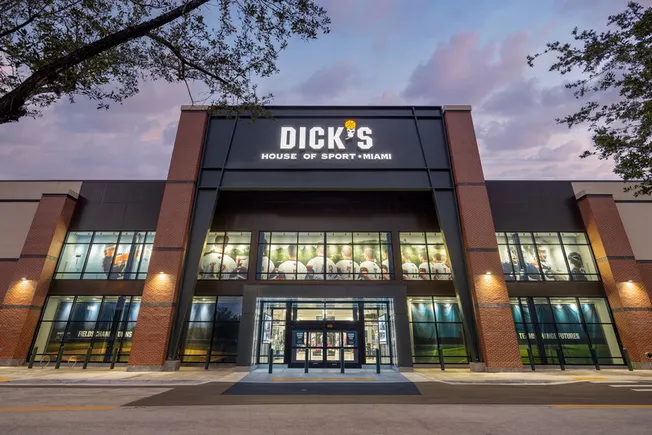
Dick’s continues opening House of Sport and Field House stores, its large-format concepts. Hobart said the company is “landing solid locations” as the concepts perform well. House of Sport stores feature batting cages, climbing walls, and putting greens, creating a destination experience that is difficult for online-first competitors to replicate.
AI Bet: Coach by Dick's
Dick’s recently launched Coach by Dick’s, a conversational agent embedded in the mobile app. The AI tool provides shoppers with tailored product recommendations, training tips, and other advice. This is not a gimmick–it is a direct attempt to increase app engagement and reduce return rates by helping customers make better first choices.
What The Numbers Mean For The Stock
Dick’s raised guidance for both the Dick’s and Foot Locker banners, which should reset expectations for the current fiscal year. The market had worried that the acquisition would become a multi-year drag on margins and management attention.
Saunders described the early results as “shallow still a clear win that underscores the dramatic improvement over a short space of time.” He said Foot Locker “might not yet be pulling its full weight, on the current trajectory it looks like it will be a valuable addition to Dick’s.”
- Key risk: The international Foot Locker business remains the heavy lift. European operations are taking longer to turn around, and currency headwinds could blunt reported results.
- Confirmatory signal: Same-store sales at Fast Break locations remain above the company average for another quarter. If comps decelerate, the thesis weakens.
- Valuation context: Dick’s trades at a premium to mass-market sporting goods peers, supported by its ability to execute across two banners simultaneously.
The stock will likely attract investors who were on the sidelines because of the Foot Locker overhang. The simple read is that Dick’s execution is validating the acquisition. The better read is that the turnaround is still early–the next two quarters will test whether the positive comps can sustain into the second half of the year, when comparisons become more difficult.
For now, the data supports the bull case: comps are up, margins are holding, and management is delivering on the integration milestones it laid out at the deal announcement. The next catalyst is the back-to-school season, which will test whether Foot Locker has regained enough vendor confidence to stock the launch products that drive holiday traffic.
Work remains–Europe has not turned, and the brand relaunch is unproven. The first-quarter evidence suggests Dick’s has done what many doubted it could: improve Foot Locker’s operations without losing momentum in its own core business. That dual-track execution is now the story investors will follow.