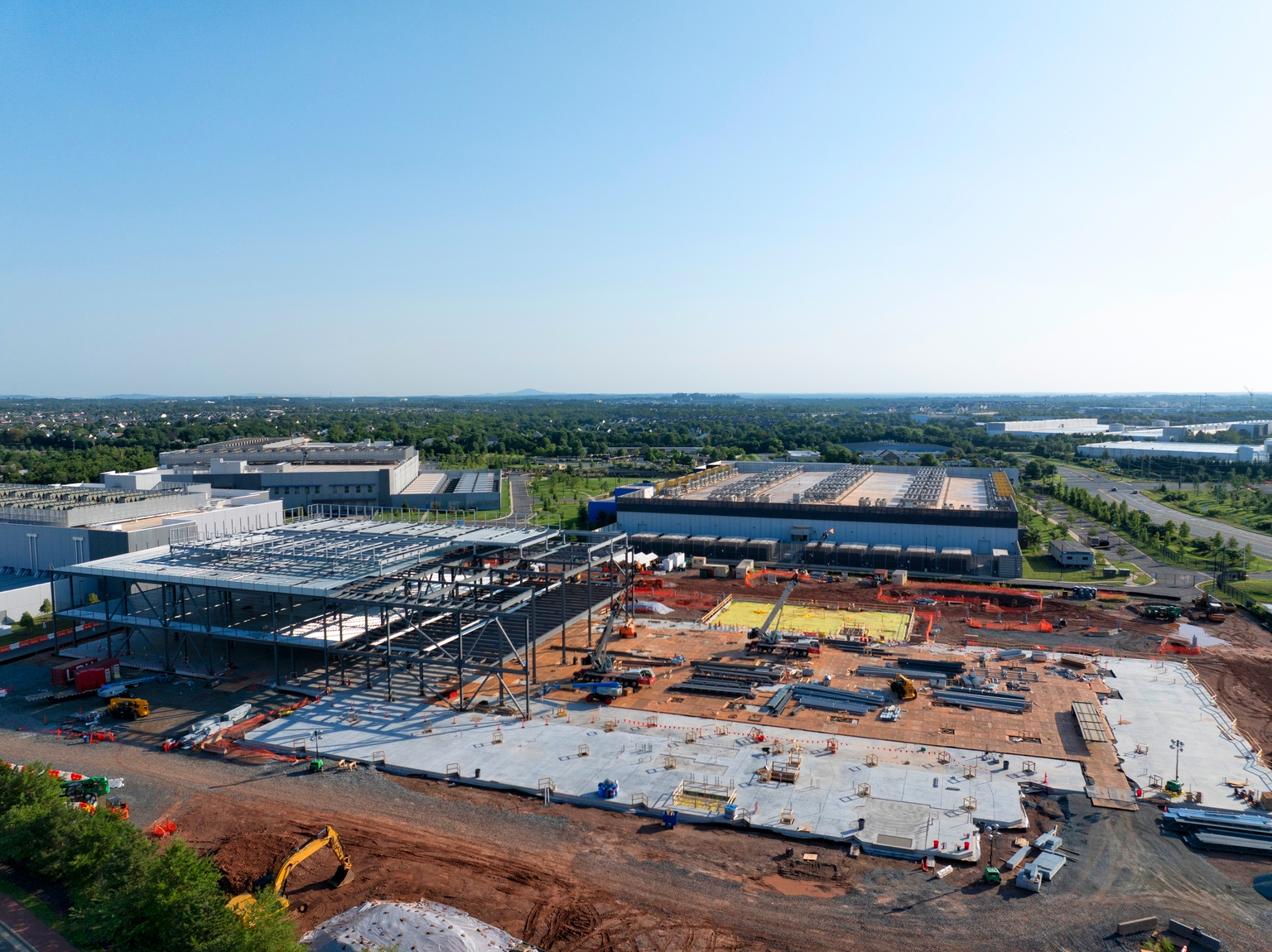
Fermi (FRMI) shares have lost roughly 80% of their value from the initial public offering price, a decline that stands in stark contrast to the rally in most AI-linked equities over the same window, stock market analysis shows. The stock’s highly speculative structure, built on building data-center capacity before securing tenants, already carried substantial construction risk. A fresh wave of management turmoil has now layered governance uncertainty on top of a thin leasing pipeline, turning an already distressed equity into an event-driven trade with a short fuse.
FRMI’s 80% Decline and the Construction Risk That Underpinned It
The core of the Fermi story is a bet that generative AI workloads will eventually fill speculative data-center capacity. The company is a development-stage operator with no commercial revenue yet. Every dollar of capital expenditure is at risk until a long-term, take-or-pay contract is signed. The 80% drawdown reflects the market’s judgment that the promise of future AI demand has not overcome the very present construction risk.
Competitors with pre-leased anchors or strong balance sheets have absorbed the first wave of hyperscaler expansions, leaving later entrants like Fermi to chase the same finite pool of cloud and enterprise tenants. The lack of a signed anchor means the company cannot point to a recurring revenue base that would cushion the equity value. Construction timelines, once started, do not pause; delays compound and consume cash with no offsetting income. The 80% wipeout has already discounted much of that pain, yet the absence of a tenant pipeline keeps the stock tethered to hard-to-value shell-and-land replacement cost, which may sit well below the current distressed price.
Management Turmoil Adds an Execution-Lever to the Risk Equation
For a company that depends entirely on execution, management stability is a first-order risk factor. Management turmoil introduces a vacuum in tenant negotiations, capital allocation, and strategic messaging. Decisions stall. Counterparties hesitate. The credibility of any forward guidance shrinks. The recent leadership upheaval threatens to lengthen the time required to secure the first anchor tenant.
The equity market has already priced in a severe deterioration in governance perception. Without a stable executive bench, Fermi finds itself defending a speculative equity story that no longer has a clear narrator. The next few months will test whether the board can replace key leaders quickly and whether a permanent leadership team can rebuild momentum in the tenant pipeline before the cash runway constrains the construction program.
What Would Shift the FRMI Narrative: Anchor Leases and Leadership Stability
A path back to a higher equity price runs through two concrete steps. The first is securing anchor tenants on long-term, take-or-pay contracts that de-risk the construction outlay and provide a visible revenue stream. The second is installing a stable management team that can present a credible transition from speculative development to operating asset.
A single headline announcing a hyperscaler or colocation lease would start to chip away at the 80% decline. Renewed institutional buying would likely follow if the board also addresses the leadership vacuum, whether through a permanent CEO appointment or a strategic partnership that brings operational oversight. Until both pieces slot into place, FRMI trades as a call option on a leasing cycle that has not yet begun for the company.
Binary Catalyst: The Next Leasing Update
The immediate decision point is the next leasing update, most likely attached to a quarterly filing or a press release signaling a material customer win. A failure to deliver a signed tenant by that window would intensify the narrative that Fermi is running against the clock. Construction costs accrue, and the speculative build model offers no revenue cushion. The 80% drawdown has priced in deep skepticism. A true floor, however, will not form until the company translates the AI narrative into a balance-sheet commitment from a counterparty. Until then, FRMI remains a high-risk event-driven trade where the next 20% move hinges entirely on execution signals rather than broader sector sentiment.