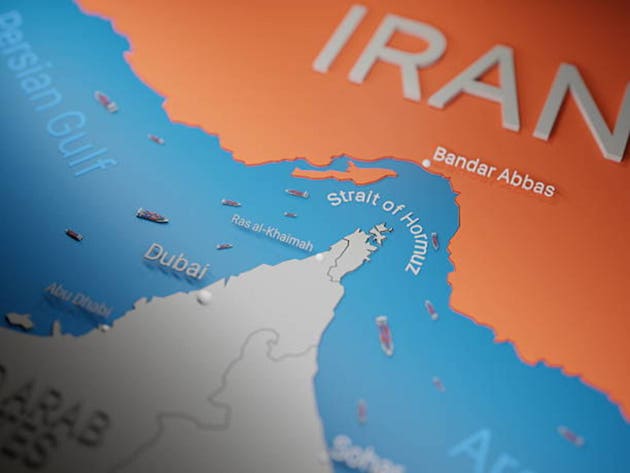
U.S. Treasury Secretary Scott Bessent told CNBC Thursday that China will work "behind the scenes" to help reopen the Strait of Hormuz to shipping. The comment injects a new diplomatic variable into a chokepoint that has been a persistent source of oil supply anxiety.
The Hormuz Chokepoint and the Oil Supply Chain
The Strait of Hormuz is the narrow waterway between Iran and Oman through which roughly a fifth of the world's seaborne oil passes. Any disruption there quickly feeds into crude prices, shipping insurance costs, and broader inflation expectations. Bessent's statement, made during a CNBC interview, suggests that the U.S. sees China as a constructive back-channel actor in reducing tensions that have periodically threatened tanker traffic.
The "behind the scenes" phrasing implies that China's role is not public diplomatic theater but operational pressure on parties that could obstruct the strait. For oil markets, the difference between a threatened closure and an actual reopening is measured in dollars per barrel. Even the perception of reduced risk can unwind the geopolitical premium that has been built into crude futures.
SPY and the Geopolitical Risk Premium
The SPDR S&P 500 ETF Trust (SPY) is not a direct oil play. It is, however, highly sensitive to energy supply shocks. A sustained disruption in the Strait of Hormuz would raise fuel costs, compress consumer spending, and force the Federal Reserve to keep rates higher for longer. The reverse is also true: a credible path to reopening removes a tail risk that has been weighing on equity valuations.
AlphaScala's proprietary Alpha Score for SPY currently reads 39 out of 100, a Mixed signal. The score aggregates technical, fundamental, and sentiment indicators, and the current reading reflects an ETF that is neither deeply oversold nor overbought. The Bessent catalyst could shift the sentiment component if oil prices decline and inflation breakevens ease. Energy sector weightings within SPY are modest. The second-order effects of cheaper oil–lower input costs, improved consumer confidence, and reduced recession odds–flow through the entire index.
The market's initial reaction to the CNBC interview was muted, with SPY trading near flat in the premarket. That lack of immediate movement does not mean the signal is irrelevant. Geopolitical risk is often priced in slowly, through options hedging and commodity desks, before it shows up in spot equity indexes. The real test will be whether shipping insurers and tanker operators begin to adjust their risk assessments.
What to Watch Next
Several data points will confirm or refute the Bessent signal:
- War-risk insurance premiums for vessels transiting the Strait of Hormuz. A decline would indicate that underwriters see a genuine de-escalation.
- Brent crude futures and the shape of the futures curve. A move from backwardation toward contango would suggest supply fears are easing.
- Official statements from Iran, Oman, or the International Maritime Organization regarding shipping safety.
- Chinese diplomatic channels–any readout from Beijing that corroborates the "behind the scenes" role.
The next concrete marker is whether shipping insurers reduce war-risk premiums for vessels transiting the Strait. A decline in those premiums would confirm that the market is pricing in a genuine de-escalation, not just a diplomatic headline. For SPY, that would remove a latent headwind and could support a move toward the upper end of its recent range. The SPY stock page provides real-time technical levels and the Alpha Score breakdown for traders tracking the ETF's reaction to this geopolitical shift.