Chicago Fed's Goolsbee warns energy inflation tied to Iran war has lasted longer than futures expected. Asian economies face 'stagflationary shock' as Brent trades at $96.
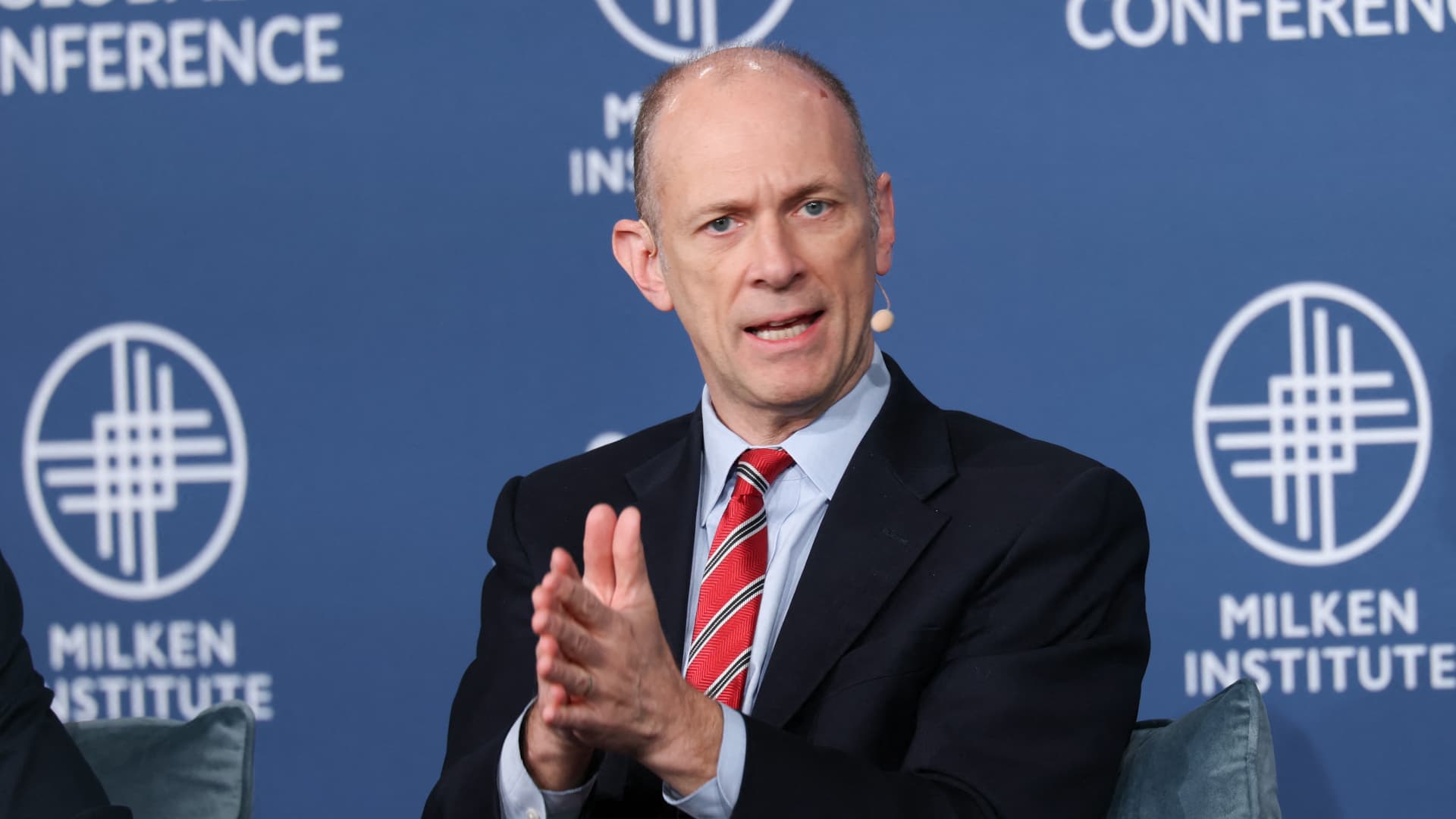
Chicago Federal Reserve President Austan Goolsbee said Thursday that energy inflation tied to the war in Iran has lasted longer than initial futures market estimates projected. Speaking at the Bank of Japan-IMES Conference, Goolsbee called the situation a “stagflationary shock” for Asian economies. Those economies are net energy importers, which makes the shock more acute.
Brent crude futures traded at $96 per barrel, up 1.81% on the session. West Texas Intermediate crude gained 1.71% to $90.21 per barrel. The day before the U.S. and Israel launched strikes on Iran, Brent was at $72 and WTI at $67.02. The gap between current prices and the pre-war baseline–roughly $24 for Brent and $23 for WTI–represents the war risk premium still embedded in the curve.
Goolsbee noted that the futures markets had initially expected energy prices to be “a lot lower” than current levels. Oil has eased recently on signs of progress in U.S.-Iran peace talks. Prices remain well above pre-war levels. The persistence of this inflation suggests the market underestimated both the duration of supply disruption and the difficulty of restoring normal flows.
For commodity traders, the key question is whether the current price level reflects a new equilibrium or a temporary premium that will collapse if a ceasefire holds. The gap between current and pre-war prices is the variable to watch.
Goolsbee specifically warned that Asian economies, because they are energy importers, face “more just a stagflationary shock of the old-fashioned variety.” This creates a direct read-through for commodity demand. Higher energy costs squeeze disposable income and industrial margins in import-dependent countries. Economic growth slows while inflation stays elevated.
For oil traders, the situation sets up a two-sided risk. On the supply side, any escalation in the Iran conflict could push oil sharply higher. The initial spike after the strikes demonstrated that sensitivity. On the demand side, a stagflationary environment in Asia could erode crude consumption. That would cap upside even if geopolitical tensions persist. The net effect depends on which force dominates in the coming weeks.
Traders should watch two concrete markers: the next round of U.S.-Iran negotiations and weekly inventory data from the Energy Information Administration. A sustained draw in U.S. crude stocks would confirm that supply tightness is real, not just speculative. A build combined with progress in talks would weaken the bullish case.
The stagflationary shock for Asia also argues for monitoring currencies and bond yields in import-heavy economies like Japan, South Korea, and India. A sharp depreciation or yield spike in those markets would signal that the energy cost burden is becoming systemic. That dynamic could eventually feed back into lower oil demand as Asian central banks tighten policy to defend currencies.
Goolsbee's comments serve as a reminder that the market's initial read on the conflict was too optimistic. The war premium remains large. The easing on peace talk progress shows that sentiment can shift quickly. The next catalyst is whether that pattern repeats or the current price level holds. For more on the broader commodity landscape, see our commodities analysis and the crude oil profile. The recent Oil Jumps After US Strikes in Iran Revive Strait of Hormuz Fears article provides context on the initial supply shock.
Prepared with AlphaScala research tooling and grounded in primary market data: live prices, fundamentals, SEC filings, hedge-fund holdings, and insider activity. Each story is checked against AlphaScala publishing rules before release. Educational coverage, not personalized advice.