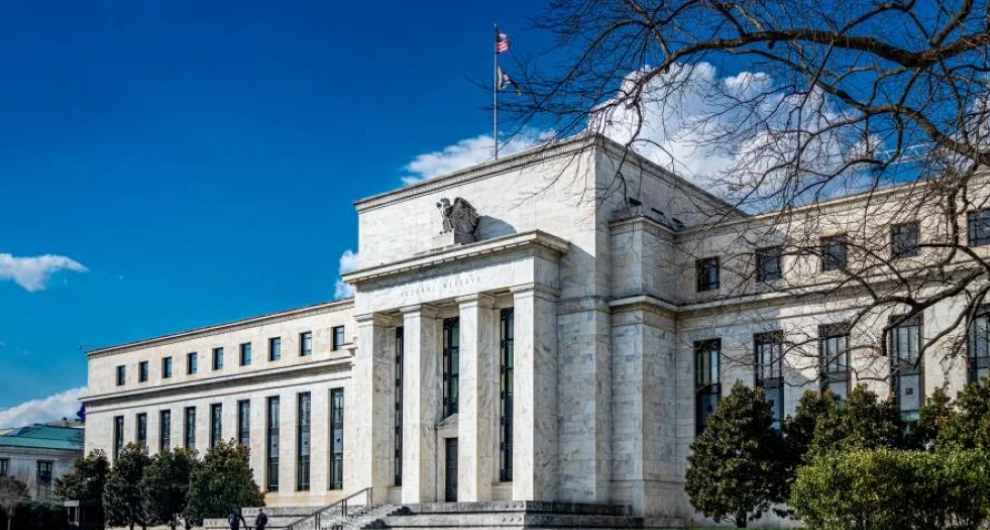
Fed Policy Stasis Extends Credit Cost Plateau as Powell Era Nears Conclusion

The Federal Reserve held rates at 3.50%–3.75% for the third consecutive meeting, signaling a continued focus on credit cost stability during a period of leadership transition.
Alpha Score of 57 reflects moderate overall profile with moderate momentum, moderate value, moderate quality, moderate sentiment.
Alpha Score of 47 reflects weak overall profile with moderate momentum, poor value, moderate quality. Based on 3 of 4 signals — score is capped at 90 until remaining data ingests.
Alpha Score of 46 reflects weak overall profile with strong momentum, poor value, poor quality, moderate sentiment.
Alpha Score of 52 reflects moderate overall profile with poor momentum, strong value, strong quality, weak sentiment.
The Federal Reserve maintained the federal funds rate at a range of 3.50% to 3.75% during its April 29 meeting. This decision marks the third consecutive pause, signaling a firm commitment to the current restrictive stance as the central bank navigates a period of institutional transition. By holding rates steady, the Federal Open Market Committee continues to prioritize the stabilization of credit costs over immediate adjustments to monetary policy.
Transmission Through Bond Yields and Credit Markets
The decision to hold rates steady reinforces the existing plateau in borrowing costs across the yield curve. For corporate and consumer credit, the persistence of this range serves as a benchmark for debt servicing obligations. As the Fed Policy Stasis Extends Credit Cost Plateau, the primary transmission mechanism remains the duration of high-interest environments rather than the magnitude of incremental hikes. Investors are now recalibrating expectations for the remainder of the year, focusing on how long the current policy ceiling can be sustained without inducing broader liquidity constraints.
Equity Index Reaction and Asset Valuation
Equity markets have responded to the policy stability with a focus on the implications for corporate earnings and valuation multiples. When the cost of capital remains fixed at elevated levels, firms with high leverage face sustained pressure on net margins. Conversely, the predictability of the rate environment allows for more stable discounting of future cash flows. The market reaction reflects a shift in focus from the terminal rate to the duration of the current restrictive cycle, as seen in the April FOMC: Policy Stasis Meets Governance Uncertainty analysis.
Institutional Continuity and Future Policy Markers
This meeting holds particular significance as it represents the final gathering under the current leadership structure. The continuity of the 3.50% to 3.75% range suggests that the committee is prioritizing institutional stability during the transition period. The following factors remain critical for the next policy phase:
- The duration of the current rate plateau relative to incoming inflation data.
- The impact of sustained credit costs on corporate capital expenditure cycles.
- The structural shifts in liquidity management as the committee prepares for future leadership changes.
As the central bank moves toward its next policy meeting, the focus will shift to the potential for a pivot in the guidance language. The committee must balance the need for inflation control with the risks associated with an extended period of high credit costs. The next concrete marker for the markets will be the release of the meeting minutes, which will provide deeper insight into the internal deliberations regarding the necessity of maintaining this specific rate range. For further context on the evolving regulatory and policy landscape, see FOMC Policy Stasis Signals Institutional Guardrails for Incoming Leadership.
AI-drafted from named sources and checked against AlphaScala publishing rules before release. Direct quotes must match source text, low-information tables are removed, and thinner or higher-risk stories can be held for manual review.