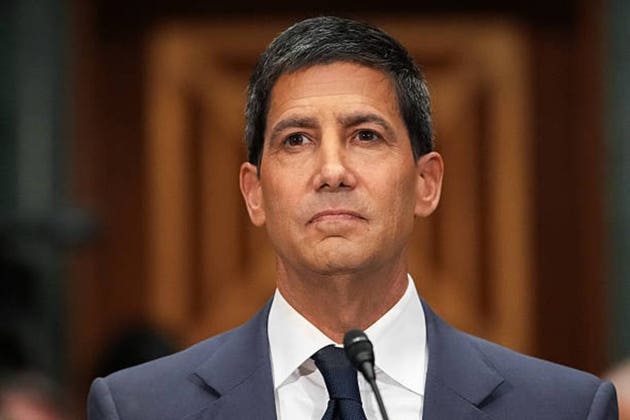
The Federal Reserve held the federal funds rate steady at a range of 3.50% to 3.75% during its latest policy meeting, a decision marked by an unusual pattern of dissents. While the headline stability suggests a continuation of the current monetary path, the internal friction serves as a structural signal regarding the transition of leadership. The dissent reflects a deliberate effort to establish institutional boundaries for incoming chair Kevin Warsh, rather than a breakdown in the authority of the current chair.
Transmission of Policy Constraints
The decision to maintain current rates indicates that the committee is prioritizing continuity in its inflation-fighting mandate over immediate adjustments to credit costs. By embedding dissent into the record, the committee is signaling that the policy framework remains tethered to consensus-driven objectives. This approach functions as a preemptive constraint on the incoming leadership, ensuring that the transition does not result in a sudden pivot in the direction of monetary policy. The market reaction reflects a recalibration of expectations, as the persistence of this policy stasis extends the credit cost plateau, impacting capital-intensive sectors that rely on predictable rate trajectories.
Institutional Governance and Market Linkages
The unusual nature of the dissents highlights a shift in how the committee manages its internal governance. By asserting these positions now, the committee is effectively locking in a policy stance that limits the discretionary power of the incoming chair. This governance maneuver is designed to prevent significant deviations from the established inflation target, even as the political and administrative landscape shifts. The broader market impact is felt most acutely in the bond markets, where the expectation of a prolonged period of stable, high rates continues to influence yield curves and the cost of corporate debt.
AlphaScala data currently tracks the following tickers within this shifting interest rate environment:
- T (AT&T Inc.), Alpha Score 56/100, label Moderate, sector Communication Services, stock page /stocks/t
- BE (Bloom Energy Corp), Alpha Score 46/100, label Mixed, sector Industrials, stock page /stocks/be
These scores reflect the current sensitivity of these sectors to the Fed Policy Stasis Extends Credit Cost Plateau environment. As the committee moves toward the next policy cycle, the focus will remain on whether these governance guardrails hold under new leadership or if the dissent pattern signals a deeper fracture in the committee's long-term consensus. The next concrete marker for this transition will be the first policy meeting presided over by the new chair, where the committee's commitment to this established framework will face its first real-world test. Investors should monitor subsequent meeting minutes for any softening in the language surrounding these dissents, as that would indicate a potential shift in the committee's internal power dynamics. For further context on the broader economic landscape, see our market analysis.