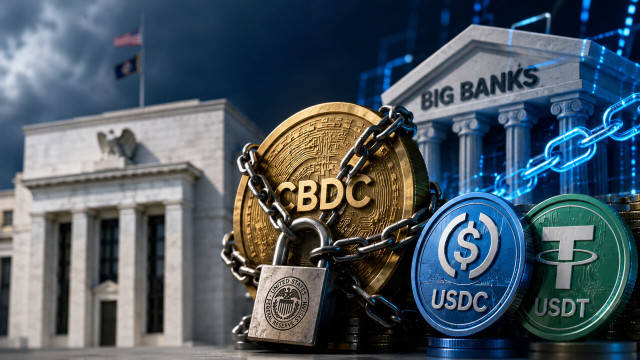
Congress folded a four-year ban on a Fed-issued digital dollar into a housing bill that cleared the Senate 85-5 on June 22 and the House 358-32 the next day. Stablecoin issuers like Circle and Tether get a clear field until 2031.
The ban looks like a win for crypto. A government digital dollar would have competed with private dollar tokens backed by the central bank's balance sheet. No private issuer could match that credibility. The bill even exempts open, private dollar tokens from the ban.
The Fed was never close to launching one. Fed Chair Kevin Warsh called it "a bad policy choice" at his confirmation hearing. Treasury Secretary Scott Bessent said a digital dollar was "off the table." Trump signed an executive order against it in January 2025. The Fed's pilot at the Boston Fed was the extent of its effort. Killing a product that nobody was shipping removes a threat that existed only on paper.
The real challenge to stablecoins is coming from the banks. JPMorgan, Citigroup, Bank of America, and Wells Fargo, with more than a dozen other lenders, are building a shared network for tokenized deposits through The Clearing House. They target the first half of 2027. Some call it "the bridge," others "the chain."
A tokenized deposit is an ordinary bank deposit recorded on a blockchain. The money remains a bank liability, retains FDIC eligibility, and stays within the same regulated system it does today while gaining instant settlement, round-the-clock movement, and programmable payments.
The banks found their legal opening in the same GENIUS Act that helped stablecoins. That law excludes deposits recorded on a digital ledger from the definition of a payment stablecoin. A bank can move customer money on new rails and still call it a deposit. The FDIC reinforced the line in April: money parked as stablecoin reserves does not carry pass-through insurance to the token holder, while a tokenized deposit keeps ordinary deposit protection.
Three flavors of digital dollar now compete for the same job. Stablecoins from crypto companies, tokenized deposits from banks, and a CBDC from the central bank. The housing bill removed the third option for four years.
Banks are fighting because deposits are their core. When money sits in checking and savings accounts, banks lend against it. That cheap funding makes the business work. A large cash migration into stablecoins would drain that base. U.S. banking groups warned Congress last year that the wrong rules could push up to $6.6 trillion out of the deposit system, shrinking lending capacity and raising borrowing costs. JPMorgan CEO Jamie Dimon has fought hard against letting stablecoin platforms pay anything that looks like yield. The tokenized deposit network is the constructive half of that response. The banks want digital money to keep up with crypto, and they want it to stay bank money.
Policymakers are split. Bank of England official Megan Greene argued at a conference in late May that tokenized deposits will probably take over from stablecoins within five years. She framed it as a race between three animals: the CBDC as a slow tortoise, stablecoins as a quick hare, and tokenized deposits as the rhino she would bet on. Fed Governor Christopher Waller pushed back, defending stablecoins as healthy payment competition with nothing dangerous about them. The split shows how unsettled the question remains.
There are reasons to stay skeptical of the bank network. Bank of America's payments chief admitted clients are not "beating down the door" for tokenized deposits yet. The network has no blockchain vendor selected and a launch still more than a year out. Most early users are expected to be large multinational companies handling treasury and cross-border payments. Tokenized deposits may remain a wholesale tool for big institutions for a while, leaving stablecoins to dominate the open, public side of crypto. Adoption takes time, and a 2027 target leaves a long runway for stablecoin firms to lock in merchants, fintech apps, and payroll systems first.
This contest will shape how fast money moves, who controls the rails it moves on, and whether you can earn anything on a digital cash balance. Stablecoins already settle in seconds, any hour, any day. Banks want tokenized deposits to match that speed while keeping the money in accounts that look and behave like the ones people have now. The version that wins broad adoption will decide whether everyday digital dollars run on open crypto networks or inside closed bank systems, and whether they pay you a share of the interest those reserves earn.
That is the fight the housing bill pushed down the road. The bill settled one thing cleanly: the Fed cannot issue a retail CBDC before 2031. The bigger decision now belongs to crypto companies and banks. Which of them will issue the digital dollars Americans actually end up using? That choice will turn on the rules regulators are still writing, including how much yield each side can offer and how heavily each gets supervised.
A wrinkle: Trump abruptly canceled the planned signing ceremony on June 24, tying it to a separate voting bill he wants passed first. House leaders expect him to sign the housing package within days regardless. The political theater around the signature will keep going. The substance underneath it points in the same direction either way.
The Fed's CBDC is frozen. Most of the country will not notice because it was never coming anyway. The digital dollars people actually use are faster than the CBDC debate suggested. Congress froze the government's version. The private versions kept racing. The banks are already set for launch.