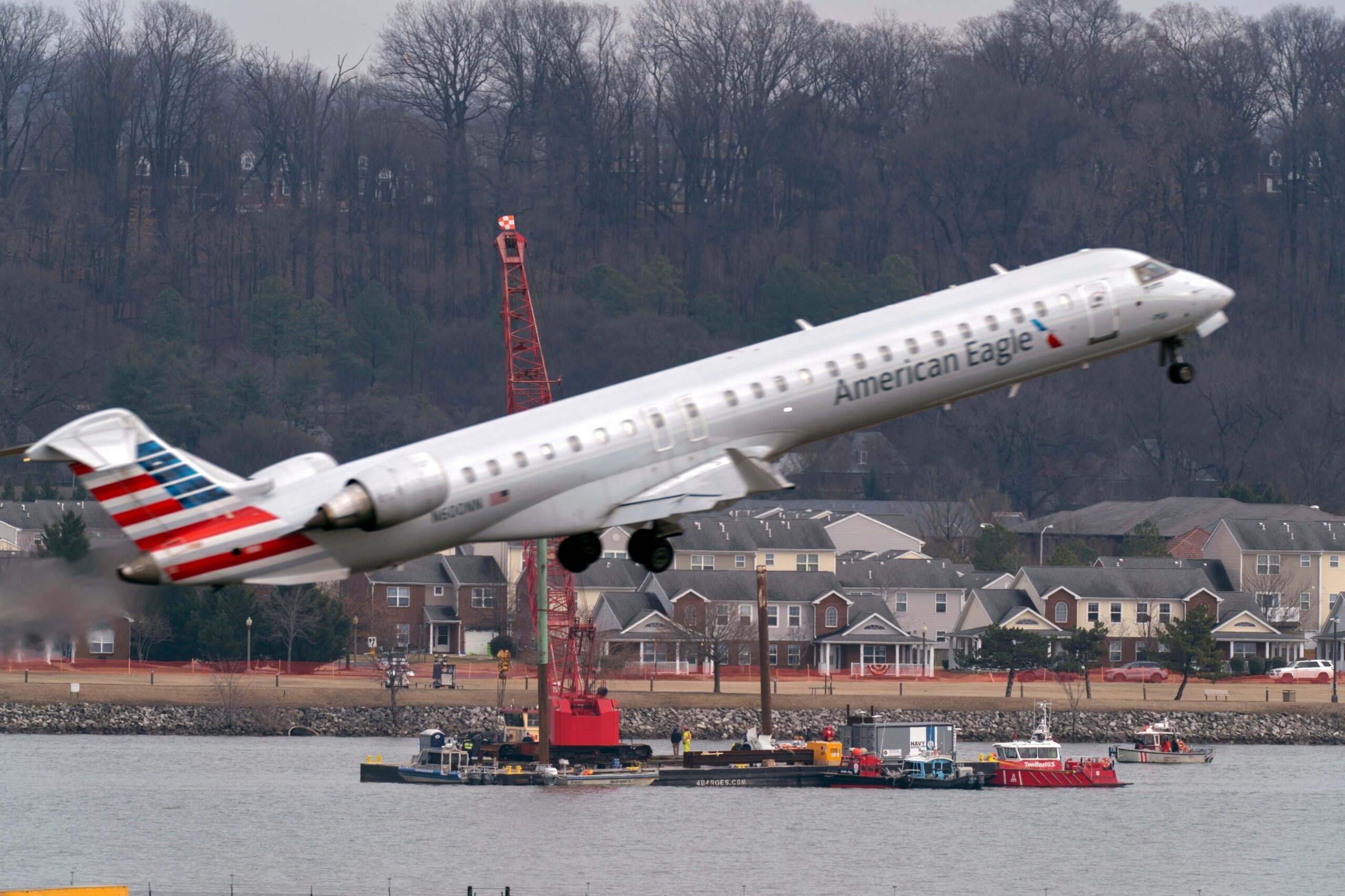
The head of the Federal Aviation Administration will tell Congress on Tuesday that the agency failed to act on warnings before the January 2025 mid-air collision between an American Airlines regional jet and an Army helicopter near Reagan Washington National Airport. The crash killed 67 people, making it the deadliest U.S. aviation disaster in more than two decades.
For traders watching the aviation and defense sectors, the testimony is not just a regulatory postmortem. It is a catalyst that could reshape operating costs for airlines, redirect defense spending toward air traffic control upgrades, and pressure helicopter operators across major airports.
FAA Admits Data-to-Action Gap
FAA Administrator Bryan Bedford will tell a U.S. Senate Commerce subcommittee that the system generated warning signals before the collision. “The issue was not a lack of data – it was a failure to translate that data into action,” Bedford says in prepared testimony. “That is the gap we are urgently closing.”
The National Transportation Safety Board previously determined the collision was caused by the FAA’s decision to allow helicopters to travel close to the airport without safeguards to separate them from airplanes, and its failure to review data and act on recommendations to move helicopter traffic away from the airport.
Since 2021, there have been 15,200 air separation incidents near Reagan airport between commercial airplanes and helicopters, including 85 close-call events. The FAA has since restricted helicopter traffic around Reagan and imposed restrictions at airports in Baltimore, Las Vegas, and Washington Dulles. It also reduced the arrival rate for planes at Reagan.
Sector Read-Through: Airlines Face Regulatory Overhang
American Airlines (AAL) at the Center
The collision involved an American Airlines regional jet operated by a subsidiary. The carrier’s Alpha Score sits at 52/100, labeled Mixed, reflecting the stock’s position in the Industrials sector. The immediate regulatory response – reduced arrival rates and restricted helicopter traffic – directly affects Reagan National Airport, a key slot-constrained hub for American Airlines.
Fewer arrivals per hour mean higher per-flight costs and potential schedule disruptions. The FAA’s March suspension of visual separation ban between airplanes and helicopters at major airports adds another layer of operational friction. For AAL, the risk is that these restrictions persist or expand to other hubs, squeezing margins in an already thin-margin business.
Broader Airline Sector: Higher Compliance Costs
The read-through extends beyond American Airlines. Every carrier operating into Reagan, Dulles, Baltimore, Las Vegas, or other airports with helicopter traffic faces the same constraints. The FAA’s admission of systemic failure invites Congress to mandate additional separation requirements, which would raise costs across the board.
Airlines may need to invest in new cockpit technology, adjust scheduling algorithms, or accept lower throughput at congested airports. The U.S. Department of Transportation has already urged Congress to approve another $10 billion for an air traffic control overhaul, after awarding $12.5 billion last year. That spending, if approved, will be funded by taxes and fees that ultimately flow through to airline ticket prices.
Defense and Air Traffic Control: Spending Catalyst
Helicopter Operations Under Scrutiny
The collision involved an Army Black Hawk helicopter. The NTSB’s finding that the FAA failed to separate helicopters from airplanes puts pressure on both military and civilian helicopter operators. The March restrictions already limit helicopter routes near major airports. If Congress mandates permanent separation zones, helicopter operators – including defense contractors that manufacture and maintain rotorcraft – could face reduced access to urban airspace.
Companies with exposure to military helicopter production or maintenance may see contract terms tighten. The Army has already reviewed its training routes near civilian airports. Any shift toward more restrictive airspace management of helicopter traffic could lower flight hours and reduce demand for parts and services.
ATC Overhaul Funding Request
The $10 billion request for air traffic control modernization is the clearest spending catalyst. Bedford notes that with more than 18 million flights managed and over one billion passenger movements annually, “our current system has reached its limits.”
Contractors that supply ATC software, radar systems, and communications infrastructure stand to benefit if Congress approves the funding. The $12.5 billion already awarded last year signals bipartisan appetite for upgrades. The FAA’s admission of a data-to-action gap strengthens the case for investing in predictive analytics and real-time conflict detection tools.
What Confirms or Weakens the Thesis
Confirmation signals:
- Congress approves the $10 billion ATC overhaul request in the next budget cycle.
- The FAA extends visual separation bans to additional airports beyond the current list.
- American Airlines or other carriers report higher unit costs tied to Reagan arrival restrictions in quarterly filings.
Weakening signals:
- The NTSB final report shifts blame away from FAA procedures toward pilot error or mechanical failure.
- Congress declines to fund the ATC overhaul, leaving the current system in place.
- The FAA lifts helicopter restrictions after a review period, indicating the risk was isolated.
For now, the FAA’s own admission that it had warning signals but failed to act is the strongest piece of evidence that regulatory change is coming. Traders should watch the Senate hearing for any specific legislative proposals and track the DOT’s funding request through the appropriations process. The sector read-through is not about one crash – it is about whether the system that allowed 15,200 separation incidents in four years will be rebuilt.