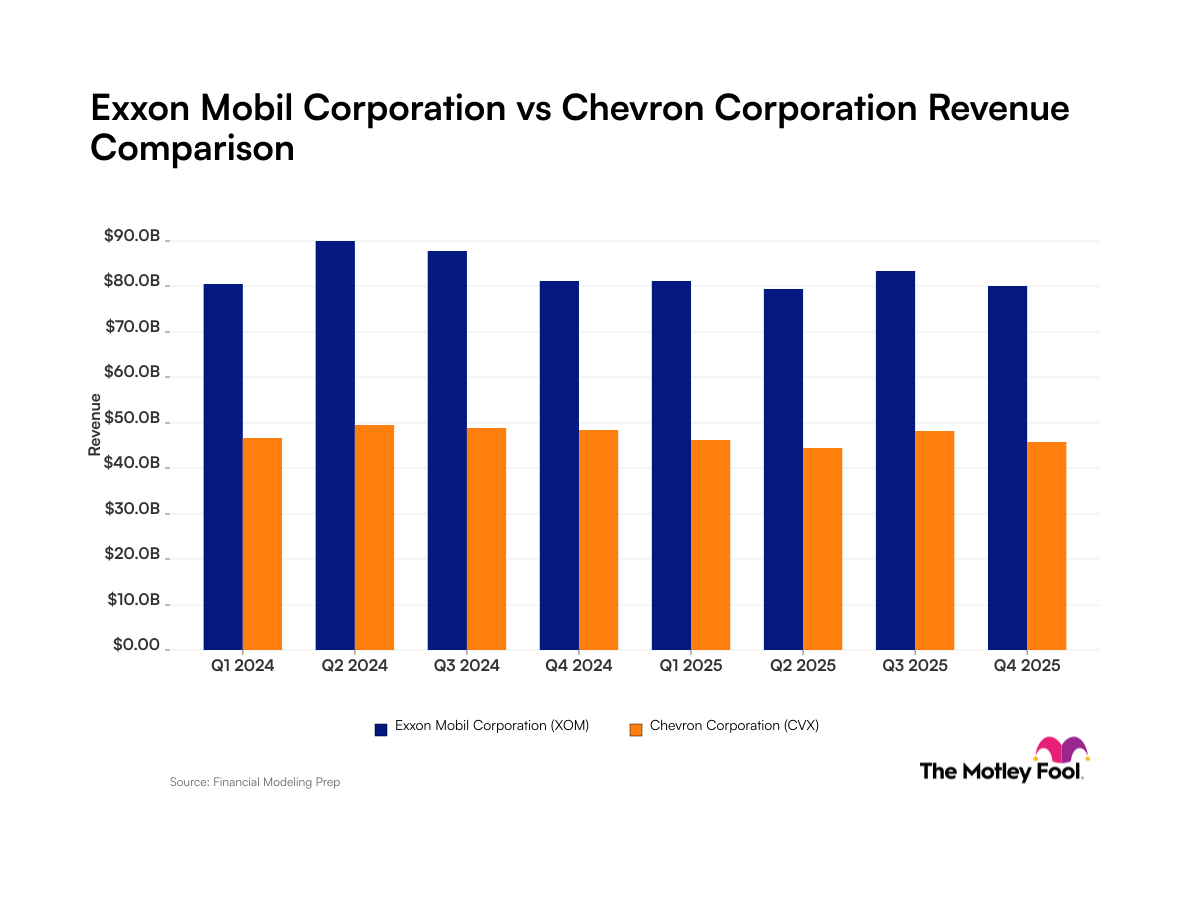
The recent divergence in revenue performance between Exxon Mobil and Chevron marks a shift in how these energy majors manage capital allocation and production scale. While both companies operate within the same global commodity environment, their distinct approaches to asset integration and regional exposure have created a measurable gap in their revenue trajectories over the last eight quarters. Exxon Mobil has prioritized aggressive production scaling through its Permian integration, whereas Chevron has focused on maintaining operational stability while navigating regulatory hurdles in key international markets.
Scaling Production and Revenue Resilience
Exxon Mobil has leveraged its expanded footprint in the Permian Basin to maintain higher revenue tiers, even as global energy prices fluctuate. By prioritizing high-volume output, the company has effectively cushioned its top line against the volatility inherent in crude oil markets. This strategy relies on the ability to integrate new assets rapidly, which has allowed the firm to capture economies of scale that are less visible in its peer group. The focus remains on maximizing throughput to ensure that revenue remains consistent despite periodic shifts in the underlying price of energy commodities.
Chevron has adopted a more cautious stance, emphasizing balance sheet stability and project execution over rapid expansion. This approach has led to a more conservative revenue profile, as the company prioritizes returns on invested capital over sheer volume. While this strategy provides a buffer during periods of market contraction, it has also resulted in a slower revenue growth rate compared to its primary competitor. The company continues to face challenges related to its international operations, where policy shifts and geopolitical friction often dictate the pace of production and revenue realization.
Sector Positioning and AlphaScala Metrics
Energy sector performance remains heavily tied to the ability of these firms to navigate supply chain constraints and geopolitical risks. The current market environment rewards companies that can demonstrate both production flexibility and fiscal discipline. According to AlphaScala data, XOM stock page currently holds an Alpha Score of 54/100 with a Mixed label, reflecting its aggressive growth posture. Meanwhile, CVX stock page carries an Alpha Score of 44/100, also labeled Mixed, as it balances operational stability with the need for further policy reform in its key production regions.
Key factors currently influencing the revenue gap include:
- The rate of Permian Basin integration and its impact on total daily output.
- Regional exposure to geopolitical volatility, specifically in the Middle East and South America.
- Capital expenditure efficiency relative to long-term production targets.
These factors suggest that the revenue gap is not merely a function of commodity prices but a reflection of deliberate corporate strategies. Investors should monitor upcoming production reports for evidence of whether Chevron can accelerate its output to close the gap or if Exxon Mobil will continue to widen its lead through sustained volume growth. The next concrete marker for this divergence will be the upcoming quarterly guidance updates, which will clarify how each firm intends to manage its cost structure in the face of persistent geopolitical friction and shifting global demand patterns. For further context on how these dynamics affect the broader energy sector, see Energy Sector Re-rates as Iran Blockade Signals Supply Constraints.