Everest Metals Corporation (ASX: EMC) dropped a maiden mineral resource estimate for its Revere gold project in Western Australia's Mid-West region. The number is 15 million tonnes at 0.54 grams per tonne for 260,780 ounces of gold. More than 40% of that total sits in the indicated category. The market's immediate reaction was muted – shares held at 11.0¢, giving EMC a $29.66M market cap. The real risk event is not the resource itself. It is the sequence of drilling decisions that will now determine whether Revere becomes a mine or remains a geological curiosity.
The Maiden Resource: 260,780 Ounces at Revere
The headline ounces are large enough to matter for a micro-cap explorer. 260,780 ounces of near-surface gold, hosted in a reef system that remains open along strike and at depth, provides a foundation. The grade of 0.54 g/t is low by hard-rock standards. That grade works only if mining costs stay exceptionally low and the deposit is amenable to bulk open-pit methods. EMC's management is betting exactly that.
Grade, Tonnage, and Open-Pit Potential
A 0.54 g/t deposit is not a high-margin project at current gold prices. The economics depend entirely on strip ratio, metallurgical recovery, and processing simplicity. EMC has disclosed that the ore body is suited to open-pit mining and that gold can be extracted via a simple gravity process. That combination – shallow, free-digging material and no complex chemical leaching – is what makes low-grade ounces viable. The resource sits at 15 million tonnes, which is a scale that could support a multi-year operation if the grade holds and the recovery is high.
Indicated vs Inferred: The Confidence Gap
More than 40% of the resource is classified as indicated. That is a meaningful detail. Indicated ounces carry enough geological confidence to support preliminary economic assessments and mine planning. The remaining inferred ounces require additional drilling to upgrade. The risk is that infill drilling fails to confirm continuity, causing the indicated portion to shrink or the average grade to slip. Every explorer promises that drilling will increase confidence. The market will wait for the next assay batch before pricing that promise.
The Gravity-Only Extraction Advantage
CEO Mark Caruso pointed to completed bulk sampling and metallurgical testwork that confirmed gold can be recovered using a simple gravity process. This is the single most important operational detail in the announcement. Gravity recovery means no cyanide leach circuit, no complex flotation, and a much lower capital requirement. For a company with a $29.66M market cap, a low-capex development path is the difference between a project that can be funded and one that cannot.
“Results of the previously completed bulk sampling and metallurgical testwork has confirmed that gold can be extracted via a simple gravity process and coupled with the open pit nature of the ore body, provides increasing confidence in the potential development pathway.”
What Gravity Recovery Does Not Solve
Gravity circuits typically recover coarse, free gold. Fine or refractory gold will report to tails. The recovery rate from the bulk sample has not been disclosed in this update. A high recovery at a coarse grind size would be a strong positive signal. A recovery below 80% would change the economic equation quickly. The market has no visibility on that number yet. That gap is a risk.
The Open-Pit Assumption
An open-pit design assumes a low strip ratio. If the mineralised reef dips steeply or the waste rock volume increases with depth, mining costs rise. EMC has not published a pit optimisation or a strip ratio estimate. The upcoming drilling is designed to test down-dip extensions. Those results will either confirm a shallow, wide system or reveal a narrower, deeper structure that costs more to extract.
Drilling Program and Resource Expansion Risk
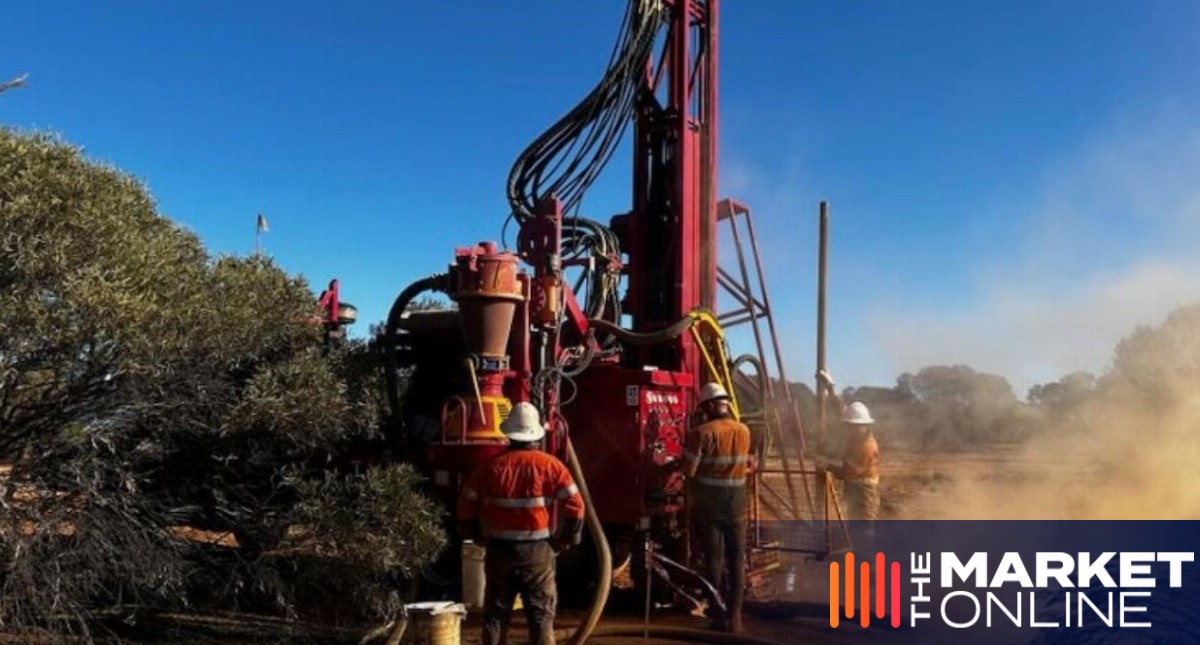
EMC is planning further resource drilling along the Revere Reef shear zone. An aircore (AC) drilling program will target both along-strike and down-dip positions. Aircore drilling is a fast, low-cost reconnaissance method. It is effective for defining near-surface oxide mineralisation. It is not a resource-definition tool for deeper fresh rock. The program will improve geological understanding and test continuity. It will not immediately deliver a large indicated resource upgrade.
Aircore Targets Along Strike and Down-Dip
The company stated that only a portion of the reef system has been drilled. Mineralisation remains open. The aircore program is designed to test extensions. Positive results would extend the strike length and potentially add ounces. Negative results – narrow intercepts, low grades, or discontinuous mineralisation – would cap the resource size and force a reassessment of the project's scale.
“With only a portion of the Revere reef system drilled and mineralisation remaining open, further drilling is expected to support resource growth and improved confidence over time.”
Timeline to the Next Resource Update
EMC has not provided a specific date for the next resource estimate. The aircore program must be completed, assays received, and data interpreted. A reasonable expectation is a six- to nine-month window before any material resource update. During that period, the stock will trade on gold price sentiment, occasional drill updates, and the company's ability to fund the work program without excessive dilution.
What Moves the Needle for EMC's $29M Market Cap
A $29.66M market cap for a company with 260,780 ounces of gold in a maiden resource implies an enterprise value per ounce of roughly $114. That is not expensive by junior explorer standards, provided the ounces are real and the development path is viable. The market is pricing in significant execution risk. Three factors will determine whether that discount narrows or widens.
Gold Price Sensitivity
A rising gold price improves the economics of a low-grade bulk tonnage deposit. A falling gold price does the opposite. EMC's project is highly leveraged to the gold price because the grade is marginal. A $100/oz move in the gold price changes the in-situ value of the resource by roughly $26 million – nearly the entire market cap. Traders should track the gold profile and broader commodities analysis for macro signals that could swamp company-specific news.
Funding and Dilution Risk
EMC had a market cap of $29.66M at the time of the announcement. Drilling programs, metallurgical studies, and eventual feasibility work require capital. The company will likely need to raise equity. The terms of any raise – price, structure, and the presence of institutional support – will signal how the market really values the Revere project. A heavily discounted placement would be a negative signal. A raise at a premium or with strategic investor participation would be a strong positive.
Market Sentiment and Liquidity
EMC is a micro-cap stock with limited daily liquidity. The share price can move sharply on small volumes. The maiden resource provides a fundamental anchor. The next catalyst is the aircore drilling results. Positive results could attract speculative interest and improve liquidity. Disappointing results could see the stock drift lower as momentum fades. The risk is asymmetric: the upside requires a clear pathway to a larger resource and a development decision. The downside is a slow bleed of time and capital.
Risk to watch: The gravity-only process is the project's margin of safety. If recovery rates disappoint, the low grade becomes a liability, not a manageable input.
The maiden resource at Revere gives Everest Metals a number to defend. The next six months will test whether that number grows or stalls. The drilling program is the mechanism. The gold price is the backdrop. The funding question is the constraint. Traders who treat this as a binary event on the next assay batch will miss the larger picture. The real trade is whether a $29M company can systematically de-risk a 260,780-ounce gold system without destroying shareholder value along the way.