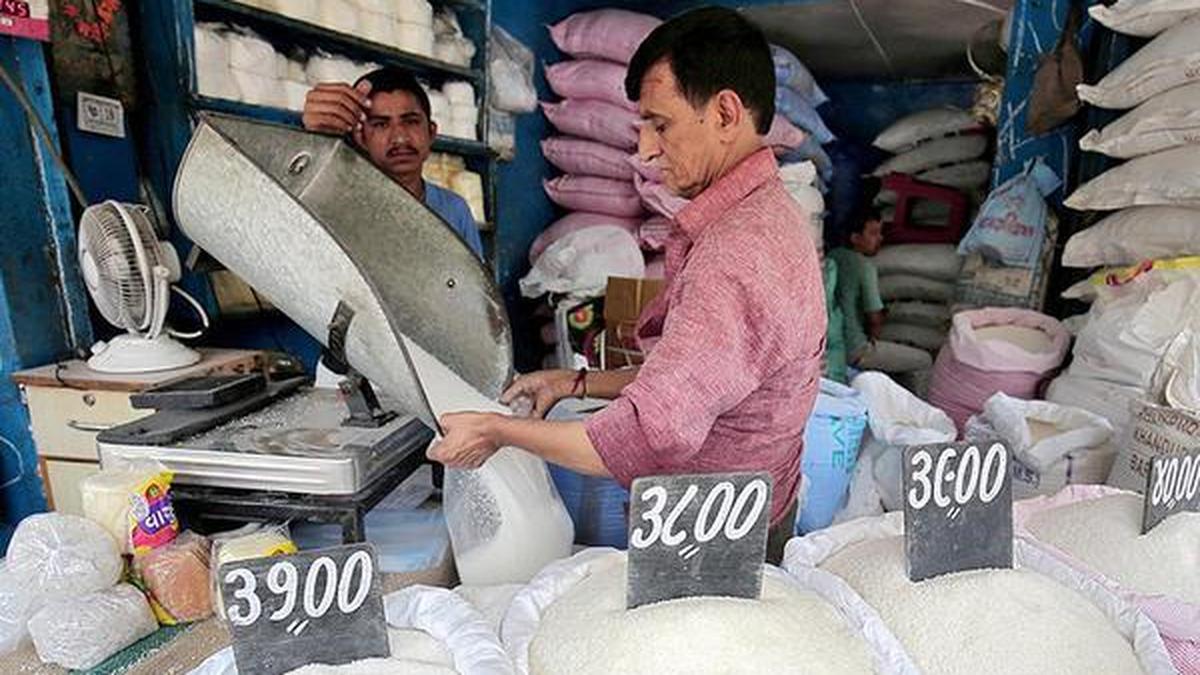
India's Directorate General of Foreign Trade (DGFT) moved sugar exports from "Restricted" to "Prohibited" with immediate effect on May 13, banning all outbound shipments of raw sugar, white sugar, and refined sugar until September 30, 2026, or until further orders. The decision aims to enhance domestic availability and contain prices amid persistent inflation concerns and the West Asia conflict. For global sugar markets, the ban removes the world's second-largest producer from the export equation at a time when supply buffers are already thin.
The simple read is that this is a supply shock that will lift global sugar prices. The better market read is that India's actual exports were already running far below the permitted quota, so the physical tonnes removed from world trade are smaller than the headline suggests. The ban's real force is that it eliminates the option for mills to ship any surplus later in the season and signals that the government will prioritise domestic price stability over export revenue for the foreseeable future.
The Ban: Immediate Prohibition, Limited Exceptions
The DGFT order applies to all three categories of sugar and takes effect immediately. It replaces the earlier restricted regime, under which mills needed a licence to export. Now, no new licences will be issued, and no fresh export contracts can be executed outside the specified carve-outs.
What the Ban Covers
- Raw sugar – the bulk of India's exportable surplus
- White sugar – refined, low-colour sugar for direct consumption
- Refined sugar – high-purity sugar used in industrial food processing
All three are now prohibited from leaving Indian ports unless they fall under one of the exceptions.
What Still Moves
The notification explicitly exempts four categories:
- Exports to the European Union under the CXL arrangement
- Exports to the United States under the Tariff Rate Quota (TRQ)
- Shipments under the advance authorisation scheme, which allows duty-free imports of raw sugar for re-export after processing
- Consignments already in the physical export pipeline, meaning cargoes that have been booked, loaded, or are in transit before the ban took effect
These exceptions mean that some Indian sugar will still reach global buyers in the coming weeks. The pipeline clause, in particular, could allow a few hundred thousand tonnes to sail even after the ban date, softening the immediate physical impact. Once those cargoes clear, however, the tap is off.
Supply-Demand Reality: Record Production, Exports Already Lagging
India's sugar production rose 7.32% to 27.52 million tonnes through April in the 2025-26 marketing year (October to September), driven by higher output in Maharashtra and Karnataka, according to industry body ISMA. ISMA projects total production for the full season at 29.3 million tonnes after ethanol diversion, up from 26.12 million tonnes in 2024-25.
The Quota vs. Reality Gap
Despite the larger crop, exports were never going to absorb the surplus. The Food Ministry initially allowed 15 lakh tonnes (1.5 million tonnes) of exports, then opened an additional 5,00,000-tonne pool. Of that second tranche, only 87,587 tonnes were approved. Total permitted exports reached nearly 16 lakh tonnes (1.6 million tonnes).
Mills and the ministry, however, expected actual shipments for the entire 2025-26 marketing year to land between 7.5 lakh and 8 lakh tonnes – less than half the allowed quota. The gap reflects weak global demand, logistical bottlenecks, and mills' preference to sell into the domestic market or divert cane to ethanol when export margins were unattractive.
Key insight: The ban cancels the unused export quota; the physical sugar that would have shipped under that quota was already minimal. The immediate supply loss is therefore smaller than the 1.6 million-tonne headline figure.
Domestic Price Containment Motive
The government's primary concern is retail inflation. Sugar is a politically sensitive commodity in India, and any price spike ahead of the monsoon or festival season carries electoral risk. The West Asia conflict adds an external uncertainty layer that could disrupt energy and freight costs, feeding into domestic food prices. By locking sugar inside the country, the government creates a buffer that can be released strategically to cool any local price pressures.
Global Sugar Market: A Supply Shock at a Delicate Juncture
India is the world's second-largest sugar producer and a swing supplier that can tip the global balance from surplus to deficit. The export ban removes that swing capacity. Global sugar futures had been pricing in some level of Indian exports through the third quarter, and the sudden prohibition forces a repricing of supply expectations. For broader commodities analysis, see commodities analysis.
Impact on Global Sugar Futures
ICE Sugar No. 11 futures, the benchmark for raw sugar, are likely to gap higher as the market digests the loss of Indian tonnes. London white sugar futures will also react, though the EU and US quota exceptions provide a small safety valve for refined sugar. The extent of the rally depends on whether other producers – Brazil, Thailand – can fill the gap. Brazil's centre-south harvest is underway, and any weather disruption there would compound the Indian supply loss. Traders will watch the CFTC Commitments of Traders report for a surge in speculative long positions.
Second-Order Effects: Ethanol and Domestic Politics
India's ethanol blending programme competes directly with sugar exports for cane. When export margins are low or blocked, mills divert more cane to ethanol, which offers a government-guaranteed offtake price. The ban reinforces that incentive. If the government raises the ethanol procurement price or increases the blending mandate, it could absorb more of the surplus cane, further reducing the sugar available for any future export window. This dynamic means that even if the ban is lifted after September, the exportable surplus may be smaller than the production numbers suggest.
What Would Extend the Ban Beyond September 30
The DGFT order uses the phrase "until further orders, whichever is earlier," meaning the ban could be lifted before September 30 if conditions change. The more likely scenario, however, is an extension if domestic inflation remains sticky.
Monsoon and Crop Outlook
The 2026 southwest monsoon will determine the size of the next sugar crop (2026-27). A weak monsoon would reduce cane yields and water availability, tightening domestic supply and making the government even more reluctant to allow exports. A normal or above-normal monsoon, conversely, could produce another bumper crop and increase pressure on the government to reopen the export window to prevent a domestic glut.
Domestic Price Triggers
If retail sugar prices rise despite the ban, the government may extend the prohibition and could even impose stock limits on mills and traders. If prices remain stable or fall, the political urgency fades, and a partial relaxation becomes possible. The key data points are the monthly Consumer Price Index (CPI) for sugar and the wholesale mandi prices reported by the Ministry of Consumer Affairs.
Global Price Spikes and Policy Temptation
A sharp rally in global sugar prices could tempt the government to allow some exports to capture revenue, especially if the domestic balance is comfortable. That temptation, however, runs into the political reality that any rise in domestic prices that follows would be blamed on the government. The safer path is to keep the ban in place until inflation is clearly under control.
Indian Sugar Mills: Margin Pressure and Policy Offsets
For Indian sugar mills, the export ban removes a high-margin outlet. Global prices typically trade at a premium to the domestic Minimum Selling Price (MSP) or market prices. Mills that had already contracted exports beyond the pipeline exceptions face cancellation costs and the loss of locked-in margins.
Who Loses Most
- Mills in Maharashtra and Karnataka with large export-oriented capacity and access to ports
- Companies that had booked forward sales on ICE futures to hedge export contracts, now facing basis risk
- Smaller mills without ethanol distillation capacity, which cannot easily switch cane to alternative revenue streams
The immediate reaction in Indian sugar stocks is likely negative as the market prices in lost export earnings.
Potential Policy Offsets
The government has a track record of supporting mills when it restricts exports. It can:
- Raise the ethanol procurement price for the next ethanol supply year
- Increase the ethanol blending mandate beyond the current 20% target
- Provide soft loans or buffer stock subsidies to mills to hold surplus sugar
Any such announcement would cushion the impact on mill margins and could turn the narrative from margin squeeze to policy support. Traders should monitor statements from the Food Ministry and the Ministry of Petroleum and Natural Gas for ethanol-related signals.
Risk to watch: The ban could be extended beyond September if domestic inflation persists, removing a key swing supplier from global markets for longer and forcing a structural repricing of sugar futures.
The export ban is a clear signal that India will prioritise domestic food security over export revenue when the two conflict. For global sugar traders, the immediate task is to assess how many Indian tonnes are still in the pipeline and how quickly other origins can respond. For Indian equity traders, the calculus is whether policy offsets arrive fast enough to protect mill earnings. The monsoon's progress and the next CPI print are the two catalysts that will determine whether this ban becomes a short-lived disruption or a multi-quarter supply constraint.