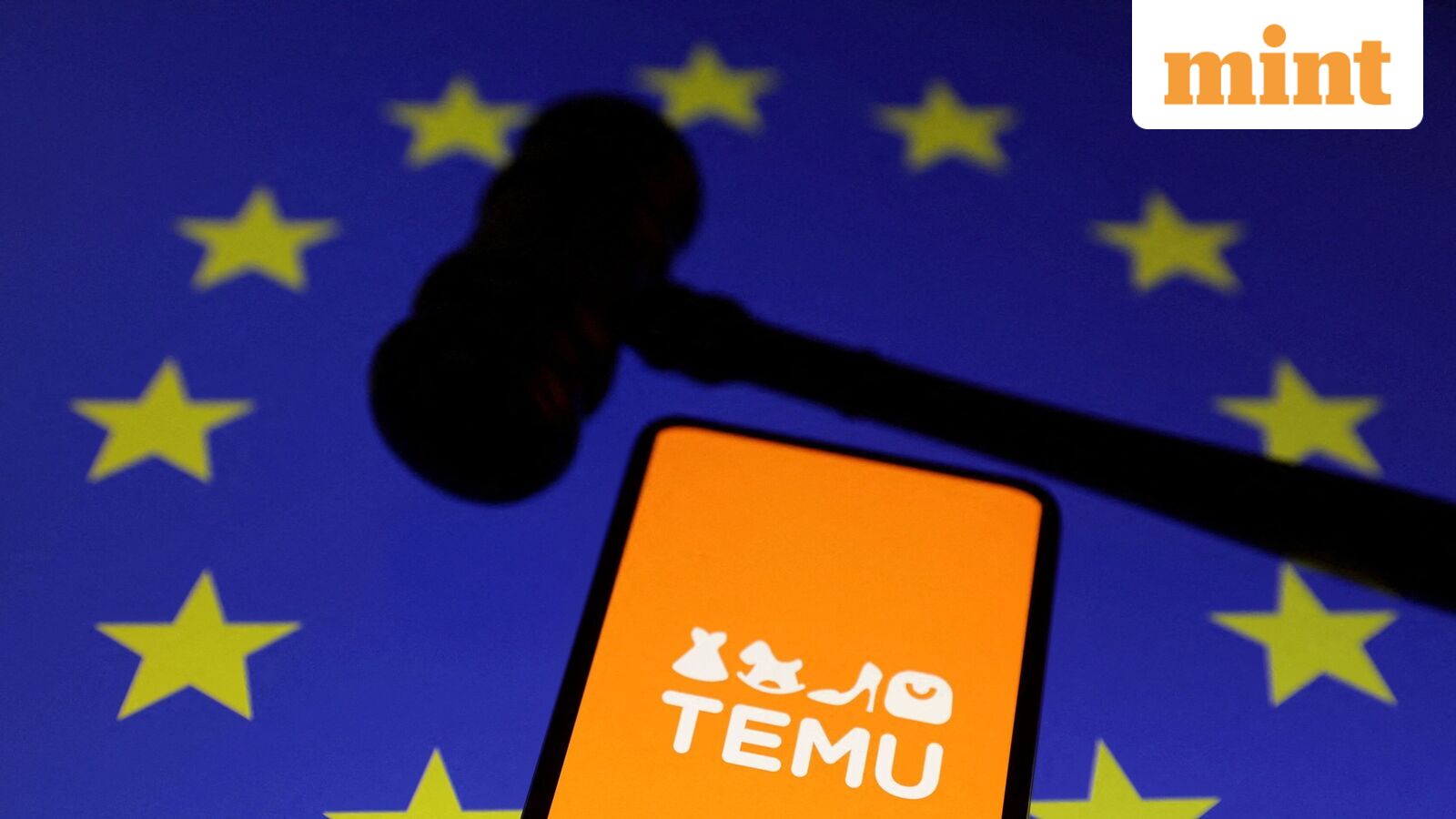
The European Union fined Temu €200 million ($232 million) on Thursday for violating the Digital Services Act (DSA). The penalty, the second since the DSA took effect three years ago, follows an investigation that found the Chinese e-commerce platform failed to protect consumers from illegal products such as hazardous toys and unsafe electronics.
The fine targets PDD Holdings Inc. (NASDAQ: PDD), Temu’s parent company, which also operates the Chinese platform Pinduoduo. With 92 million users across the EU, Temu now faces a regulatory deadline that could quickly escalate into daily, weekly, or monthly penalties if Brussels deems its response insufficient.
How the DSA Exposed Temu’s Risk Assessment Failures
EU investigators conducted a “mystery shopping exercise” that turned up multiple “non-compliant” products on Temu’s platform. The findings centered on two categories:
- Baby toys – a very high percentage posed safety risks, either from chemicals exceeding safety limits or from small parts that could detach and become a suffocation hazard.
- Electronic device chargers – many failed basic safety tests.
The European Commission determined that Temu failed to “identify, analyse and assess the systemic risks involved with illegal goods being sold on its platform and the resulting harm to European consumers.” The regulator described the failure to carry out proper risk assessments as a “particularly serious breach” of the digital rules.
The Commission’s Stance on the Risk Report
The Commission’s detailed criticism of Temu’s risk assessment suggests regulators viewed it as a box-ticking exercise rather than a substantive evaluation. The DSA requires platforms to actively analyse how their services could amplify the spread of illegal goods or harmful content and then take concrete steps to mitigate those risks.
Temu’s Response: Dated Evidence
Temu said it disagreed with the decision and considered the fine “disproportionate.” The company argued that the ruling relates to the Commission’s first DSA evaluation in 2024 “and does not reflect the current state of our systems.”
“Temu engaged constructively with the Commission throughout the process and has since taken further steps to strengthen risk assessment, platform governance, and user protection,” the company said in a statement.
The gap between the Commission’s evidence and Temu’s current compliance posture will be tested over the coming months. The company has until the end of August to submit an action plan acceptable to the regulator.
PDD’s Exposure: The Cost of EU Compliance
PDD Holdings derives a growing share of revenue from its international Temu business, which uses a direct-from-seller shipping model to offer ultra-low-cost clothing, household items, and electronics. That model, central to Temu’s rapid EU expansion, is now under direct regulatory fire.
The €200 million fine is substantial but not existential for a company with billions in annual revenue. The real risk lies in the potential for recurring penalties. If Temu fails to deliver an action plan that satisfies the Commission by August, the EU can impose additional fines on a daily, weekly, or monthly basis until compliance is achieved.
AlphaScala’s PDD Score: Mixed
PDD Holdings currently carries an Alpha Score of 52/100, rated Mixed, in the Consumer Discretionary sector. This places the stock in a neutral zone – not clearly signaling a buy or sell but reflecting material uncertainty. The regulatory overhang from the EU fine is now a new weight on that score, though the company’s core China business (Pinduoduo) remains insulated from the EU action.
For full data, see the PDD stock page.
DSA Precedent: The X Fine and What It Means for Temu
The Temu fine is the second DSA penalty the EU has issued. In December 2024, the Commission fined X (formerly Twitter) €120 million ($140 million) for three breaches of DSA transparency requirements, specifically around X’s blue checkmark system.
| Platform | Fine Amount | Year | Main Violation |
|---|
| X | €120 million | 2024 | Deceptive design practices with checkmarks |
| Temu | €200 million | 2025 | Failure to assess risks of illegal goods |
The EU’s escalating penalty amounts signal a rising compliance cost for platforms operating in the bloc. The Temu fine is 67% larger than the X fine, partly reflecting the scale of the violation (consumer safety as opposed to transparency) and the higher user count (92 million vs. X’s EU user base).
Political Risk: Will the US-EU Tech Clash Spill Over?
The X fine drew criticism from the Trump administration, which accused Brussels of targeting US tech companies. Temu is Chinese-owned, so the political dynamics differ. The Commission is unlikely to face the same retaliatory pressure from the US. However, the DSA precedent could embolden EU regulators to impose even larger fines on US platforms in the future.
Timeline: The August Deadline and Potential Escalation
Temu’s action plan is due by August 31, 2025. If the Commission accepts the plan, the fine stands, and Temu will operate under heightened scrutiny. If the plan is rejected or implementation lags:
- The EU can impose periodic penalty payments (daily, weekly, or monthly) until compliance is reached.
- The Commission could also issue additional fines for any new infringements found during ongoing monitoring.
The mystery shopping exercise that uncovered the non-compliant products is likely to become a routine tool for EU enforcement against all DSA-regulated platforms. Temu’s competitors – including SHEIN and other direct-from-China sellers – should expect similar scrutiny.
For a broader view of regulatory risk across tech stocks, see our stock market analysis.
What Would Reduce the Risk for PDD?
A clean action plan approved by the Commission before the deadline, combined with evidence of systematic improvements in product screening and seller verification, could contain the damage. Traders would watch for:
- Public acceptance of the plan by EU regulators (a press release or statement from Virkkunen).
- Third-party audits of Temu’s product safety controls.
- Reduction in complaint volume reported by EU consumer protection agencies.
What Would Make It Worse
- Missed deadline or submission of a plan that regulators reject.
- Additional DSA investigations – the current fine covers risk assessment failures. Separate probes into algorithm, advertising, or data compliance could follow.
- Class-action or consumer-group lawsuits in EU member states based on the Commission’s findings.
The DSA allows national regulators to impose their own penalties on top of the EU fine. Germany’s or France’s consumer protection authorities could open parallel cases, potentially leading to cumulative sanctions.
PDD’s Broader Regulatory Landscape
The EU fine lands amid other regulatory pressures on Temu. In the US, the De Minimis Rule under Section 321 of the Tariff Act allows low-value packages to enter duty-free – a loophole that has fueled Temu’s growth. US lawmakers have proposed closing that loophole, which would directly raise Temu’s cost structure.
For a related analysis of regulatory compliance costs, see our article on EU’s $232M Temu Fine Risks Cascading Compliance Costs for PDD.
In the UK, Temu may face similar scrutiny under the Online Safety Act, which shares DNA with the DSA. A coordinated Western regulatory push on Chinese e-commerce platforms is becoming a tangible risk for PDD shareholders.
The fine is a test case for how aggressively the EU will enforce the DSA against non-European platforms with large user bases. Temu’s 92 million EU users make it one of the largest DSA-regulated companies. The message to PDD and other platform operators is clear: risk assessments must be substantive, and regulators are willing to use mystery shopping to verify claims.
For traders assessing PDD’s risk-reward, the August deadline is the next concrete inflection point. Until then, the stock trades under the cloud of potential recurring penalties and further regulatory escalation.