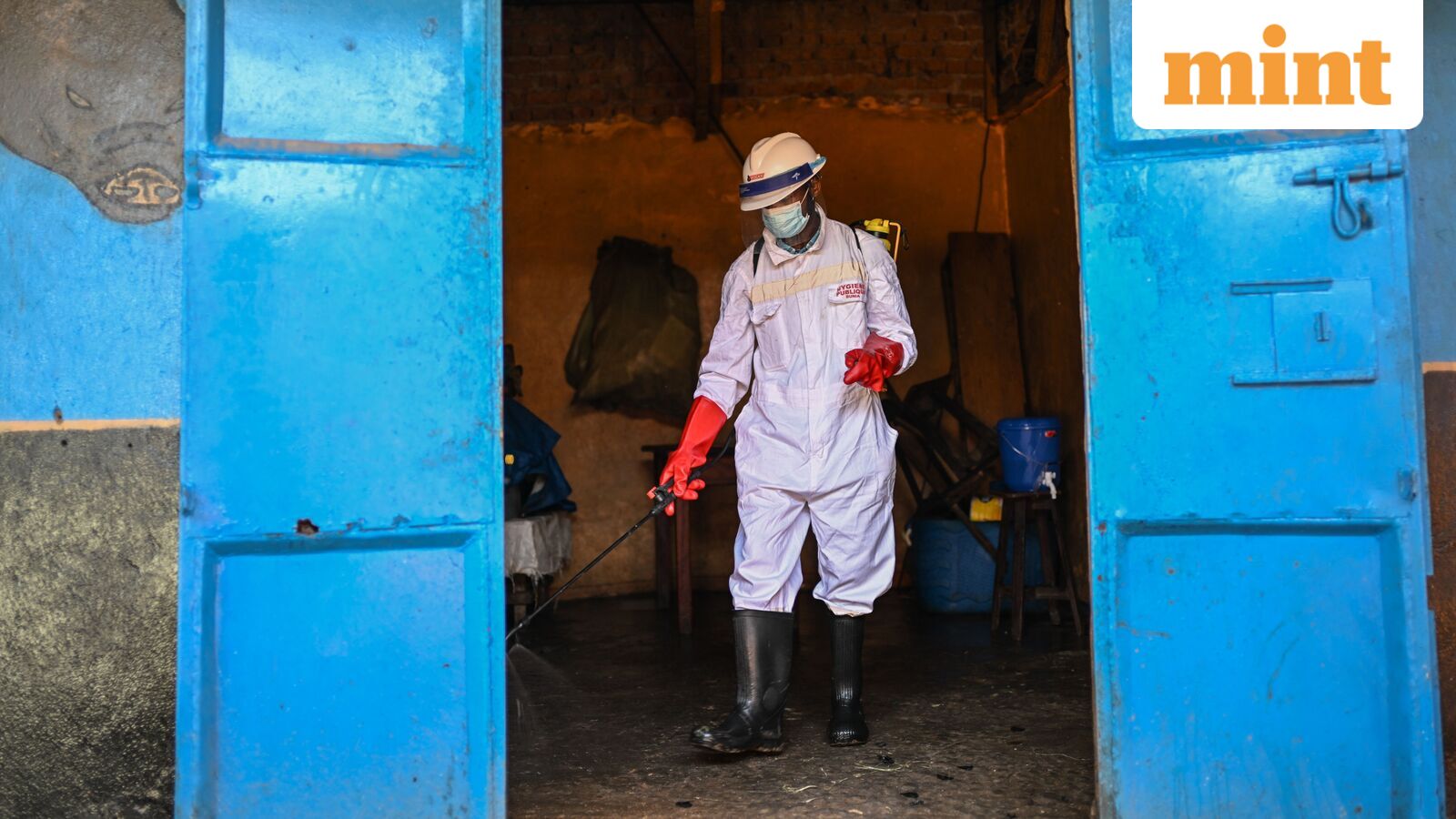
The Ebola outbreak in the Democratic Republic of Congo is spreading faster than responders can track. The Africa Centres for Disease Control and Prevention warned on Saturday that 10 additional African countries are at risk. For traders, the gap between official containment messaging and on-the-ground reality is the key risk to watch in gold mining, airline, and pharmaceutical sectors.
Contact Tracing Gap: Only 21% of Monitored Contacts Reached
Authorities in the DRC reported 83 confirmed infections, 746 suspected cases, and 1,603 identified contacts as of May 21. That same day, health workers managed to follow up with only 342 contacts – about 21% of the total under monitoring. The Bundibugyo strain of Ebola, for which no approved vaccine or treatment exists, has now spread across three provinces. Officials confirmed a case this week near Bukavu, a major city on the Rwanda border, and two cases earlier in Uganda.
The World Health Organization declared the outbreak a Public Health Emergency of International Concern on Sunday. The risk inside Congo is rated "very high", with neighboring countries facing a "high" regional threat.
| Metric | Value (May 21) | Implication |
|---|
| Confirmed cases | 83 | Official baseline |
| Suspected cases | 746 | Potential 9× multiplier |
| Identified contacts | 1,603 | 21% follow-up rate |
| Countries at risk | 10 (listed by Africa CDC) | Cross-border spread potential |
Exposed Mining Operations in Ituri and South Kivu
Gold Mining Hub Mongbwalu and Surrounding Zones
Mongbwalu, the gold-mining hub initially viewed as the epicenter, remains the largest suspected cluster. Confirmed infections are increasingly concentrated in surrounding health zones including Rwampara and Bunia (population about 700,000). Nyankunde, home to a major referral hospital serving 200,000 people, has 11 confirmed cases and 340 contacts under follow-up. The DRC is a significant gold producer. Disruption to mining operations – through worker illness, quarantines, or transport shutdowns – would affect supply chains for companies such as Barrick Gold and AngloGold Ashanti.
- Direct exposure: Artisanal mining zones near Mongbwalu and Bunia.
- Second-order exposure: Logistical bottlenecks for gold exports via Uganda or Rwanda.
- Risk to monitor: Mine closure announcements or workforce reduction orders.
Air Travel and US Travel Ban Extended to Green Card Holders
Uganda has tightened border controls and suspended passenger transport links with Congo after reporting five confirmed cases. Rwanda denies entry to most foreign travelers who recently visited Congo and mandates quarantine for returning residents. The US CDC expanded public-health entry screenings to Hartsfield-Jackson Atlanta International Airport and Washington Dulles International Airport. The agency plans to temporarily bar lawful permanent residents (green-card holders) who have traveled to Ebola-affected areas from reentering the country.
The Red Cross reported that three volunteers died after contracting Ebola on duty in Ituri province in March. The International Federation of Red Cross and Red Crescent Societies stated:
The Trump administration has also paused deportation flights to the DRC, according to Politico. At least 37 people have been moved to affected countries through third-country removals in recent months, and one woman is reportedly stuck in Kinshasa after a judge ordered her return.
Travel restrictions on this scale reduce passenger demand for airlines with African routes, including Delta Air Lines, United Airlines, and European carriers. The travel ban extension to green-card holders adds legal and logistical uncertainty for companies moving employees into or out of the region.
Vaccine and Diagnostics Gap for Bundibugyo Strain
Unlike the Zaire strain targeted by Merck's Ervebo vaccine and Johnson & Johnson's two-dose regimen, the Bundibugyo strain has no approved vaccine or treatment. That makes the current outbreak a potential catalyst for accelerated development of broader-spectrum Ebola therapeutics. Companies with candidate vaccines or monoclonal antibodies in early trials could see increased attention from governments and global health organizations. Diagnostics firms providing rapid testing kits stand to benefit from expanded screening at borders and airports.
- Merck (MRK): Ervebo approved for Zaire strain; no cross-protection data for Bundibugyo.
- Johnson & Johnson (JNJ): Two-dose regimen for Zaire; separate program for Bundibugyo is preclinical.
- Rapid diagnostics: Cepheid, Abbott – capable of differentiating strains.
10 African Countries at Risk: Timeline and Confirmation Markers
The Africa CDC named Angola, Burundi, Central African Republic, Republic of Congo, Ethiopia, Kenya, Rwanda, South Sudan, Tanzania, and Zambia as at-risk countries. Any confirmed case in a new country would escalate the risk perception and likely trigger additional travel restrictions, further hurting air travel demand.
What would reduce the risk:
- A sustained improvement in contact tracing to above 50%.
- Deployment of a rapid diagnostic that can distinguish Bundibugyo strain in field settings.
- Containment of all confirmed cases within existing health zones in Ituri province.
What would make it worse:
- A confirmed case in Goma (population 860,000) or Bukavu – both are transport hubs and urban centers.
- Spread to a neighboring country that had not yet reported cases, especially Kenya or Ethiopia.
- Additional deaths of health workers or Red Cross volunteers in high-profile incidents.
Broader Emerging Market Read-Through
The outbreak adds a negative tail risk for emerging market ETFs holding significant exposure to frontier African economies, such as the iShares MSCI Frontier 100 ETF (FM). Frontier market equity flows are sensitive to health scares; the 2014–2016 West Africa Ebola outbreak weighed on West African markets even after containment. The difference this time is the lack of an approved vaccine for the circulating strain.
AlphaScala rating for ICE (Intercontinental Exchange): The exchange operator holds an Alpha Score of 47/100 (Mixed). While ICE is not directly exposed to the outbreak, volatility-linked products such as VIX futures could see increased volume if travel restrictions widen. Monitoring ICE's options and futures activity may provide a barometer for institutional hedging against geopolitical risk.
Traders should watch for mining company advisories about non-essential travel to affected zones, airline schedule changes to Uganda and Rwanda, and US CDC updates on expanded screening. The combination of a low contact-tracing rate and a vaccine gap makes this an epidemic that markets cannot yet price with confidence.