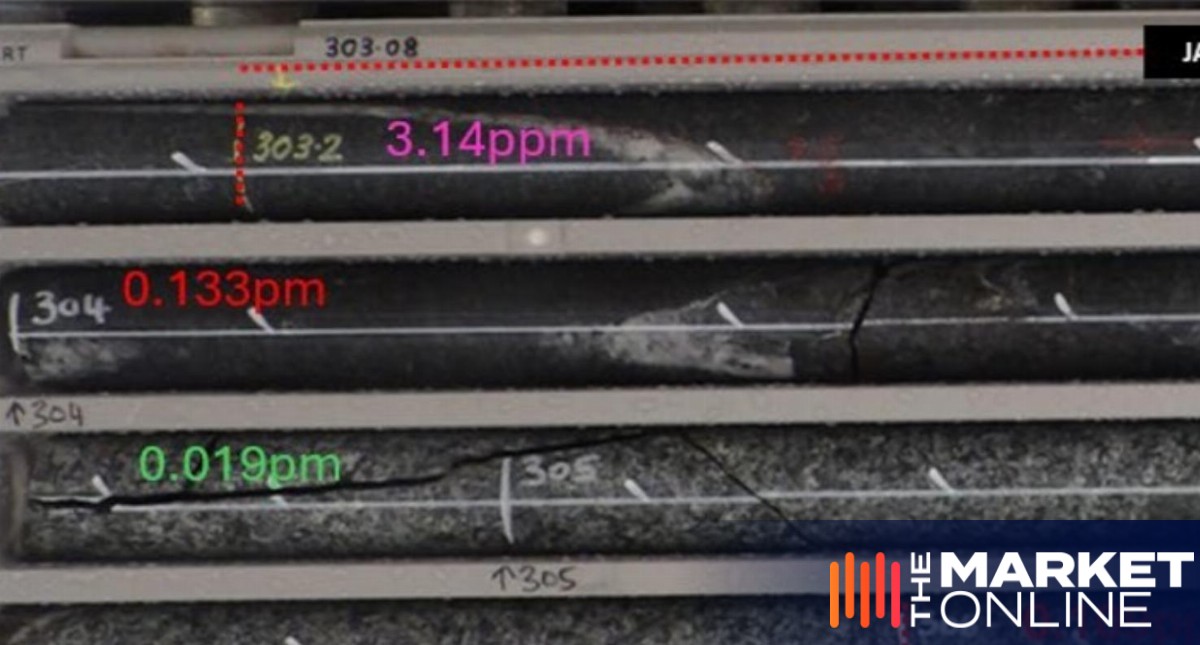
Dynamic Metals (ASX: DYM) has confirmed the extension of gold mineralisation to a depth of 300 meters at its Cognac West prospect, located within the Widgiemooltha project in Western Australia. The results, derived from the first two holes of a four-hole diamond drilling program totaling 1,400 meters, validate the company's hypothesis that the gold system at the Anomaly B target persists significantly deeper than previous shallow exploration had indicated. While the initial grades reported are described as moderate, the structural confirmation of a deeper system marks a shift in the geological understanding of the project.
Structural Continuity and Depth Potential
The primary significance of these results lies in the vertical extent of the mineralised system. Prior exploration at Cognac West, consisting of two phases of reverse circulation (RC) drilling throughout 2025, was largely confined to near-surface targets. Those earlier programs successfully identified Anomaly B as a priority zone, yielding intercepts such as 8.0 meters at 2.87 grams per tonne (g/t) gold, which included a higher-grade interval of 4.0 meters at 5.37 g/t. By pushing the drill bit to 300 meters, Dynamic Metals is now testing geological horizons comparable to those exploited at established regional operations like the Higginsville and Junction gold mines.
Managing Director Karen Wellman noted that the diamond drilling was specifically designed to capture detailed geological, structural, and alteration data. This information is critical for determining the controls on mineralisation and assessing whether the system maintains continuity at depth. The transition from RC to diamond core drilling allows the technical team to move beyond simple grade detection and toward a structural model that could support a more substantial, vertically extensive resource. For investors, this confirms that the project is no longer just a shallow geochemical anomaly but a system with depth potential.
Regional Context and Exploration Strategy
The Widgiemooltha district is a well-understood gold province, and the ability to correlate Cognac West’s depth profile with nearby producing mines provides a benchmark for future exploration success. The company’s strategy has been systematic, moving from soil geochemistry and rock chip sampling to RC drilling, and finally to the current diamond program. This methodical approach is intended to de-risk the project by ensuring that deeper drilling is targeted at zones where the geological framework is already well-defined.
Market participants should note that the current valuation of Dynamic Metals, with a market capitalization of $30.17 million and a share price of 57.5 cents, reflects an early-stage exploration profile. The transition to deeper drilling increases the capital intensity of the exploration program, but it also increases the potential for identifying a larger, more economic mineralised body. Investors looking for further catalysts should monitor future assay results from the remaining two holes of the diamond program, which will provide the final data set for this phase of exploration.
Risk and Execution Factors
While the confirmation of gold at 300 meters is an encouraging technical milestone, the economic viability of the project remains unproven. The distinction between geological mineralisation and an economic ore body is significant in the junior mining sector. The next phase of work will likely focus on infill drilling to establish the continuity of these deeper intercepts. If subsequent drill holes fail to demonstrate grade consistency or if the structural complexity of the deposit increases, the market may discount the initial excitement surrounding the depth extension.
For those tracking broader sector trends, the performance of junior explorers in Western Australia often correlates with gold price volatility and regional consolidation activity. While Dynamic Metals is focused on its own internal milestones, the broader commodities analysis landscape remains a key driver for sentiment in the sector. The company's ability to maintain its current trajectory will depend on its success in converting these structural findings into a defined resource estimate in future reporting cycles.