Stocks● Neutral
Dream Sports Shuts Wealthtech Arm: The Pivot That Didn't Work
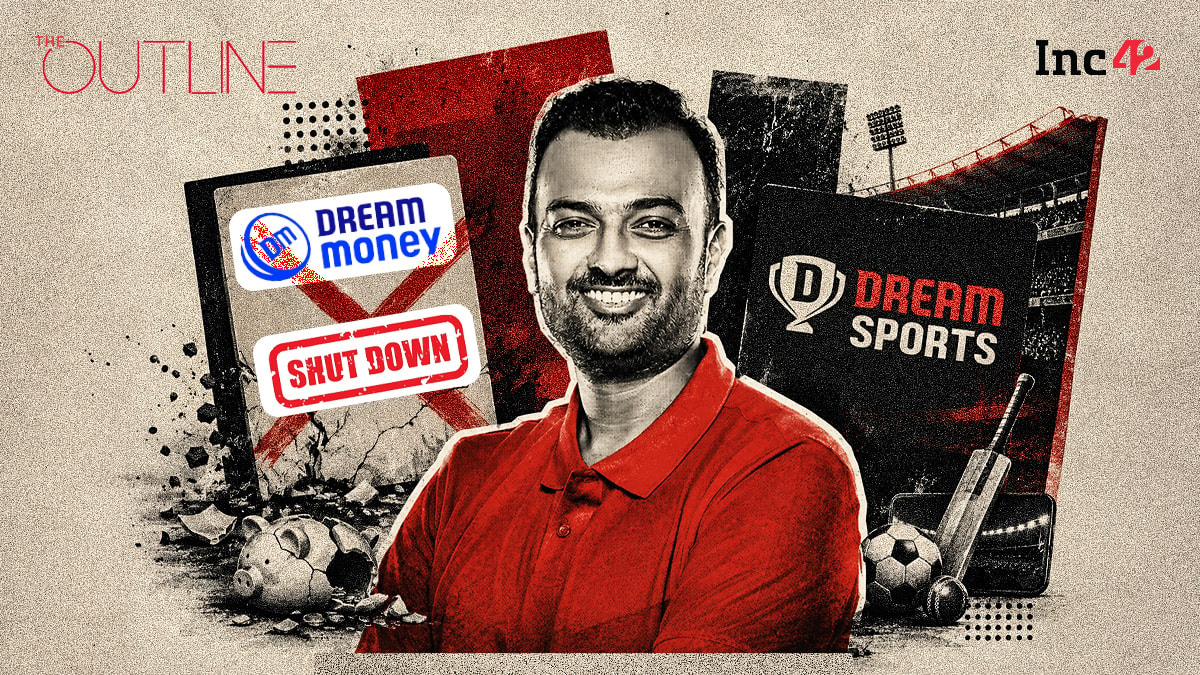
Dream Sports is shutting Dream Money after a failed pivot from fantasy cricket to wealthtech. A steep trust gap and regulatory overhang sealed the fate. July 30 deadline for investors.
Continue with
Dream Sports is pulling the plug on Dream Money, its wealthtech foray, effective July 30. Customers have been told their investments are safe because holdings sit with partner institutions. Digital gold can be redeemed through July 15 before holdings move to Augmont. Mutual funds must be redeemed by July 30 or will be held directly with asset management companies. Fixed deposits remain with partner banks. Loan servicing has already stopped. New registrations, fresh investments and new loan applications are suspended. Systematic investment plans will cancel automatically on July 7.
The fintech pivot was Dream Sports' most ambitious diversification play. By early 2025, senior leadership worried about the company's dependence on fantasy cricket, which generated nearly all revenue and concentrated regulatory, tax and legal risk into one business. As GST scrutiny intensified and retrospective taxation uncertainty mounted, internal conversations turned toward new revenue streams. Wealthtech seemed logical. Dream Sports had one of India's largest internet user bases, especially in tier II and III cities where financial penetration is low. Users already made online payments and trusted the platform with money. On paper, cross-selling financial products made sense, a senior executive at a rival wealthtech platform said.
The gap between gaming and wealth management proved too wide. Fantasy sports expertise runs on prediction engines, engagement loops and gamification. Financial services run on trust. A consumer does not download an investment app just because it has millions of users on another platform, the executive added. That requires a different kind of credibility, one Dream Sports never established with its user base.