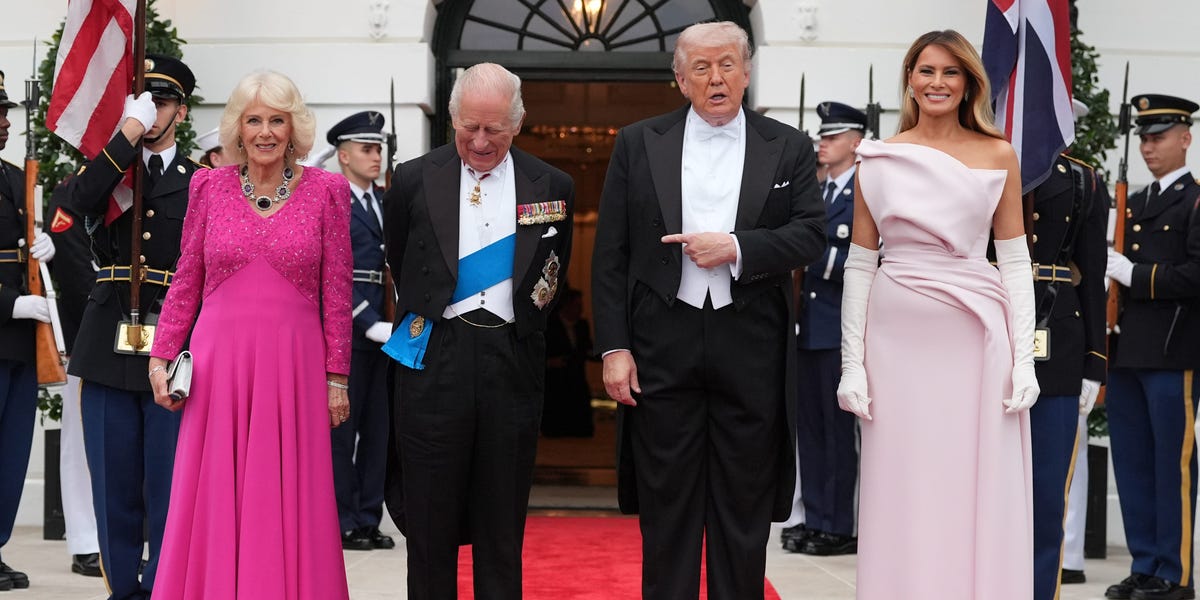
Diplomatic Signaling Through Sartorial Alignment

The deliberate coordination of attire between Melania Trump and Queen Camilla during the recent royal visit to the White House signals a shift in how diplomatic optics are managed at the highest levels of state interaction.
Alpha Score of 46 reflects weak overall profile with strong momentum, poor value, poor quality, moderate sentiment.
Alpha Score of 47 reflects weak overall profile with moderate momentum, poor value, moderate quality. Based on 3 of 4 signals — score is capped at 90 until remaining data ingests.
Alpha Score of 46 reflects weak overall profile with strong momentum, poor value, poor quality, moderate sentiment.
The deliberate coordination of attire between Melania Trump and Queen Camilla during the recent royal visit to the White House signals a shift in how diplomatic optics are managed at the highest levels of state interaction. While observers often focus on the substance of policy discussions, the visual synchronization of high-profile figures serves as a non-verbal indicator of alignment between the two administrations. This practice of sartorial diplomacy is rarely coincidental, as it requires significant logistical planning between the offices of the First Lady and the royal household.
Strategic Visual Coordination
The choice to align color palettes and silhouettes during formal state events functions as a soft-power tool. By mirroring the aesthetic tone of a visiting dignitary, the host administration projects a unified front, effectively minimizing the visual friction that can arise during complex international summits. This level of preparation suggests that the broader state visit was managed with a high degree of attention to detail, aimed at reinforcing the stability of the bilateral relationship.
Such coordination is a standard component of modern statecraft, where the objective is to project cohesion to both domestic and international audiences. When high-level officials synchronize their public presentation, it serves to reinforce the narrative of a seamless partnership. This visual consistency is often used to signal that the underlying diplomatic channels are functioning as intended, regardless of the specific policy hurdles being addressed behind closed doors.
Impact on Diplomatic Optics
The effectiveness of these visual cues relies on the public perception of the individuals involved. In the context of a state visit, the optics of the event are just as critical as the formal meetings. The deliberate nature of the matching outfits highlights a shift toward highly curated public appearances, where every element of the presentation is designed to support the broader diplomatic agenda.
This approach to public image management reflects a broader trend in stock market analysis where institutional narratives are increasingly driven by carefully managed visual and verbal signals. Just as corporations use branding to influence investor sentiment, state actors use the aesthetics of diplomacy to influence public and geopolitical confidence. The success of this strategy is measured by the absence of negative visual noise, allowing the focus to remain on the intended message of cooperation.
Future Diplomatic Markers
The next concrete marker for this diplomatic relationship will be the follow-up readout from the formal policy meetings conducted during the visit. While the sartorial choices provided a visual baseline for the event, the long-term impact on the bilateral relationship will depend on the specific commitments made regarding trade, security, and international policy. Analysts will look for subsequent joint statements or policy shifts that confirm whether the visual alignment observed at the White House translates into substantive cooperation on the global stage. The upcoming release of official transcripts from the private sessions will serve as the definitive test of the current diplomatic trajectory.
AI-drafted from named sources and checked against AlphaScala publishing rules before release. Direct quotes must match source text, low-information tables are removed, and thinner or higher-risk stories can be held for manual review.