Delta CEO: Higher Airfares Lasting, Profit Goal in Reach
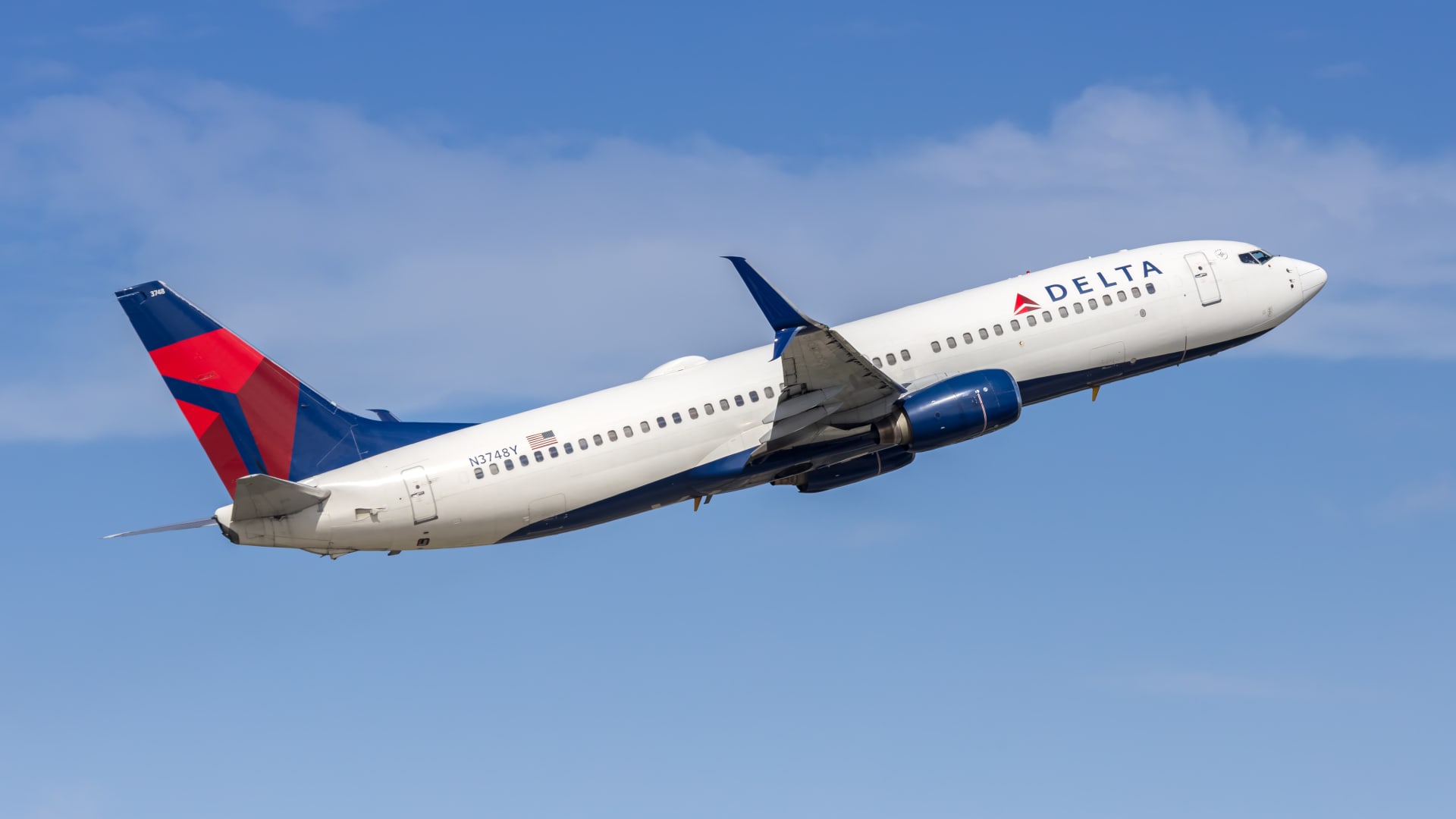
Delta CEO Ed Bastian said higher airfares are sustainable; Q3 EPS forecast of $2.00-$2.50 beats estimates. Full-year guidance reaffirmed. Premium sales top main cabin.
Alpha Score of 50 reflects moderate overall profile with moderate momentum, weak value, weak quality, moderate sentiment.
Delta Air Lines CEO Ed Bastian said the carrier’s original profit goal is within reach this year as the airline passes higher fuel bills along to customers and expects that pricing power to endure even as oil prices fall from multi-year highs.
“I think it’s sustainable,” Bastian told CNBC in an interview. He said fares will likely stay strong thanks to robust demand, a wider range of seat options and a more disciplined industry that has learned from past cycles and is unlikely to add capacity as soon as fuel costs drop.
Delta forecast third-quarter earnings of $2.00 to $2.50 per share. Analysts had expected $2.02, according to LSEG consensus. Revenue in the July-through-September period is projected to rise in the mid-teens compared with 2025. For the full year, the carrier reaffirmed its January forecast of $6.50 to $7.50 a share.
Second-quarter net income fell 25% from a year earlier to $1.6 billion, or $2.44 a share. Operating revenue rose 19% to $19.76 billion. On an adjusted basis, excluding one-time items including third-party refinery sales, earnings came in at $1.03 billion, or $1.56 a share.
Premium seats are outpacing the main cabin. Delta’s first-class and other premium tickets generated $6.92 billion in revenue during the quarter, while the main cabin produced $6.85 billion. Corporate travel rose in the quarter, with aerospace and defense, banking and automotive sectors leading growth, the airline said in its earnings release.
Fuel costs remain the biggest swing factor. Bastian said Delta is currently passing about 60% of higher fuel bills through to customers, a share that should reach close to 100% this quarter. Revenue per available seat mile, a measure of pricing per seat flown, rose 17% from a year earlier. Cost per available seat mile climbed 21%. The carrier’s refinery in Trainer, Pennsylvania, was a bright spot, with revenue jumping 83% to $2.09 billion.
Bastian said World Cup demand was stronger than expected, including from inbound visitors to the United States. Carriers have pared growth plans and cut unprofitable flights after this year’s record run-up in fuel, pushing airfares up nearly 27% in May from a year earlier, according to federal data. Bastian said executives still have not passed the full fuel bill on to consumers but expect to do so by the end of the third quarter.
Drafted by a large language model from the source reporting linked above, then screened by automated publishing checks. It is not read by a journalist before publication. Some articles cite our Alpha Score. Verify prices and figures against the original source. Educational coverage, not personalized advice.