Mattress Firm has converted roughly a quarter of its deliveries to contactless drop-offs, a logistics overhaul that solved a 45-minute execution gap and created a new free option against a $109.99 in-home baseline.
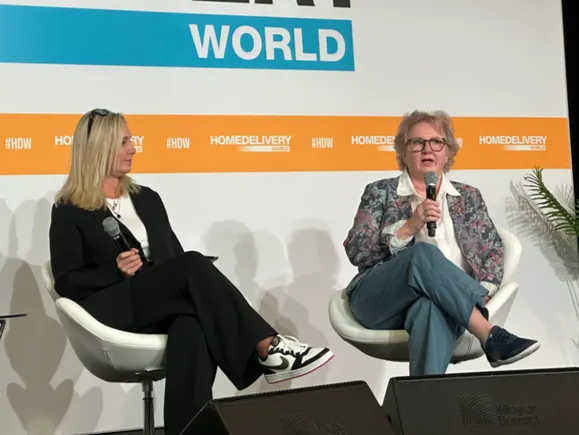
The chain's logistics team rolled out the method after a test in Charlotte succeeded, then scaled it nationally in one month. The result: about 25% of deliveries are now contactless, according to Todd Warner, Mattress Firm senior director of logistics and care, speaking at the Home Delivery World 2026 conference in Nashville.
Why the old threshold model broke
Mattress Firm previously offered a "threshold" delivery where drivers placed the mattress just inside the front door. The expected time was 15 minutes. In practice, customers often persuaded drivers to do more.
"In some instances it could take 45 minutes if the customers convinced drivers to also set up the mattress for them as well," Maryjane Fanizzi, vice president of logistics, said in a separate conference session.
The knock-on effect was systematic. A driver delayed by 30 minutes on one stop pushed the next customer's window, compounding across the route. Mattress Firm needed a model that decoupled delivery time from customer negotiation.
The Amazon-inspired fix
The team looked at how Amazon handles large-item drop-offs. The concept was straightforward: a driver places the mattress at the front door, takes a photo, and leaves. Fanizzi described it as "kind of like a drop and run."
A test in the Charlotte region returned what Fanizzi called "an overwhelming success." Customer feedback was direct and positive: "I don't have to wait for it. You didn't ring my doorbell. I don't have to sign for it. I was in a meeting and you guys just came, set it down, took your pictures, and you left."
Scaling created internal friction
After the Charlotte proof-of-concept, Mattress Firm leadership gave the logistics team one month to roll out contactless delivery across the entire U.S. The timeline was aggressive, and it exposed a resistance point inside the company.
"Even though we proved it worked, they failed to really grasp onto it," Fanizzi said. The sales and operations teams worried about theft. The logistics team countered with a practical argument: a 200-to-300-pound mattress sitting on a front porch is not a high-theft target.
Customer satisfaction dipped then recovered
Initial customer satisfaction scores for contactless deliveries ran below the in-home white-glove standard. The issue was not the delivery itself but the sales-floor communication. Customers were told "free delivery" without being told that free meant no entry and no setup.
"The poor delivery guys are standing there and they're going, 'No, we're not supposed to do that,'" Fanizzi said. The mismatch created frustration on both sides of the door.
Mattress Firm adjusted the sales script: free means contactless, with no home entry involved. Once the messaging was corrected, satisfaction scores normalized. "It's normalized back out, which means people have accepted it finally, and they're selling it correctly," Fanizzi said.
What the numbers show
The logistics math
The operational gain is visible in the time comparison. A 15-minute threshold delivery that stretched to 45 minutes under customer pressure is replaced by a contactless stop that takes under five minutes. The driver does not ring the doorbell, does not wait for a signature, and does not enter the home.
Driver productivity shift
A route of 10 threshold deliveries at 30 minutes each (the mid-point of the 15-to-45-minute range) totals 300 minutes of stop time. The same route under contactless delivery at 5 minutes per stop totals 50 minutes. The freed 250 minutes per route can be reallocated to more stops or shorter driver shifts.
Practical rule: a 25% contactless share on a route of 20 stops saves about 125 minutes of driver time per day, assuming a 20-minute time savings per contactless stop versus the average threshold stop.
What this means for the broader delivery sector
Mattress Firm's experience shows that the barrier to contactless adoption is not customer demand but internal sales alignment. The Charlotte test proved customer acceptance. The national rollout stumbled because the sales team did not update the offer language.
Key insight: a logistics innovation that changes the customer interaction model requires the same level of retraining as a pricing change. Sales teams selling "free delivery" without defining "contactless" created a service gap that operations had to absorb.
For retailers considering a similar shift, the sequence matters. Test the delivery model first. Then build the sales script and the customer-facing messaging before scaling. Mattress Firm ran the test and the messaging update in reverse order, which created a temporary satisfaction dip.
Sector read-through
Companies in furniture, appliances, and bulky goods retail face the same tension between white-glove delivery and operational efficiency. The Mattress Firm case suggests that a 25% contactless share is achievable without a major revenue hit, provided the customer expects no in-home service.
Risk to watch: if a competitor offers free threshold or in-home delivery as a standard option, the contactless model could lose share among customers who value setup over speed. Mattress Firm charges at least $109.99 for in-home service, which creates a clear price anchor.
The decision point for logistics teams
The next question is whether contactless delivery can scale beyond 25% without cutting into total delivery volume. Mattress Firm's Warner said roughly a quarter of deliveries are now contactless, which implies three-quarters still choose the paid in-home option.
A higher contactless share would require one of two things: a lower price point for in-home service to compete with free, or a market segment that actively prefers drop-and-run over setup. The Charlotte test proved the segment exists. The question is its ceiling.
What would confirm the thesis: contactless share rising quarter over quarter without a decline in overall delivery satisfaction scores, as happened after the sales script was corrected.
What would weaken it: a return to the 45-minute threshold problem at any scale, which would suggest the contactless model cannibalizes in-home demand without solving the driver time issue.
Bottom line for traders: Mattress Firm's logistics shift is a cost-side story. Free contactless delivery lowers the variable cost per stop by eliminating the driver's in-home time. If the share grows from 25% to 35%, the margin impact across a national delivery network is material. If the share stalls, the network gains a ceiling and the cost advantage remains capped at the current level.
See also: Amazon Invested €17B in UK, Plans €46B Through 2027 for how large retailers approach delivery infrastructure spending.