Stocks● Neutral
Dalmoros Fresh Italian Opens First Train Station Location
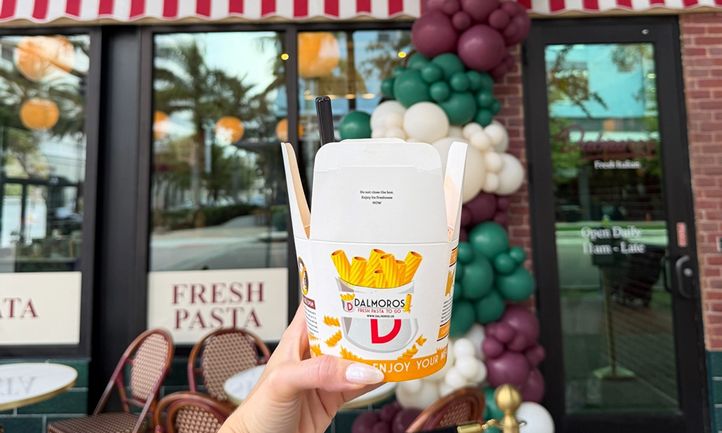
Dalmoros Fresh Italian opens inside Boston's South Station on July 12, testing whether high-volume fresh pasta can succeed in a commuter hub. Expansion into five more cities is planned.
Continue with
Dalmoros Fresh Italian opens its first train station location at Boston's South Station on Friday, July 12, 2026. The move shifts the "build-your-own" fresh pasta concept from tourist-heavy retail spaces into a commuter environment where speed and packaging matter as much as taste. The location at 700 Atlantic Ave, Suite 112, will operate daily from 6:30 am to 10:00 pm, serving breakfast and coffee for the first time in the brand's history.
Founder David Caruso described the opening as a major milestone. The South Station debut tests whether Dalmoros can thrive in transit-oriented food service, a venue class that could unlock dozens of additional sites across the Northeast corridor and beyond.
Dalmoros Fresh Italian Enters Transit Hub Territory
South Station is the brand's first major transit hub. Existing locations sit in pedestrian-heavy destinations such as Faneuil Hall Marketplace in Boston, Downtown St. Petersburg, Armature Works – Tampa, Atlantic Avenue – Delray Beach, and The Mall at Millenia – Orlando. Those are spots where visitors linger and explore. Commuters behave differently. They arrive in concentrated waves, expect short wait times, and need food that travels well on a train.
South Station as the First Test
The station serves an estimated 150,000 daily commuters and travelers. Dalmoros will operate inside the historic hub at a location that requires careful queue management and a kitchen designed for throughput. The brand's on-site fresh pasta machine, which extrudes pasta in front of customers as a theatrical element, runs throughout the day. That same machine could become a bottleneck during the 8:00–9:00 am and 5:00–6:00 pm windows if staffing levels are not optimized for peak demand.
Breakfast and Coffee Menu Addition
Dalmoros introduced a breakfast and coffee menu specifically for South Station. No other location serves morning items. This addition targets early commuters and flattens demand across the day. It also raises the competitive overlap with Dunkin', which dominates the Boston commuter market, and with fast-casual chains such as Au Bon Pain and Panera. If the breakfast menu gains traction, it could become a standard feature for future transit locations, altering kitchen layouts and staffing schedules across the chain.
Build-Your-Own Pasta Model in a Commuter Environment
Dalmoros positions itself between fast food and full-service Italian. Customers choose a fresh pasta, a homemade sauce, and toppings from a line that the company says generates more than 1,000,000 unique combinations. Meals are made in less than five minutes and served in to-go boxes. The on-site pasta machine creates a "dinner and a show" experience that distinguishes Dalmoros from chains that use dried pasta.
Production Speed and Queue Management
The build-your-own model gives customers freedom. It also slows throughput compared to fixed-menu competitors such as Pret A Manger or Noodles & Company. Each order involves a customer making three choices before the meal is assembled. During peak hours, a single station may struggle to serve 15–20 customers every 15 minutes. Dalmoros will need parallel preparation lines or an express menu for commuters in a hurry. Breakfast items, which are simpler, may help reduce morning bottlenecks.
Menu Items Beyond Pasta
Beyond the core pasta meals, Dalmoros offers Paninos (Italian-style sandwiches with traditional meats and cheeses and a Dalmoros twist), salads, garlic bread sticks, meatballs, tiramisu, soft drinks, beer, wine, and gluten-friendly options. Bagged fresh pasta is sold for home cooking, tapping into a grocery-adjacent market without a separate storefront. The South Station location is the first to serve alcohol, requiring a separate license and compliance with MBTA rules.
Expansion Pipeline: Five Cities and Counting
Dalmoros currently operates six locations. Five are in Florida and two are in Massachusetts (Faneuil Hall and South Station). The company has announced plans to open in Philadelphia, New York City, Austin, San Antonio, and Washington, DC.