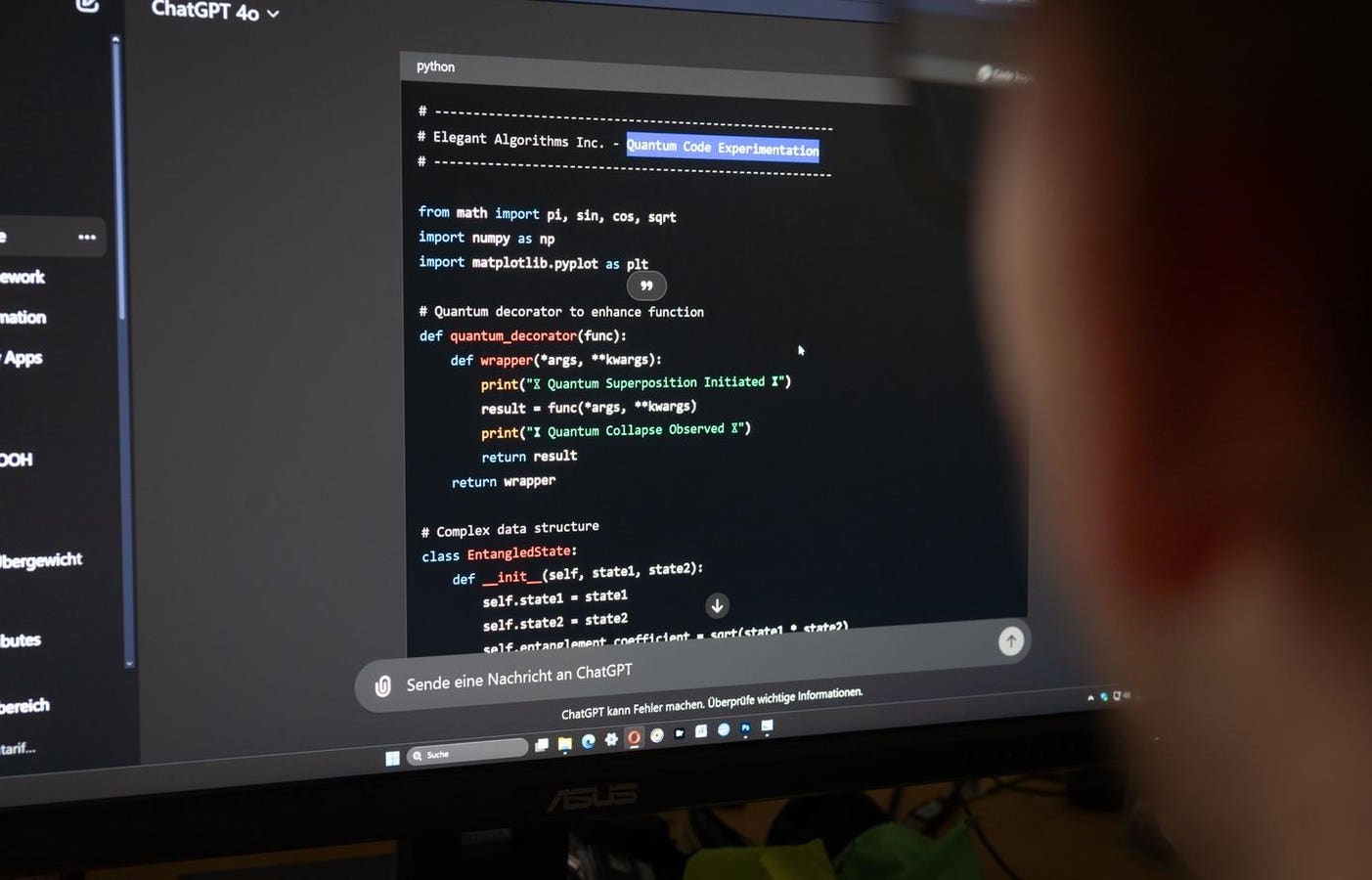
A four-year-old code editor was valued at $60 billion in June. In the same month, employment for young software developers logged its 33rd straight month of decline.
The market still needs code. Junior developers don't get to write it.
Anysphere, the company behind Cursor, closed an OpenAI Startup Fund seed round in 2023. Its revenue climbed from $100 million annualized in January 2025 past $2 billion by February 2026. Accel and Coatue priced the Series D at $29.3 billion that November. Five months later Nvidia, Andreessen Horowitz and Thrive Capital were negotiating a round above $50 billion when SpaceX preempted the process, agreeing to an all-stock deal worth roughly $60 billion. The price implies about 15 times Cursor's estimated $4 billion in annualized revenue for 2026. Slack needed five years to reach its first billion in revenue. Zoom took nine. Snowflake six. Cursor did it in roughly three.
The deal signals where venture capital now thinks software's value sits. Andrej Karpathy called vibe coding passé in February, arguing the frontier had already moved from single-line autocomplete to agents that plan, test and self-correct across entire codebases. If a model can generate the code, the scarce input left is judgment: what to build, how to specify it, how to review it, when to ship it.
Not every practitioner agrees. Developer Senko Rasic wrote a post that went viral arguing that dismissing coding as never having been the hard part insults programmers. He pointed to leetcode interviews, sustained high salaries and shelves of dense technical books as evidence the craft demanded scarce skill long before AI arrived. His conclusion was not that judgment matters and code does not, but that developers should resist outsourcing either their technical understanding or their taste to a model.
Much of the disagreement traces to definition. Coding can mean writing syntax that compiles, designing a system that survives years of feature creep, or knowing which undocumented corner of a codebase cannot be touched. Labor statistics do not distinguish between these. A 33-month decline in junior headcount is consistent with automation of the first skill and silent on whether the other two are still being taught or quietly disappearing from the pipeline.
Stanford's Digital Economy Lab, working with ADP payroll data covering millions of US workers, found employment in AI-exposed occupations for workers aged 22 to 25 fell 4.3 percent year over year in June, extending a contraction that began in October 2023 to 33 straight months. Indeed's Hiring Lab found US tech job postings down 36 percent from February 2020 levels, with entry-level postings dropping 25 percent year over year in 2024 alone. A 2024 SHRM survey found 70 percent of hiring managers already believe AI can do the work of an intern.
None of this looks like a labor market rejecting AI-written code. It looks like one that stopped paying humans to write code AI already produces for free, while still paying senior engineers to judge whether and when that code should ship.
SignalFire's 2026 State of Talent report found entry-level hiring down roughly 65 percent at major tech companies and 76 percent at early-stage startups compared with 2019, and warned that companies cutting junior pipelines are trading short-term margin for a leadership shortage within five to ten years. IBM is betting the other way, announcing plans to triple US entry-level hiring in 2026 even as competitors cut, arguing junior engineers are shifting from routine coding into customer-facing and judgment work AI cannot yet handle.
The Bureau of Labor Statistics still projects 15 percent growth in US software developer jobs between 2024 and 2034, roughly five times the average across all occupations. What has changed is the entry price and the job description. Andreessen Horowitz's 2026 outlook calls for investment in systems of coordination to manage multi-agent software work. Foundation Capital has staked a similar thesis on infrastructure for encoding how engineering decisions get made, not how code gets typed.
Capital is concentrating in two places: agentic tools that generate code at industrial scale, priced like Cursor at double-digit revenue multiples, and the coordination and review infrastructure that lets fewer senior engineers supervise more output. It is not concentrating in the training pipeline that produces the next generation of senior engineers. That is the gap SignalFire flags as a five-to-ten-year risk.
Founders building tools that manufacture judgment cheaply are building into the one part of this market nobody has priced correctly yet. The Cursor deal prices the code generation. The open question is who will price the judgment pipeline that replaces the junior developers the market no longer pays for.