Back to Markets
Stocks● Neutral

Credit Markets Pivot Toward Risk as Geopolitical Tensions Ease

Credit Markets Pivot Toward Risk as Geopolitical Tensions Ease
ASASAFEON

Credit investors are shifting into riskier debt as geopolitical tensions ease, signaling a move away from safe-haven assets and a broader recalibration of risk-adjusted returns.

AlphaScala Research Snapshot
Live stock context for companies directly referenced in this story
Consumer Cyclical
Alpha Score
47
Weak

Alpha Score of 47 reflects weak overall profile with moderate momentum, poor value, moderate quality. Based on 3 of 4 signals — score is capped at 90 until remaining data ingests.

Alpha Score
55
Moderate

Alpha Score of 55 reflects moderate overall profile with moderate momentum, moderate value, moderate quality. Based on 3 of 4 signals — score is capped at 90 until remaining data ingests.

Real Estate
Alpha Score
54
Weak

Alpha Score of 54 reflects moderate overall profile with moderate momentum, strong value, weak quality. Based on 3 of 4 signals — score is capped at 90 until remaining data ingests.

Alpha Score
40
Weak

Alpha Score of 40 reflects weak overall profile with strong momentum, poor value, poor quality. Based on 3 of 4 signals — score is capped at 90 until remaining data ingests.

This panel uses AlphaScala-native stock data, separate from the source wire linked above.

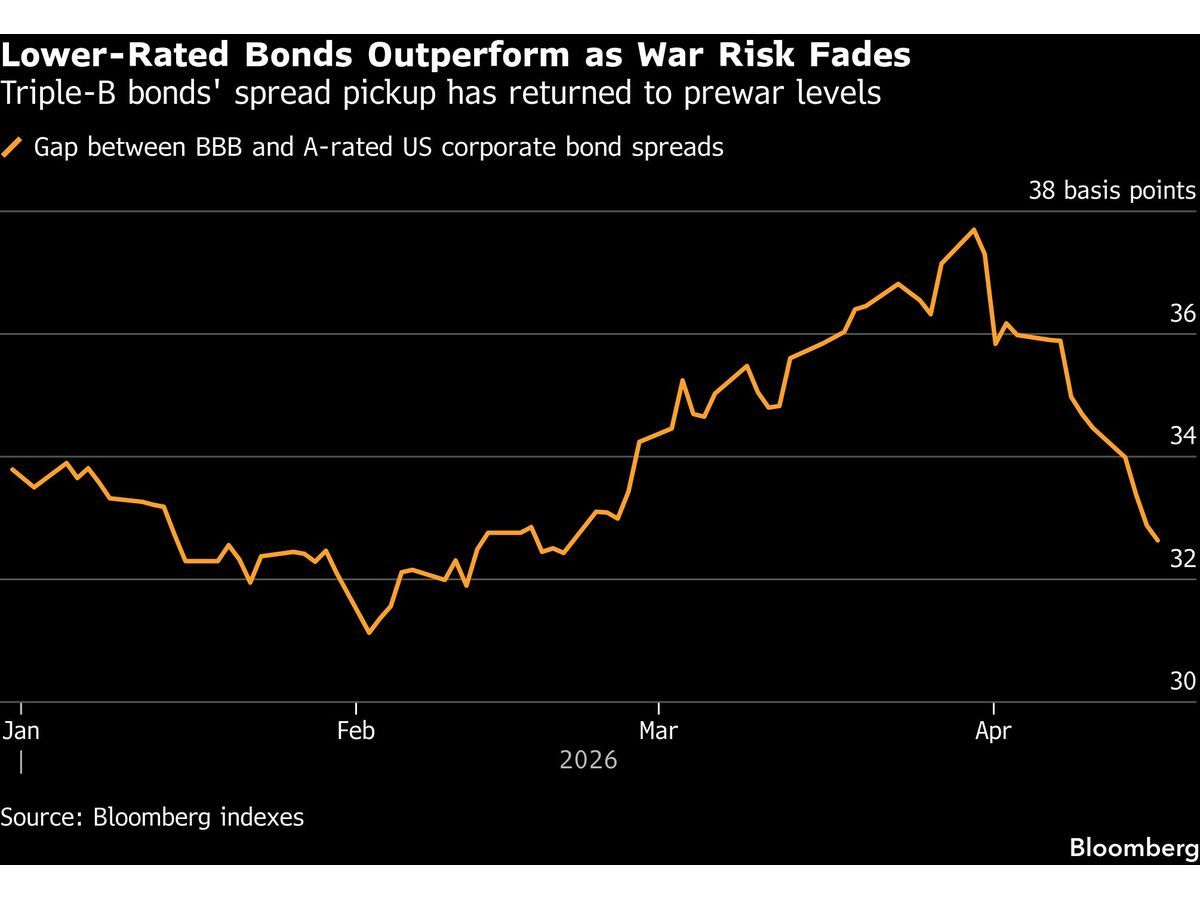
Credit investors are aggressively rotating into riskier debt instruments, signaling a shift in sentiment as the perceived threat of a broader conflict between Iran and the United States recedes. This movement marks a departure from the defensive positioning that defined the previous period, where capital flowed heavily into safe-haven assets. The current appetite for yield suggests that market participants are pricing in a sustained truce, effectively discounting the risk premium that had been attached to credit spreads over the last several weeks.

The Shift in Credit Risk Appetite

The pivot is most visible in the narrowing of spreads across corporate bond markets. Investors are shedding high-grade defensive holdings in favor of lower-rated debt, seeking to capture higher coupons as the urgency for capital preservation wanes. This transition is not merely a tactical adjustment but a broader recalibration of risk-adjusted returns. By moving down the quality spectrum, credit desks are betting that the stabilization of geopolitical conditions will provide a more predictable environment for corporate earnings and debt servicing.

This trend mirrors broader movements in stock market analysis, where equity indices have begun to recover lost ground as the geopolitical overhang lifts. While the credit market often acts as a leading indicator for systemic risk, the current buying activity suggests a high degree of confidence in the durability of the diplomatic pause. The transition from havens to risk-on assets is a direct response to the reduced likelihood of a supply-chain disruption or a sudden spike in energy costs that would have otherwise pressured corporate balance sheets.

Sectoral Read-Through and Valuation Dynamics

As credit markets normalize, the focus shifts to how this liquidity will impact specific sectors. Companies with higher leverage ratios are seeing the most significant compression in their borrowing costs, which provides a necessary tailwind for capital expenditure plans that were previously shelved. This environment is particularly favorable for industries that rely on consistent access to debt markets to fund operational growth.

AlphaScala data currently reflects a varied landscape for industrial and technology firms. For instance, ON stock page holds an Alpha Score of 40/100 with a Mixed label, while A stock page maintains an Alpha Score of 55/100 with a Moderate label. These scores highlight that while the macro environment is improving, individual company performance remains tethered to specific operational execution rather than just broad market tailwinds.

The Path Toward Market Normalization

The next concrete marker for this narrative will be the upcoming round of corporate debt issuance and the subsequent pricing of new credit offerings. If the current appetite for risk persists, issuers will likely accelerate their refinancing schedules to lock in rates before any potential shift in central bank policy or a resurgence in geopolitical volatility. Investors should monitor the spread differential between investment-grade and high-yield indices, as this will serve as the primary gauge for whether the market is truly looking past the conflict or merely engaging in a temporary relief rally. The sustainability of this risk-on sentiment depends heavily on the absence of new escalations that could force a sudden reversal in credit flows.

How this story was producedLast reviewed Apr 18, 2026

AI-drafted from named sources and checked against AlphaScala publishing rules before release. Direct quotes must match source text, low-information tables are removed, and thinner or higher-risk stories can be held for manual review.

Editorial Policy·Report a correction·Risk Disclaimer