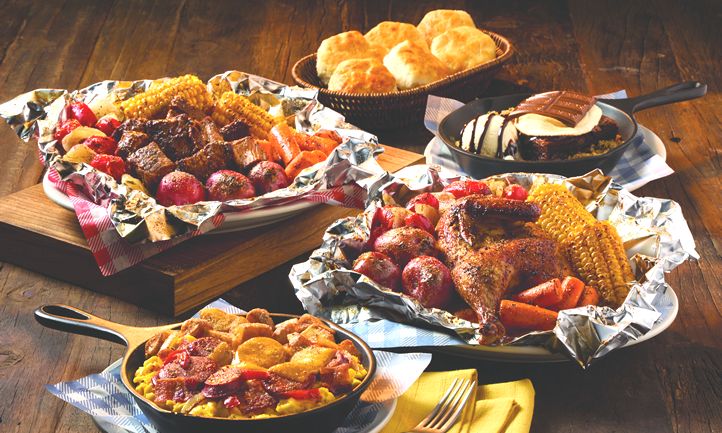
Cracker Barrel Old Country Store, Inc. is banking on nostalgia and seasonal menu expansion to bolster its summer performance, officially reintroducing its "Campfire Meals" lineup across its approximately 660 nationwide locations. The return of the foil-wrapped Campfire Chicken and Campfire Beef, staples of the brand’s menu since the late 1990s, serves as a tactical play to drive foot traffic during a period where casual dining operators are increasingly reliant on limited-time offers (LTOs) to maintain guest frequency. By anchoring the summer quarter with a high-recognition product, the company is attempting to leverage its existing brand equity to combat broader industry headwinds in the restaurant sector.
The Mechanics of the Seasonal Pivot
The decision to bring back these specific items is not merely a menu rotation; it is a calculated effort to optimize kitchen throughput and guest engagement. The foil-wrapped preparation method allows for consistent execution across a large footprint of stores, minimizing the complexity often associated with new menu rollouts. By maintaining the "slow-cooked" branding, Cracker Barrel reinforces its value proposition of "comfort-forward" dining. This strategy is essential for a brand that operates in a competitive landscape where stock market analysis often highlights the struggle of legacy chains to remain relevant against more agile, fast-casual competitors.
Beyond the core entrées, the company is expanding the Campfire concept into the breakfast daypart with the new Campfire Breakfast Skillet. This addition is significant because it attempts to capture incremental revenue during the morning hours, a segment that is historically less sensitive to the cyclical fluctuations seen in dinner traffic. The skillet, which includes bacon, smoked sausage, roasted red peppers, and onions, utilizes the same "Campfire Seasoning" as the dinner entrées, allowing the company to achieve supply chain efficiencies by scaling a single proprietary spice blend across multiple menu categories.
Retail Integration and Margin Expansion
Cracker Barrel is also utilizing its unique hybrid business model to maximize the impact of this campaign. By stocking campfire-inspired items—including s’mores-flavored treats, signature seasonings, and new Campfire Kettle Chips—in the attached Country Stores, the company is attempting to increase the average ticket size per visit. This retail-restaurant synergy is a core differentiator for the brand. When a guest enters for a meal, the retail store acts as a high-margin conversion point for impulse purchases that are not tied to the volatility of food commodity costs.
This strategy is particularly relevant given the current economic environment where consumers are increasingly selective about discretionary spending. By positioning the Campfire experience as a "culinary adventure" that requires "no tent pitching," the brand is marketing convenience alongside tradition. For investors, the success of this campaign will be measured not just by same-store sales growth, but by the ability of these LTOs to drive traffic without eroding margins through excessive discounting or operational friction.
Sector Context and Competitive Positioning
While Cracker Barrel focuses on its traditional roots, the broader industrials and consumer goods space remains under pressure. For context, firms like Fastenal Company (Alpha Score 56/100, Moderate) continue to navigate a complex supply chain environment, mirroring the challenges that restaurant operators face in sourcing consistent ingredients for seasonal menu surges. The ability to manage these costs while maintaining the "abundant portions" that define the Cracker Barrel experience is the primary operational hurdle for the remainder of the fiscal year.
The Decision Point for Stakeholders
The "Campfire" campaign is a defensive, yet necessary, maneuver. The company is leaning into its 1969 heritage to create a sense of stability for its core demographic. However, the introduction of the Campfire Breakfast Skillet and the Americana-inspired treats in partnership with America250 suggests a push to modernize the guest experience. The key indicator for success will be whether these items can sustain interest beyond the initial launch phase. If the LTO fails to move the needle on traffic, it may signal that the brand's reliance on legacy menu items is insufficient to offset the rising costs of labor and food service operations. Investors should watch for whether the company provides specific commentary on the "Campfire" contribution to same-store sales in upcoming quarterly reports, as this will determine if the strategy is a viable template for future seasonal rotations or a one-off attempt to bridge a traffic gap.