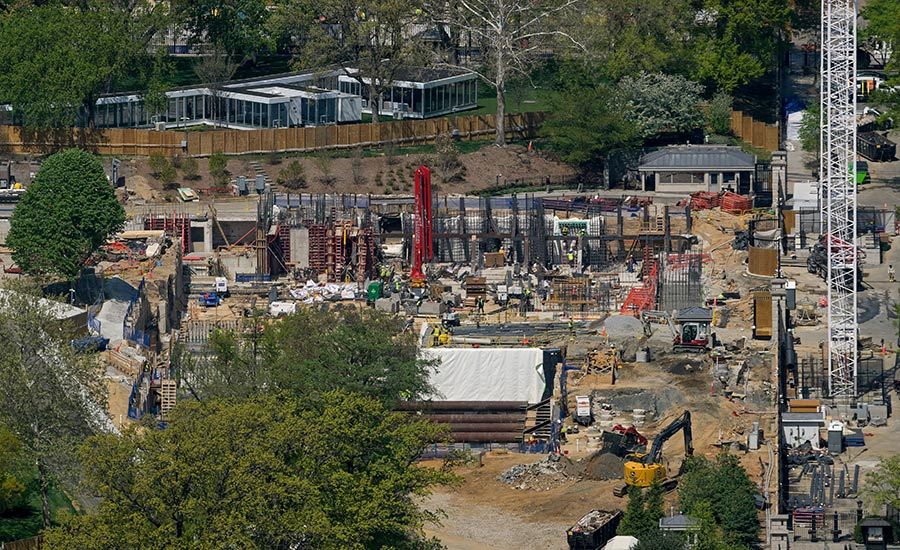
Court Mandates Partial Halt on White House Ballroom Construction

A federal court has ordered a halt to vertical construction on the White House Ballroom, while permitting security-related below-grade work to continue.
A federal court has issued an order requiring a bifurcated approach to the White House Ballroom project, allowing security-related excavation and below-grade work to proceed while forcing a total stop on vertical development. This ruling introduces a significant delay for contractors on-site, effectively creating a two-speed project timeline until legal challenges are resolved.
Operational Constraints and Project Scope
The court's decision forces a hard stop on all vertical construction, limiting site activity to specific security-focused tasks. This creates a challenging environment for general contractors who now must decouple their construction schedules. The distinction between below-grade security infrastructure and the ballroom structure itself is now the primary determinant of capital deployment on the site.
Project managers are now forced to re-evaluate the critical path for the development. With vertical work halted, the project will likely see an extension of the total construction timeline, which could lead to cost overruns if labor contracts remain locked in for the original duration. The following table illustrates the current split in operational status:
| Construction Phase | Status |
|---|---|
| Security-Related Excavation | Authorized |
| Below-Grade Infrastructure | Authorized |
| Vertical Framing & Superstructure | Halted |
Market and Sector Implications
The construction sector often reacts sharply to court-mandated delays, particularly on high-profile projects that involve public land or federal oversight. Traders should monitor the impact on local construction firms and raw material suppliers linked to the project. When major projects stall, the secondary effects on material procurement and equipment leasing can ripple through regional industrial indices.
Investors typically view these legal hurdles as indicators of potential long-term friction. If the delay extends into the next fiscal quarter, expect to see adjustments in project-related service contracts. For those tracking broader market analysis, this serves as a reminder of how regulatory and judicial interference can alter the risk profile of industrial real estate holdings overnight.
What Traders Should Watch
- Contractor Disclosures: Any updates regarding force majeure clauses or revised completion dates from the primary developers.
- Budget Revisions: Public filings indicating if the project budget is being revised to account for the downtime in vertical construction.
- Judicial Timelines: Upcoming court dates that could either lift the injunction or extend it into a permanent stay.
The restriction on vertical construction effectively caps the immediate progress of the project, forcing stakeholders to shift their focus toward securing the site rather than advancing the build.
AI-drafted from named primary sources (exchange feeds, SEC filings, named news wires) and reviewed against AlphaScala editorial standards. Every price, earnings figure, and quote traces to a specific source.