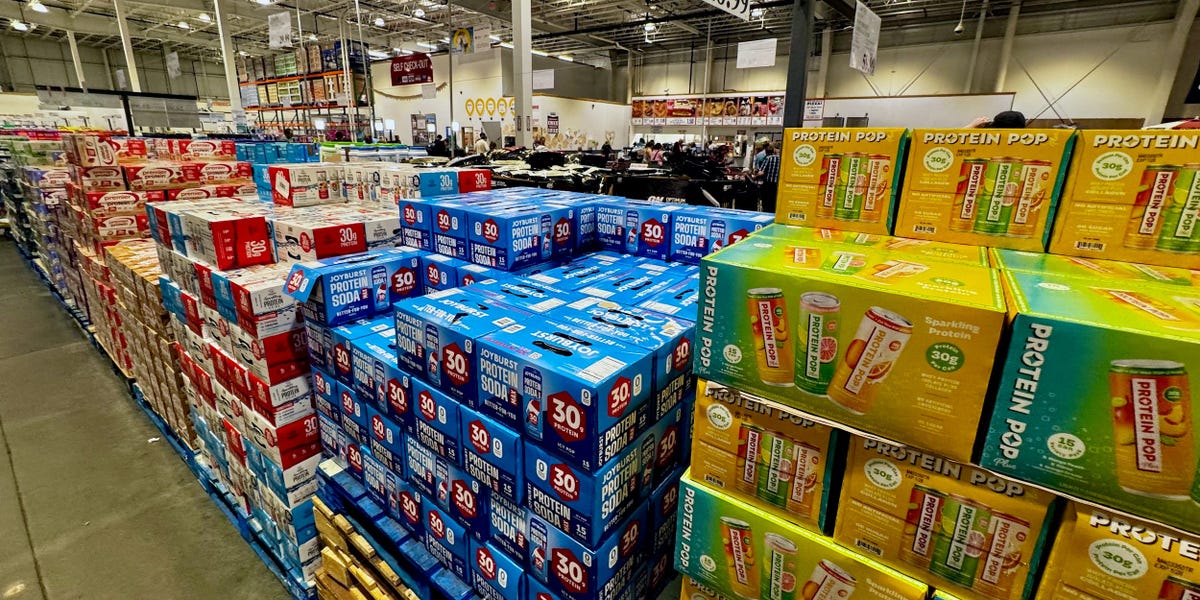
Costco is moving large volumes of protein products as shoppers hunt for deals on a category that is getting more expensive at the ingredient level. The wholesale club benefits from a demand shift that also exposes a structural problem: whey protein supplies are tightening, and prices are climbing.
Costco's Protein Volume and the Whey Squeeze
Whey protein is a byproduct of cheese production. When cheese output slows or milk supply contracts, whey volumes shrink. The current cycle reflects both. US milk production has been under pressure from higher feed costs and herd reductions, while cheese makers have not expanded output enough to offset the drag. The result is less whey available for the protein powders, bars, and ready-to-drink shakes that fill Costco shelves.
Costco benefits from this dynamic in the short term. Its pricing power and bulk format let it offer protein at a lower per-unit cost than grocery or specialty retailers. As retail prices for whey-based products rise elsewhere, more consumers treat Costco as the default source. That traffic lift shows up in the protein aisle, yet it also masks a risk: if whey costs keep climbing, Costco's margin on these items will compress unless it raises shelf prices.
Why Costco's Margin on Grocery Matters Now
The simple read is that Costco is winning share in a hot category. Protein demand has grown steadily across fitness, weight management, and meal-replacement use cases. Costco's Kirkland Signature protein bars and powders are among its highest-turn private-label items. More foot traffic in that aisle means more basket spend overall.
The better market read is that the whey shortage is not a Costco-specific story. It is a commodity input squeeze that will hit every manufacturer and retailer with exposure. Costco's advantage is temporary. If whey prices rise further, the company will face a choice: absorb the cost and accept lower gross margin on a high-volume category, or pass it through and risk losing the price advantage that drives the traffic in the first place.
Costco reports earnings next quarter. The key metric for protein investors is not just same-store sales growth but gross margin on fresh and dry grocery. If that margin line shows compression, the whey squeeze is already hitting the P&L. If it holds steady, Costco is either hedging its whey contracts well or using its scale to negotiate better terms than smaller rivals.
Competitors face a harder path. GNC, Vitamin Shoppe, and even Amazon in the supplement category lack Costco's membership model and bulk purchasing leverage. They will feel the margin pressure first. The whey shortage also creates an opening for plant-based protein alternatives, though those carry their own cost and formulation challenges.
The Next Signal for Protein Investors
A confirmation signal would be a sustained rise in whey protein concentrate prices that forces broad retail price increases. A weakening signal would be a recovery in US milk production or a surge in cheese output that loosens whey supply. Neither looks likely in the near term based on current dairy market conditions.
For now, Costco's protein sales are a useful window into a broader commodity story. The company is the most resilient player in that chain, yet resilience is not immunity. The next earnings call will show whether the whey squeeze is a tailwind for traffic or a headwind for margins.
For traders watching the retail and commodity overlap, stock market analysis and best stock brokers offer context on how to position for this input-cost cycle.