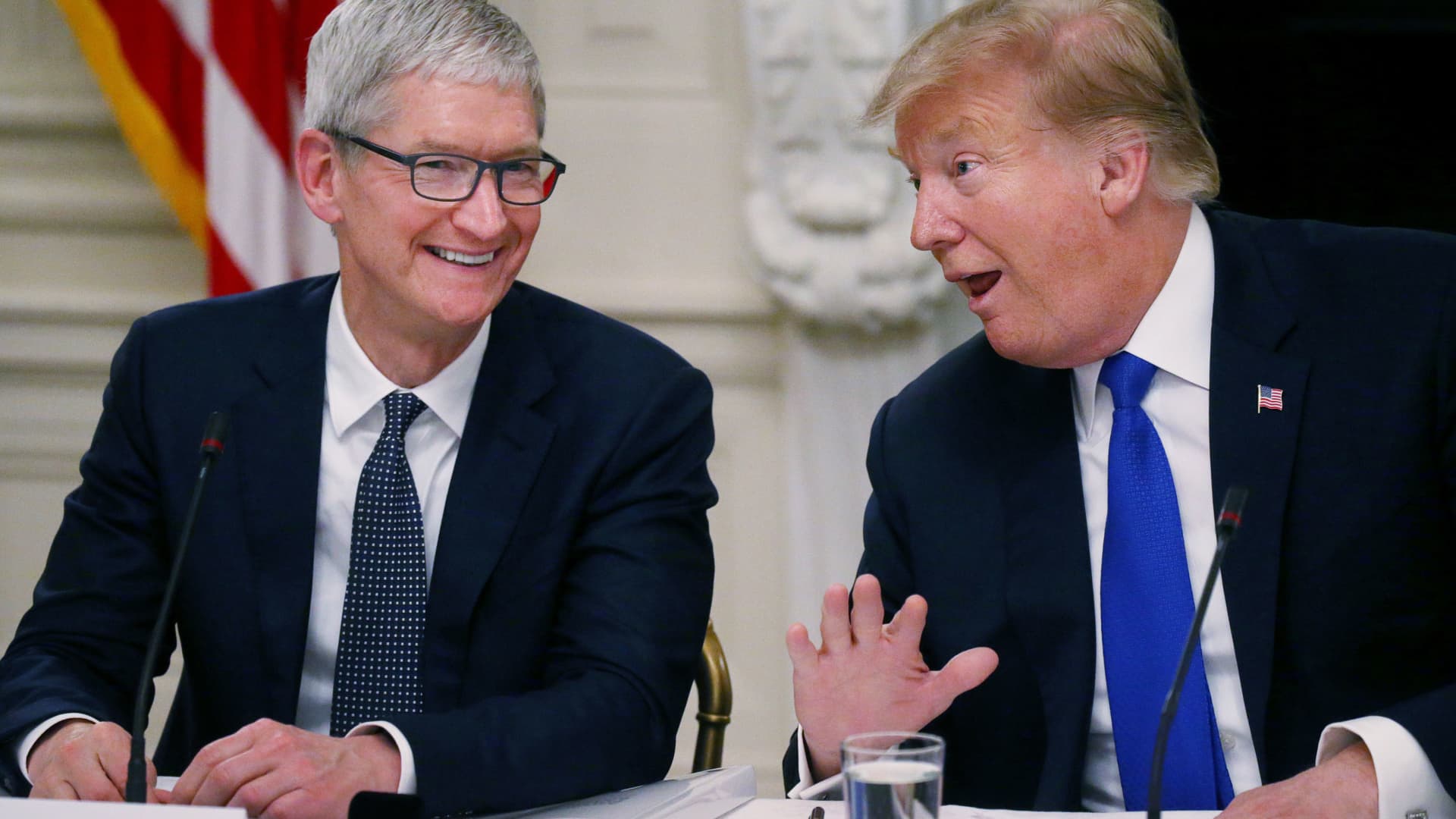
The recent disclosure regarding the nature of private communications between Apple CEO Tim Cook and President Donald Trump underscores a fundamental shift in how large-cap technology firms navigate political friction. By detailing a specific, informal exchange regarding regulatory and trade pressures, the narrative moves away from traditional lobbying toward a model of direct, high-stakes personal diplomacy. This dynamic is particularly relevant for firms that maintain significant manufacturing footprints abroad while simultaneously managing domestic antitrust scrutiny.
The Evolution of Executive Access
Tech giants have historically utilized a combination of inauguration funding, ballroom hosting, and direct executive-level meetings to maintain open lines of communication with the executive branch. The current focus on these interpersonal exchanges highlights the vulnerability of companies like Apple, Amazon, and Meta to sudden shifts in trade policy or regulatory enforcement. For these firms, the cost of maintaining such access is measured not just in direct donations, but in the strategic trade-offs required to keep supply chains stable and domestic operations shielded from punitive measures.
This approach to corporate diplomacy suggests that the traditional separation between business operations and political advocacy is narrowing. When executives are forced to manage personal rapport with leadership to mitigate policy risks, the predictability of the regulatory environment decreases. Investors must now account for the idiosyncratic nature of these relationships as a primary variable in long-term valuation models for the technology sector.
Sector Read-Through and Valuation Impacts
The broader technology sector, including AAPL stock page, META stock page, and AMZN stock page, remains sensitive to these high-level interactions. AlphaScala data currently reflects a moderate outlook for these entities, with AAPL holding an Alpha Score of 61/100 at a price of $266.22, META at 61/100 with a price of $668.90, and AMZN at 54/100 at $249.95. These scores suggest that while market sentiment remains stable, the underlying volatility associated with political exposure is a persistent factor in current pricing.
The reliance on direct executive intervention to navigate trade and antitrust hurdles creates a unique risk profile. If the efficacy of these personal relationships wanes, the sector may face a period of heightened regulatory volatility. The following factors are currently shaping the landscape for these firms:
- The necessity of maintaining domestic manufacturing commitments to satisfy political mandates.
- The ongoing pressure to balance global supply chain efficiency against national security and trade policy.
- The potential for sudden shifts in antitrust enforcement based on the quality of executive-level political engagement.
As these companies continue to balance their global footprints, the next concrete marker for investors will be the formalization of new trade agreements or the introduction of specific legislative proposals targeting digital services. Any deviation from the current status quo in these policy areas will serve as a test of the durability of the personal relationships established by these executives. The ability of firms to maintain operational continuity during these transitions will be the primary indicator of whether this model of direct diplomacy remains a viable strategy for long-term growth in the stock market analysis space.