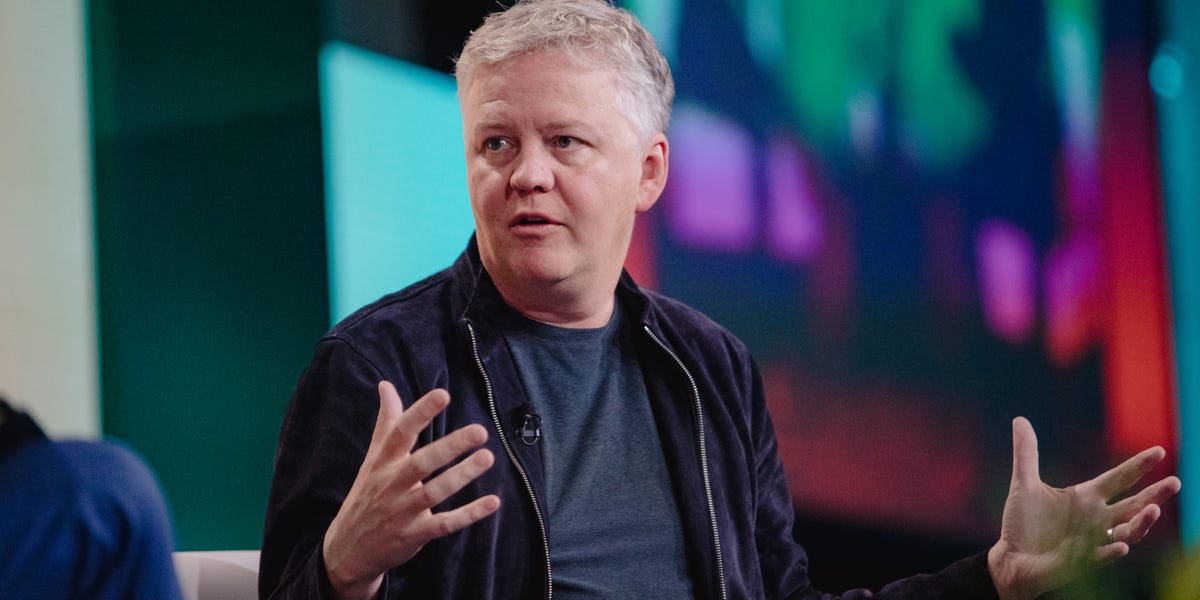
Cloudflare CEO Matthew Prince admitted over the weekend that the company's name is confusing, often mispronounced, and frequently misspelled. The remark, made in response to a user on X, was not a crisis-management exercise. It was a candid acknowledgment that the brand he built carries a friction point he has lived with from the start. Prince added that the name was still an improvement over his original idea, which he described as worse.
The comment lands at a moment when Cloudflare's brand is inseparable from its product. The company sells network services, zero-trust security, and edge computing to enterprises that need to trust the infrastructure they are buying. A name that trips up procurement teams or gets mangled in a boardroom presentation is not a fatal flaw, but it is a small, persistent tax on every sales cycle. The fact that the CEO is willing to say it out loud tells you something about how little it has actually mattered.
The Name That Stuck
Cloudflare was founded in 2009, and the name was chosen early. Prince has previously explained that the original concept was tied to the idea of a "cloud" of protection, with "flare" evoking a signal or a burst. The exact original name he now calls worse remains undisclosed, but the admission reframes the company's branding as a compromise rather than a masterstroke. For a business that now generates over $1 billion in annual revenue, the name has become a container for a much larger set of capabilities, from DDoS mitigation to AI inference at the edge.
The mispronunciation problem is real. Prince noted that people say "Cloud-flair" instead of the intended "Cloud-flare," and misspellings are common. In a purely rational market, this would be noise. But brand recognition is a factor in enterprise software buying decisions, especially when security and reliability are the product. A name that requires correction creates a tiny moment of doubt, and in competitive deals against the likes of Fastly or Akamai, tiny moments can compound.
Brand Friction vs. Business Momentum
Despite the naming friction, Cloudflare's business has not suffered in any measurable way. The company has posted consistent revenue growth, expanded its large-customer count, and built a developer community that treats "Cloudflare" as a verb. The stock, traded under the ticker NET, has been a volatile but net-positive performer over the past several years, driven by the shift to zero-trust architectures and the growth of AI workloads that need low-latency global distribution.
The better market read is that Prince's comment is a signal of confidence, not concern. A CEO worried about brand perception would not amplify the issue on social media. By treating the name as an amusing footnote, Prince is implicitly telling the market that the company's competitive moat is built on technology and network effects, not on the elegance of its trademark. That aligns with how institutional investors have valued Cloudflare: as a platform play with high switching costs, not a consumer brand.
For traders, the immediate takeaway is that this is a non-event for the stock. There is no product recall, no guidance revision, no customer churn tied to the name. The risk is that the comment gets picked up in a slow news cycle and creates a superficial narrative that distracts from the company's fundamentals. That would be a mispricing opportunity, not a reason to sell.
The Next Decision Point
The real test of Cloudflare's brand strength will come with its next product cycle. The company is pushing deeper into AI, with Workers AI and its global inference network. Enterprise buyers evaluating these new services will be making decisions based on performance, security, and integration, not on whether they can spell the vendor's name. If adoption accelerates, the naming quirk will remain exactly what Prince treats it as: a piece of company lore. If growth stalls, the market will look for real causes, and the name will not be one of them.
The next concrete marker is Cloudflare's quarterly earnings, where revenue growth, large-customer adds, and the pace of AI-related deal activity will provide the actual signal. Until then, the name story is a reminder that even the most successful tech companies are built on decisions that were never perfect, just good enough.