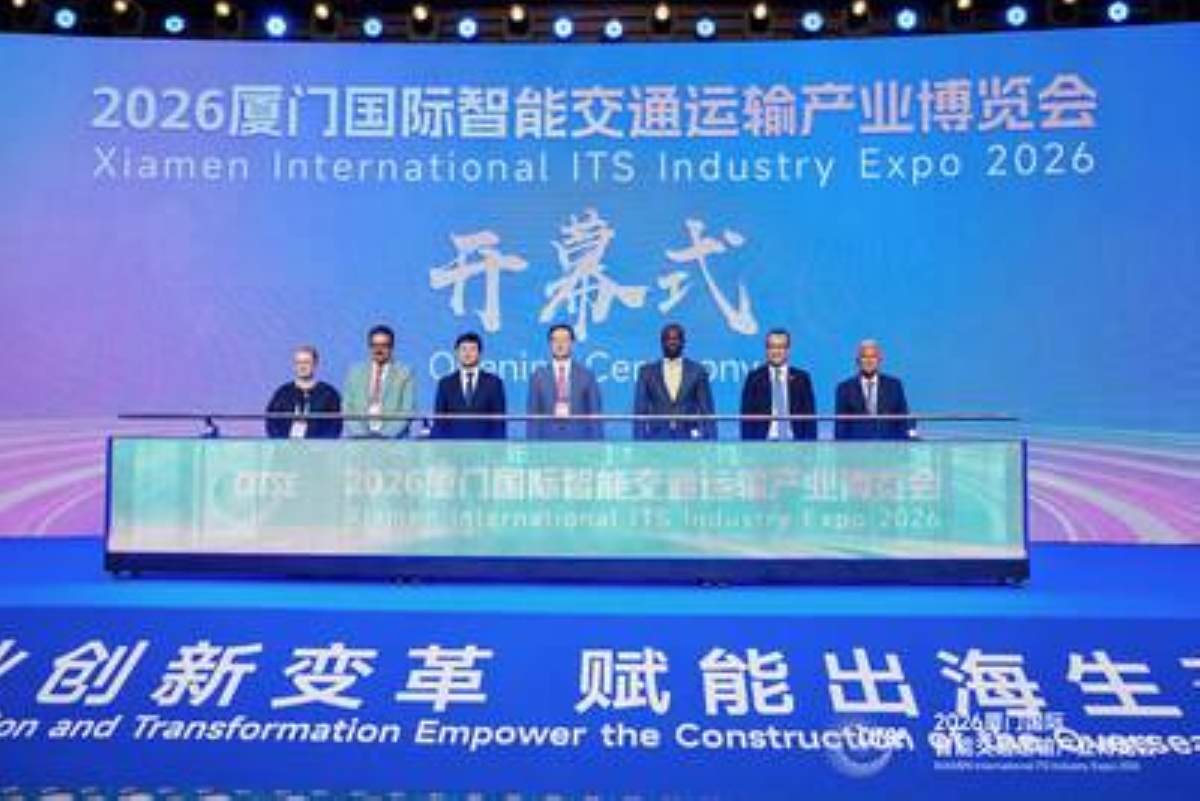
CITSE 2026 unveiled 30+ technologies and held overseas demand-matching sessions. The export-focused theme signals a strategic pivot for Chinese ITS firms. Next catalyst: first post-expo contract disclosure.
The China International ITS Industry Expo 2026 (CITSE 2026) concluded on May 15 in Xiamen after a three-day run. Co-organized by the China Intelligent Transportation Systems Association and Xiamen C&E Group, the event carried the theme "Focus on Industrial Innovation and Transformation, Empower the Construction of the Overseas Expansion Ecology."
For a sector investor, the headline number is the 30-plus cutting-edge technologies and innovative solutions unveiled during the expo. That volume of debuts in a concentrated window suggests the pipeline for China's intelligent transportation sector is accelerating, not just maintaining pace. The expo also hosted multiple overseas demand-matching sessions, which points to a concrete mechanism for cross-border deployment rather than just domestic signaling.
The naive read is that CITSE 2026 was a successful trade show. The better market read is that the event's explicit focus on "overseas expansion ecology" signals a strategic pivot for Chinese ITS companies. When an industry expo dedicates its theme to export infrastructure, it implies that domestic players are past the proof-of-concept stage and are now building the sales and service networks needed for international revenue.
This affects the sector in two ways. First, companies with existing export compliance and localization capabilities gain a structural advantage. Second, the demand-matching sessions create a near-term catalyst for partnership announcements and pilot project disclosures over the next two quarters. The confirmed fact is that the event facilitated global resource collaboration. The inference is that several non-Chinese buyers were actively evaluating Chinese ITS hardware and software stacks.
The source names no specific listed companies. The sector read-through is clear. Chinese ITS hardware makers (sensors, roadside units, traffic controllers) and software platform providers (traffic management OS, AI-based analytics) are the direct beneficiaries of an export push. The supply-chain read-through extends to semiconductor suppliers that design chips for traffic vision systems and telecom equipment vendors that provide the connectivity layer for vehicle-to-infrastructure (V2X) communication.
Companies that have already disclosed overseas pilot projects or certification wins in target markets (Southeast Asia, Middle East, parts of Africa) are the most likely to convert expo interest into purchase orders. Those still relying on domestic municipal contracts face a longer monetization path.
The catalyst path from CITSE 2026 has three stages. Stage one is the follow-up filings from exhibitors that announce specific MOUs or contracts signed during the event. Stage two is the Q3 2026 earnings calls, where management will quantify the pipeline generated from the expo. Stage three is the CITSE 2027 announcement cycle, which will test whether the export momentum is sustained or episodic.
Valuation support depends on whether the overseas revenue stream is incremental enough to lift revenue growth rates above the domestic infrastructure cycle. If Chinese ITS companies can demonstrate 15-20% of revenue from non-China sources within two years, the sector's price-to-sales multiples could re-rate toward global industrial software peers rather than local construction contractors.
The next concrete marker is the first post-expo contract disclosure from any major Chinese ITS exhibitor. That filing will confirm whether the demand-matching sessions translated into binding agreements or remained exploratory. Until then, the sector trades on the event-driven momentum from CITSE 2026, which is real unconfirmed in dollar terms. Watch for cross-border payment announcements or regulatory approvals in target markets as the first hard evidence of execution.
Prepared with AlphaScala editorial tooling from the source reporting linked above. Indexable analysis may include a cited Alpha Score value. Publishing checks screen each story before release. Educational coverage, not personalized advice.