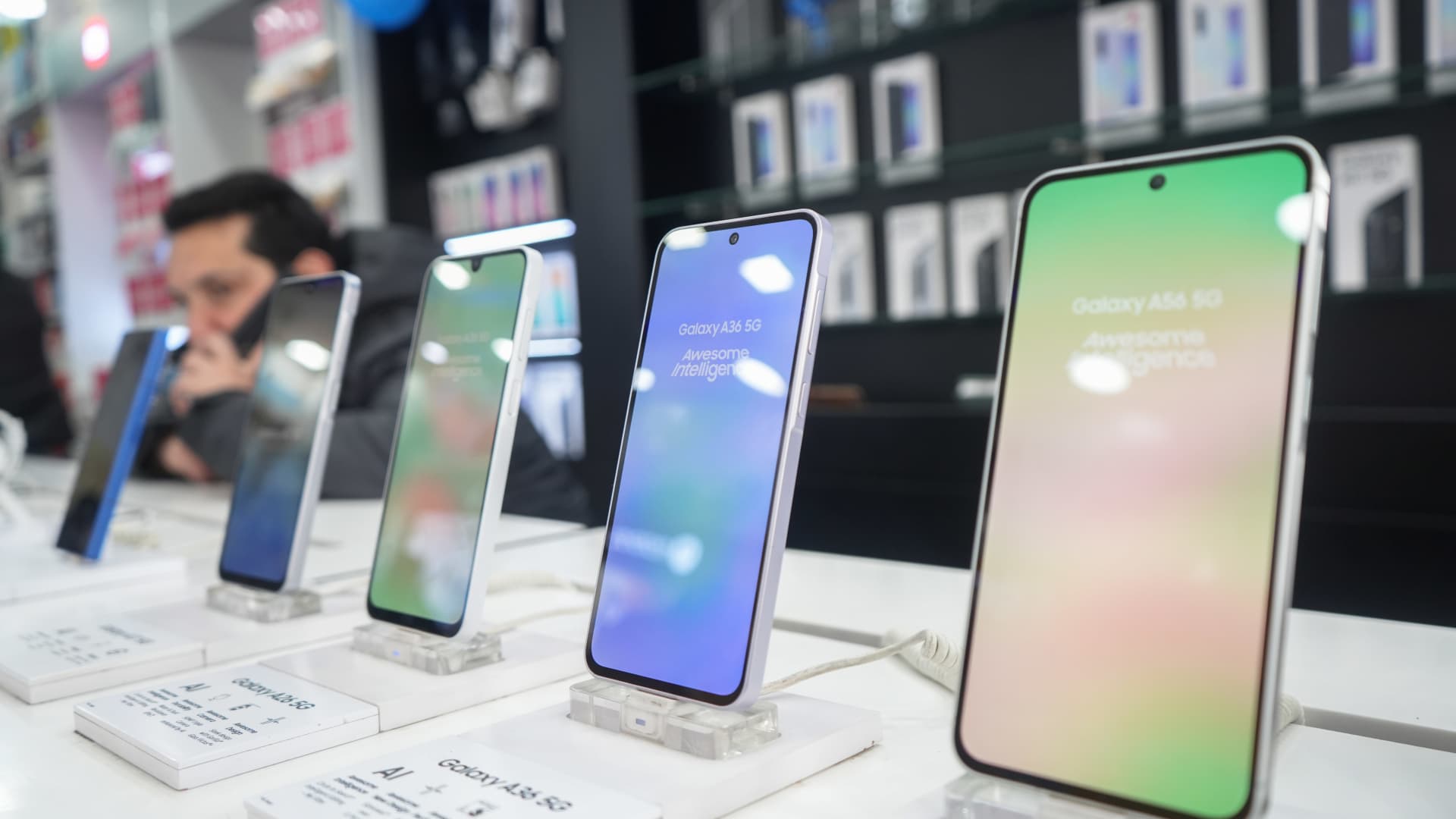
Memory chip prices have quadrupled since September 2025, according to Counterpoint Research, and the surge is reshaping India's smartphone market. Chinese brands that dominate the budget segment are raising prices, pushing cost-conscious buyers toward premium devices from Apple and Samsung.
Entry-level smartphone shipments in India fell sharply in the first half of 2026. Total industry volume dropped 7.9% from a year earlier to 64.2 million units, data from IDC show. The entry tier declined the most. Average selling prices hit a record $315, up 3.6% in value terms, as buyers traded up.
Chinese brands bore the brunt. Vivo shipments fell 13.9% in the June quarter from a year earlier, Oppo declined 8.5%, Xiaomi dropped 10%, and Realme crashed 14.2%, IDC reported. OnePlus, which serves the higher-end tier, recorded the smallest decline among Chinese brands at 2.5%.
Samsung posted a 0.4% gain in shipments during the quarter. Apple rose 0.7%, IDC said. The gap between volume leader Vivo and second-place Samsung narrowed. Samsung's market share increased by nearly 200 basis points, while Apple's rose 100 basis points, according to IDC. Vivo's share fell 60 basis points by IDC's measure, and 140 basis points by Counterpoint's estimate.
"Global memory chip shortage pushed prices up and hit entry-level demand hardest, the segment Chinese brands rely on most," Upasana Joshi, senior research manager, devices research, IDC Asia Pacific, said. Chinese brands all saw steep declines, she said. Samsung and Apple were the only major names "to hold steady and gain share."
Samsung has a wide portfolio in India, from $200 to above $800, and competes directly with Vivo in the $200-$300 price bracket, experts said. The South Korean company also sources memory chips internally. Vivo and many other Chinese firms have relied on chips from MediaTek, SK Hynix and Samsung, said Neil Shah, co-founder at Counterpoint Research.
When prices started rising last year, some Chinese brands shifted to cheaper chips from UNISOC and CXMT, which bought time, Shah said. CXMT recently raised funds to expand AI and data-center capacity in China, diverting resources from the smartphone supply chain, he said.
Higher prices erode the value-for-money pitch that made Chinese brands successful in India, Shah said. At the same time, financing options are making premium handsets more affordable, pushing more consumers toward Samsung and Apple. The iPhone 17 was the top-shipped model in India for the first two quarters of 2026, IDC said.
Smartphone shipments of Apple (AAPL) in India rose 0.7% in the June quarter, IDC said. The company's market share climbed 100 basis points year-on-year, according to the same data.
Memory chip prices are expected to keep rising in the coming months, Counterpoint Research said.