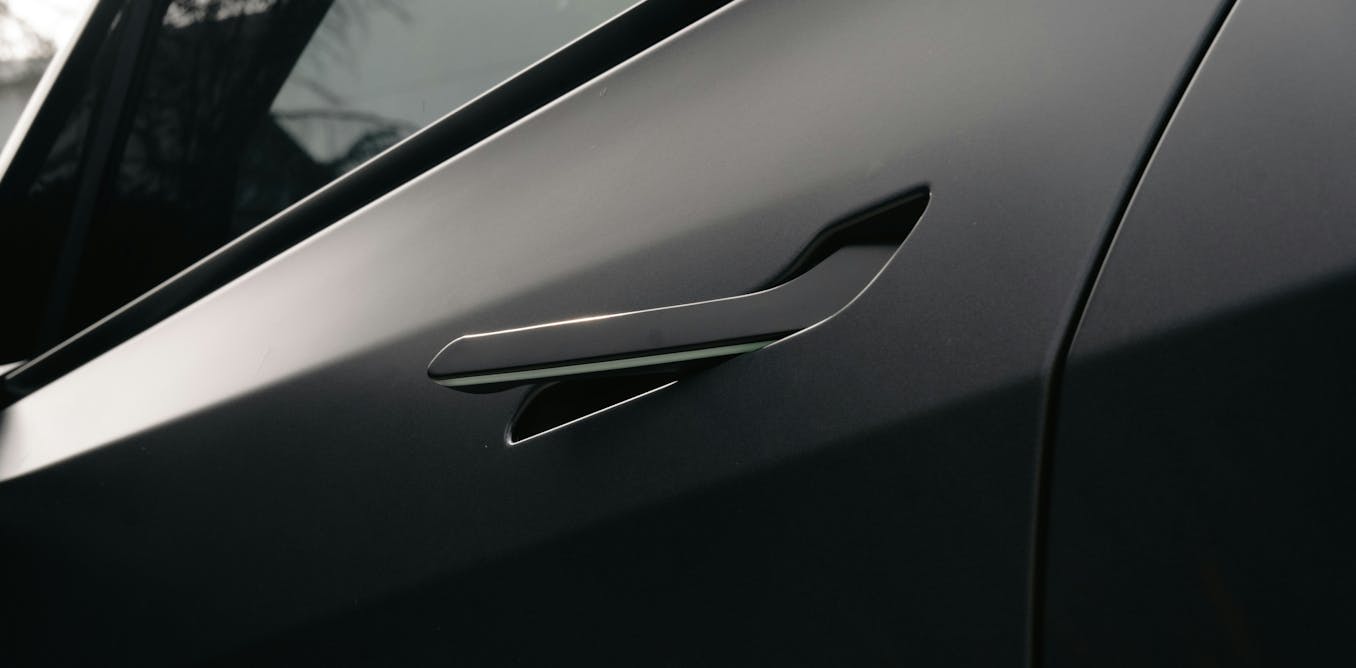
China will ban hidden or retractable door handles on new cars sold from January next year, a world-first rule that could leave Australia as a dumping ground for electric vehicles designed to lower safety standards, a report for Australian car dealers has warned.
The rule, phased in from January 1, 2027, for new models and January 1, 2029, for existing ones, requires all passenger cars sold in China to have manual door releases that work even when the vehicle has lost power. The move follows a series of fatal incidents in which people were trapped inside burning, flooded or frozen cars because doors could not be opened from the outside.
Concealed door handles have become a signature feature of many electric vehicles, popularised by Tesla. China Daily reported last year that about 60% of the country's 100 bestselling new-energy vehicles – pure EVs, hybrids and fuel-cell cars – used flush handles. The US is now considering a similar ban under the SAFE Exit Act of 2026, introduced in the House of Representatives.
Australia's independent vehicle safety body, ANCAP, has already flagged the risk. Its 2026 safety rating system requires electric door handles to remain operable after a crash or provide a manual override to earn the highest five-star rating. ANCAP also rewards physical controls for critical functions such as indicators and hazard lights, rather than relying solely on touchscreens.
But ANCAP has no legal power to stop cars from entering the market. "We're doing what we can, but we're voluntary – it's not mandatory to have an ANCAP safety rating, so we can't stop cars coming into the country," chief executive Carla Hoorweg said earlier this year. She urged the Australian government to follow China's lead on regulating concealed door handles, saying "the concern is warranted."
A report by legal expert Emeritus Professor Jenny Buchan, commissioned by the Australian Automotive Dealers' Association, concluded that Australia "should not ignore the risk of stock dumping following China's approach to EVs with flush door handles." The report noted that if the US bill passes Congress, the US would also mandate manual door releases, narrowing the pool of markets where older designs could be sold.
Chinese carmakers are a growing force in Australia. BYD, the Chinese electric and hybrid carmaker, was Australia's second bestselling car brand for the third month running in April, trailing only Toyota. The company's models rely heavily on flush door handles and large touchscreens, features that will soon be restricted in its home market.
China is the world's largest EV market, and its safety standards increasingly shape global vehicle design. The country is also considering a draft rule that would require physical buttons for indicators, windscreen wipers, hazard lights and the horn, reducing reliance on touchscreens.
Australia has been slow to adopt comparable standards before. It took roughly a decade longer than Europe to implement Euro 6 emissions limits, meaning Australian buyers kept purchasing more polluting vehicles long after other countries had moved on. The same pattern could repeat with safety features.
Manufacturers face a choice: redesign vehicles globally to meet China's rules, or continue selling older versions in markets with less stringent requirements. Australia, without a mandatory safety rating system for door handles, is a natural destination for those older designs.
For investors, the regulatory shift directly affects companies with large China exposure and Australian sales. Tesla, BYD, and other EV makers with flush-door-handle models will eventually need to retrofit or redesign. The cost of compliance is manageable for large manufacturers, but the timing creates a window for inventory dumping in markets like Australia.
ANCAP's Hoorweg said the solution is straightforward: the government should mandate what ANCAP already tests. "If concealed door handles are considered a genuine safety concern by car safety experts, that judgment should be reflected in Australian legal standards," the Buchan report concluded. Until then, the risk of Australia being used as a dumping ground remains.