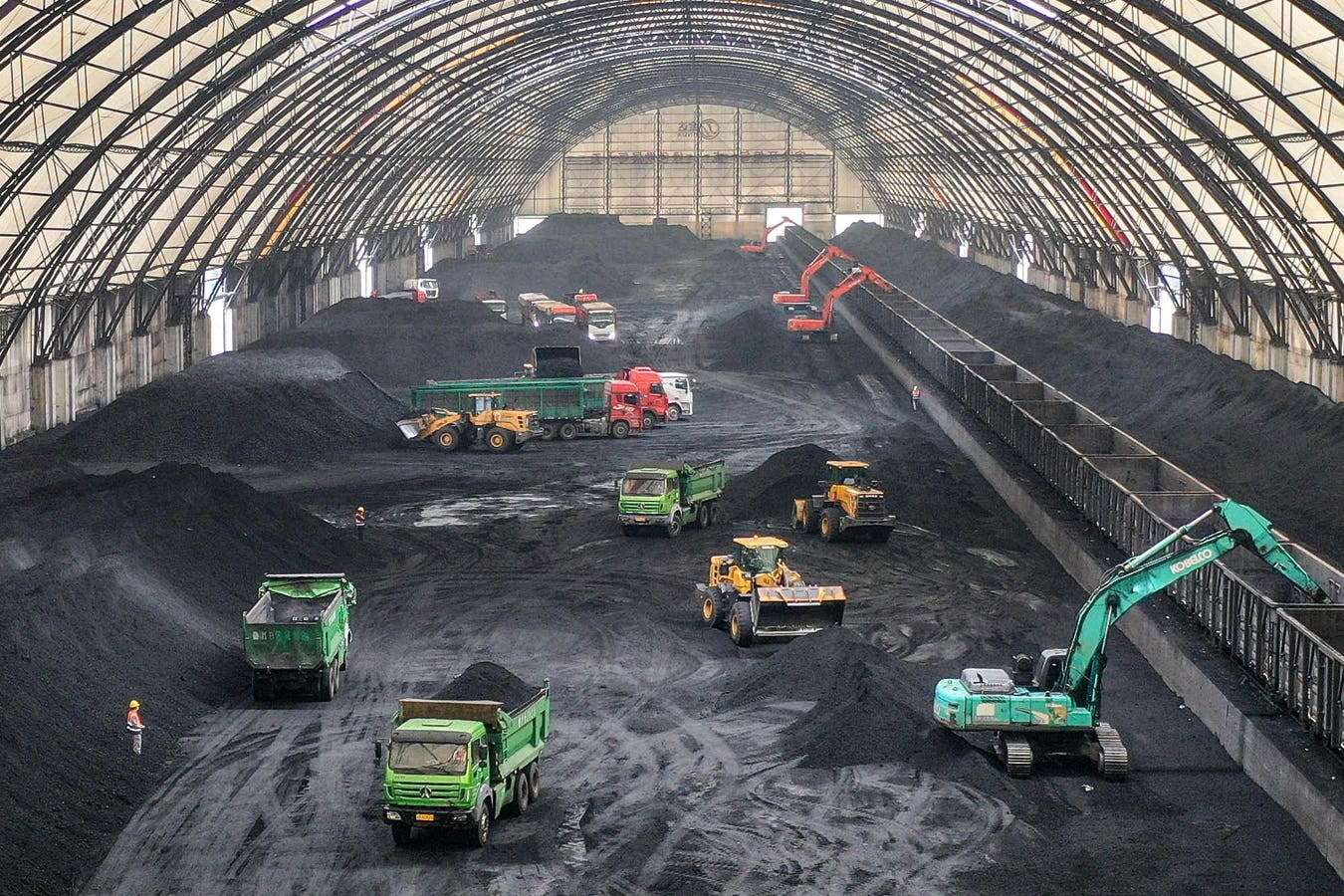
China's coal-fired power generation fell below 50% of the country's total electricity output in the first half of the year for the first time in recent history, the government said last week, marking a symbolic turning point for the world's largest carbon emitter.
Coal produced 49.7% of China's power in the January-to-June period, down from 55% in the same months of 2024, according to data from the China Electricity Council. The decline reflects a breakneck pace of renewable energy installations that is reshaping the country's power grid faster than most analysts had projected.
Solar and wind capacity additions are running at a clip that could push total renewable installations to 4,300 gigawatts by year-end, the council said. At that rate, solar may overtake coal as China's top electricity source as soon as the third quarter.
"Solar and wind play a central role in outcompeting and displacing coal. But solar and wind generation is still only at 25%," said Gao Yuhe, Greenpeace East Asia's Beijing-based project lead. "Stronger targets for solar and wind generation will have a knock-on effect to further undercut coal."
Electricity demand is surging in China, just as it is in the U.S., driven by the buildout of AI data centers, the electrification of industrial manufacturing and a growing fleet of electric vehicles. That demand growth means total coal consumption could still rise in absolute terms over the next few years even as renewables take a larger share of the mix.
Beijing's official target calls for coal use to peak no later than 2030 and decline from there. Gao said China's current goal of 30% wind and solar generation by 2030 is too modest. "We can easily hit 33% by 2028," he said. "Without stronger targets, coal will linger in the interim."
The milestone comes as Chinese automakers have become the de facto global standard for electric vehicles. BYD outsells Tesla with highly affordable models. Xiaomi has rolled out stylish sedans and SUVs outfitted with in-cabin infotainment technology. Staggeringly high U.S. tariffs, hovering at 127.5% for Chinese-built EVs, have kept those cars largely out of American driveways.
They have not kept them out of Waymo's robotaxi fleet. Alphabet's self-driving vehicle company began deploying small electric vans built by China's Zeekr brand in Los Angeles and San Francisco in late May. Waymo said at the time it had "more than 100" of the minivans on the road. Most industry watchers assumed the company would ultimately operate fewer than 1,000 because of the excessive import fees.
Since 2024, Zeekr has shipped more than 3,200 units of its CM1e model through the Port of Los Angeles, including over 2,600 so far this year, based on Bills of Lading data compiled by ImportGenius. Waymo is not identified as the recipient on the shipping documents, but Zeekr has no other U.S. partner. At the CM1e's Chinese market price of $39,000, tariffs would drive the cost above $89,000, excluding Waymo's autonomous driving hardware.
The broader shift in China's power mix is part of a global convergence that is reshaping energy markets independent of climate policy, said David Miller, co-founder and managing partner at a clean energy investment firm. He pointed to three factors: the abundance of cheap green electrons at scale, a massive inflection in electricity demand, and renewed emphasis on energy security in the wake of geopolitical instability.
"It has very little to do with climate. It has a lot to do with markets, technology, and economics," Miller said. "It could set the stage for one of the biggest super cycles of clean energy and renewables investing of the 21st century."
The cheapest, fastest electron in many places happens to be a green electron, Miller noted, citing the fact that building large solar and battery systems is faster and cheaper than new natural gas turbines, which can take seven to eight years to bring online.
For most of the world's population, roughly 70%, the domestic hydrocarbon endowment does not exist, he said. "Sunlight does not get imported through the Strait of Hormuz."
Gao said the trajectory of China's coal phase-down depends on whether policymakers set more aggressive targets. "Without stronger targets, coal will linger in the interim."