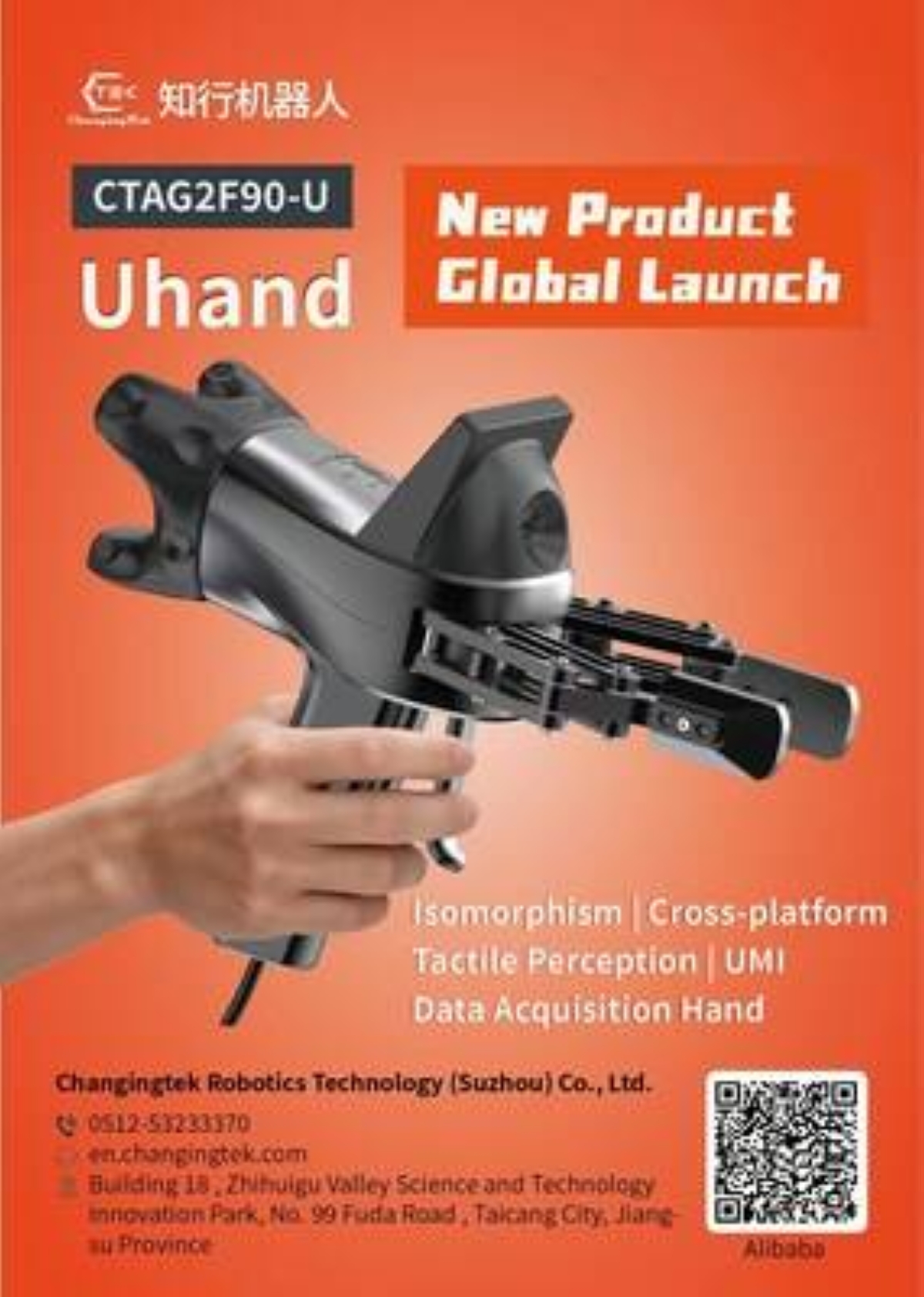
Changingtek Robotics has launched the Uhand, a high-precision tactile data collection hand built to solve a specific problem: the shortage of real-world, synchronized multimodal data for embodied intelligence research. The device, announced from Suzhou, China, captures synchronized multi-dimensional and multimodal data to support precision manipulation tasks and algorithm validation. For anyone tracking the robotics supply chain, this is not just another gripper launch. It is a targeted attempt to close a data bottleneck that has limited progress in dexterous manipulation.
Uhand Launch: A Direct Answer to the Tactile Data Gap
The naive read of this announcement is that Changingtek added a new product to its hand lineup. The better read starts with the data problem. Training embodied AI models requires high-quality tactile data paired with visual and force feedback. Most research labs rely on custom rigs or modified commercial grippers that introduce latency and calibration drift. The Uhand addresses that directly with a unified architecture consistent with the motion logic and communication protocols of all Changingtek grippers. That means the data it generates has minimal deviation from the physical system, making it useful for both simulation and real-world deployment.
The hardware weighs 600 g and offers up to four hours of battery runtime, allowing extended field deployment without a tether. Its proprietary software suite supports real-time data processing and visualization, with seamless compatibility across mainstream operating systems, robot control frameworks, and algorithm development platforms. This is not a niche tool. It is designed to plug into existing research pipelines without forcing a platform switch.
What the Specs Actually Mean for Research
Changingtek has built three core technology platforms: mechanical intelligence, perceptual intelligence, and drive-control systems. The Uhand draws on all three. The mechanical side handles the physical dexterity and weight distribution. The perceptual side manages the tactile-visual fusion and AI control algorithms. The drive-control side ensures the hand communicates with the robot's motion stack without added latency.
The company's full product lineup includes industrial parallel grippers, collaborative grippers, multi-fingered dexterous hands, and heavy-duty grippers, covering payload capacities from single grams to several hundred kilograms. The Uhand fits into the dexterous hand category but with a specific focus on data collection rather than pure gripping force. That distinction matters. Most industrial grippers are optimized for repeatability and payload. The Uhand is optimized for signal fidelity and synchronization.
The Confirmation Markers to Watch
A product launch is a catalyst, not a thesis. The confirmation that the Uhand is gaining traction will come in three forms. First, adoption by research institutions or corporate AI labs that publish results using Uhand data. Second, integration announcements with major robot control frameworks such as ROS 2 or NVIDIA Isaac. Third, orders from verticals like aerospace, automotive manufacturing, and smart logistics, where Changingtek already has a presence.
The company claims its solutions cut operational costs and improve robotic flexibility. If the Uhand can demonstrate a measurable reduction in the time required to train a precision manipulation model, that would be a concrete signal. Until then, the launch is a watchlist item for anyone following the embodied AI hardware layer.
For a broader view of how hardware launches like this fit into the automation ecosystem, see our stock market analysis and the recent coverage of IEI's COMPUTEX Edge AI for factory compute. The next decision point for Changingtek is whether the Uhand becomes a standard data collection tool or remains a reference design for its other grippers. That will depend on how quickly the research community adopts it and whether the data quality justifies the switch from custom rigs.