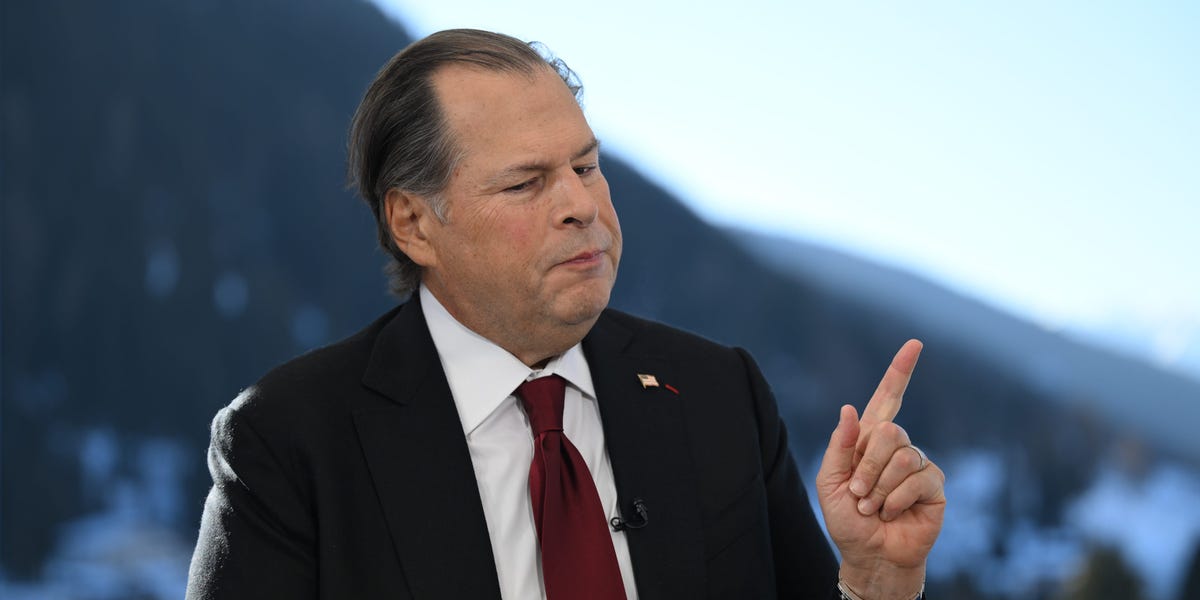
Marc Benioff told a podcast audience that he uses Slackbot to scan employee messages for complaints, operational gaps, and business issues in real time. The Salesforce CEO's admission immediately reframes the company's workplace culture narrative and introduces a governance angle that investors have not priced into CRM shares.
Salesforce CEO's Slack Monitoring Admission
Benioff's statement confirms that AI is being deployed internally to monitor employee communications at one of the world's largest software companies. Slack, which Salesforce owns, enables the scanning protocol. The CEO can see patterns of discontent before they surface through official channels. The simple read is that this improves management responsiveness. The better market read is that it signals a surveillance posture that could backfire. Employees who believe their Slack messages are private may feel betrayed. Trust erosion often leads to talent flight, lower productivity, and higher recruiting costs. For a company whose primary asset is human capital, that risk is material.
AI Surveillance and Employee Trust Risks
The admission lands at a moment when regulatory scrutiny of workplace AI is intensifying. The European Union's AI Act and proposed U.S. state-level privacy laws could treat employee monitoring differently than customer data collection. Salesforce may face compliance costs or legal challenges if employees in certain jurisdictions argue that the scanning violates privacy expectations. The mechanism is straightforward: negative headlines reduce employee morale, which can depress operating margins over a 12-18 month horizon. Investors should watch: internal employee survey scores, Glassdoor ratings, and attrition rates in Salesforce's engineering and sales teams. A spike in departures would confirm the risk is real.
Next Decision Point for CRM Investors
The next concrete marker is Salesforce's ability to clarify the scope of the monitoring. If Benioff follows up with a policy statement that limits scanning to aggregate sentiment analysis rather than individual message reviews, the reputational damage may be contained. If regulators or employee groups file complaints, the story becomes a legal overhang. For now, CRM shares trade on revenue growth and margin expansion targets. The Slackbot admission adds a non-financial risk that is difficult to quantify but easy to underestimate. Stock market analysis shows that governance controversies can compress multiples even when earnings are intact. Investors should treat this as a watchlist item and require a clear policy response before reassessing the risk premium on CRM.
Salesforce's next earnings call or SEC filing may include language about data privacy investments or employee engagement initiatives. Until then, the CEO's own words have introduced a catalyst that did not exist last quarter. The burden of proof is now on management to show that internal AI monitoring does not undermine the trust that makes the company's remote-work culture function.