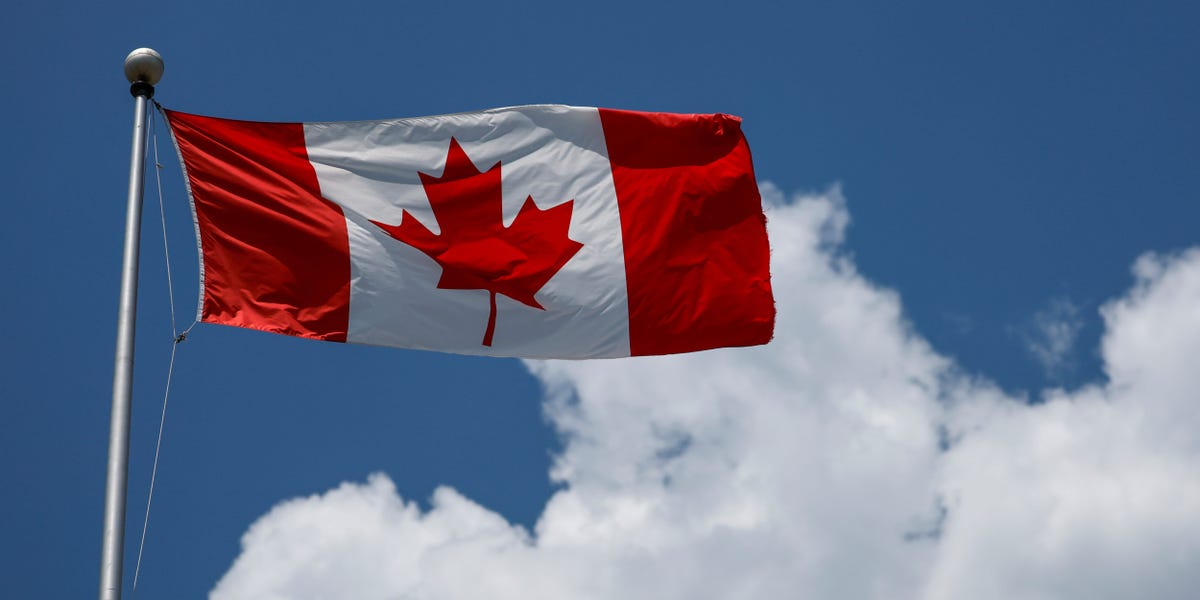
Trade talks between the US and Canada collapsed Friday. The next day Washington enforced a 50% tariff on some Canadian goods. Prime Minister Mark Carney responded with dollar-for-dollar counter-tariffs, framing the moment as a unifying cause.
“Canada has what the world wants,” Carney wrote Friday night. “We will not allow any nation to determine our future. We will set our own course to keep Canada strong for all.”
Canadians were already boycotting American products. The breakdown in negotiations has pushed that movement into higher gear, according to interviews and social media posts cited by Business Insider. Tyler Black, a child psychiatrist in Vancouver, told Business Insider that if you went for a walk in his neighborhood, there was a 50/50 chance you would overhear a conversation about tariffs.
“I'm not kidding,” he said. “Random conversations I'm walking by are talking about Trump and Carney, and what America just did. We're feeling very attacked.”
The boycott has been building since President Donald Trump’s reelection. Over the weekend, more people pledged to join. The #BoycottUSA tag revived on X. Reddit users posted infographics on supporting “Buy Canadian” during the tariffs. Some Europeans asked whether they should join in. TikToks cheering retaliatory tariffs drew thousands of likes.
Economic boycotts rarely move the needle for large companies. The Target boycott is one exception. Still, the White House in July called Canada’s treatment of US products “discriminatory,” a sign the campaign has rankled.
Eurasia Group founder Ian Bremmer wrote on X that he had never seen Canadians from across the political spectrum “so angry” with the United States.
Some signs suggest the sentiment is still gathering steam. Soccer fans booed the American national anthem. Travel data between the two countries, however, show a different picture – a possible bottoming out of the anti-US travel pullback. Tyler Black said he expected the travel numbers to fall again.
“I have no doubt that it's going to fall back down again,” he said. “I think Canadians are going to take this very patriotically.”
Tina Garrett, a writer from Toronto, said she had been boycotting since before the latest tariffs. The news, she said, would renew the effort for people who had let it slip.
“Some people got a little lazy with it,” she said. “I think it will renew the boycott for a lot of people.”
The risk for US companies with Canadian exposure is real. The Canadian market accounts for roughly 18% of US exports. Consumer-facing sectors – food, beverages, retail, travel – are the most vulnerable. A coordinated, sustained boycott could shave a few tenths of a percentage point off quarterly revenue for companies like Starbucks, McDonald’s, and Walmart, which have thousands of Canadian locations. The downturn in Canadian travel to the US is already visible in airline booking data and hotel occupancy rates in border states.
Carney’s government has not laid out a timeline for the counter-tariffs. The next round of trade talks has not been scheduled. The situation is reminiscent of the gradual policy build-up that analysts have flagged as a market risk that accumulates over time, not in a single shock.
For now, the boycott is a consumer-led protest, not a government-mandated one. That makes it harder to reverse, because it is decentralized and emotional. The White House called the treatment discriminatory in July. Whether that escalates further depends on the trajectory of the next trade talks.