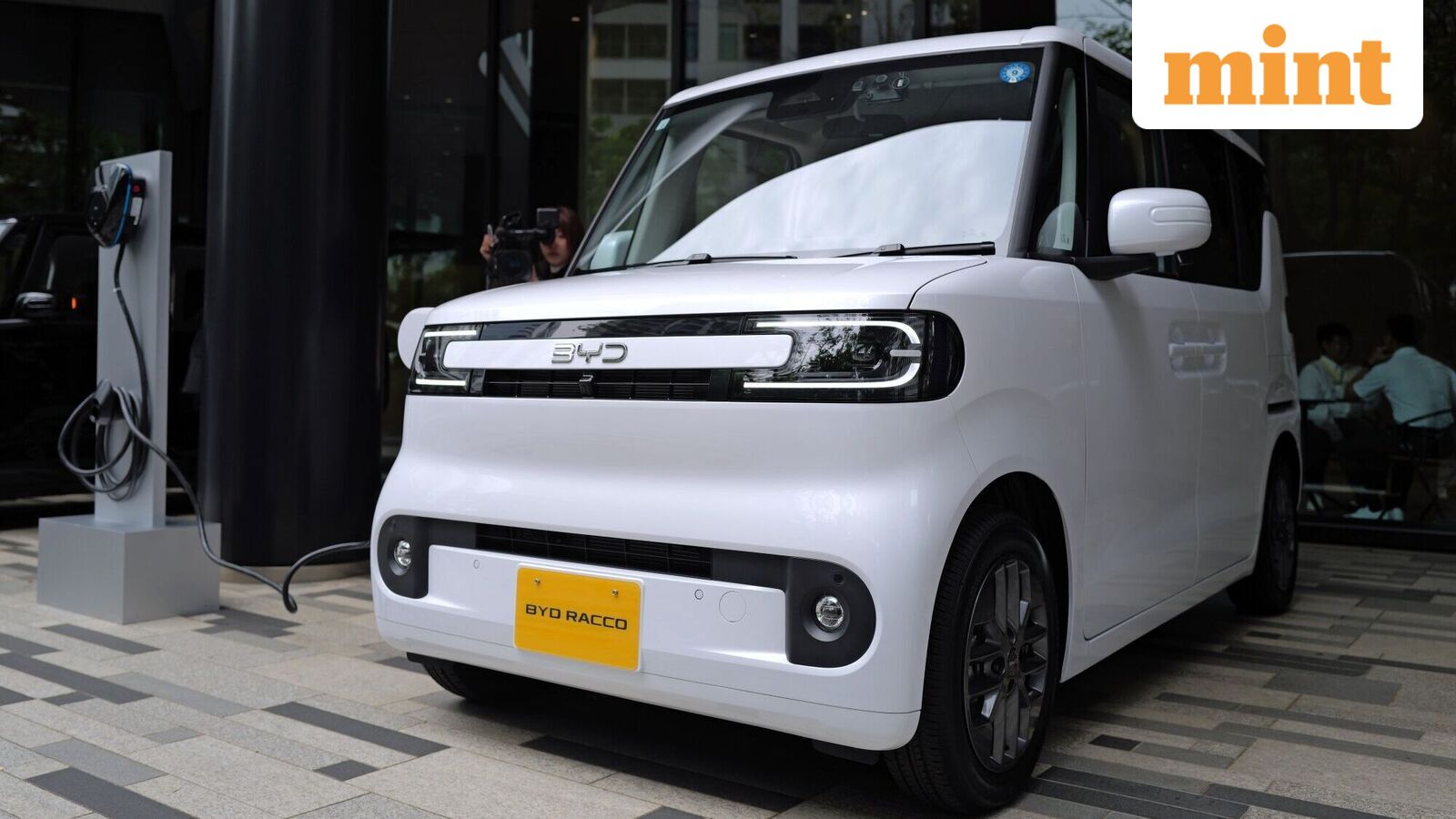
BYD Co. is making its most serious push yet into Japan, the world's fourth-largest auto market, with a tiny electric car built specifically for the country's beloved kei jidosha category.
The Shenzhen-based company this week introduced the Racco, a four-seat minicar priced at ¥2,145,000 ($13,000) for the entry-level model. That puts it in direct competition with Nissan Motor Co.'s popular Sakura, which carries a higher sticker price but becomes slightly cheaper after national subsidies. The Racco offers a longer driving range and more features at a comparable outlay.
Japan's kei segment accounts for more than a third of annual vehicle sales. The category dates to 1949, when the government created it as a low-cost, fuel-efficient transport option during the postwar rebuilding period. The cars are restricted to 3.4 meters in length and 1.48 meters in width, with their own tax and insurance rules.
BYD sold only 4,500 vehicles in Japan last year. Foreign brands as a group make up about 5% of the country's auto market. Even modest success in the kei segment would mark a breakthrough and create a path for other Chinese carmakers, the company hopes.
The timing matters because BYD has set a goal of overtaking Toyota Motor Corp. as the world's top automaker within five years. That ambition faces a major structural obstacle: the U.S. market is effectively closed to Chinese vehicles, which face 100% tariffs plus a national security ban on their software and hardware systems. With domestic revenue shrinking, BYD needs new export markets.
Japan's subsidy system presents a separate challenge. In April, the government revised how it calculates clean-energy vehicle incentives. The old formula rewarded driving range and energy efficiency, which played to BYD's strengths. The new version weights supply chains and cybersecurity, favoring companies that support domestic industry, according to Ken Maeda, an analyst cited by Bloomberg.
The result: the subsidy for BYD's entire lineup was cut by more than half, to ¥150,000. Toyota's bZ4X retained the maximum ¥1.3 million subsidy. Tesla Inc.'s purchase incentive followed at ¥1.27 million. In the kei category, the gap is roughly ¥400,000 versus rival models.
BYD's pricing on the Racco suggests the company is working around that disadvantage. The entry-level model undercuts the Sakura on features and range, even if the subsidy gap narrows the effective price difference.
Japanese kei buyers are among the most loyal in the world. Suzuki Motor Corp., Daihatsu Motor Co. and Honda Motor Co. dominate the segment, having spent decades building trust on reliability, resale value and dealer support. Many kei owners have purchased several generations of the same model. Persuading them to switch to an unfamiliar Chinese brand is a tall order.
BYD has 77 sales locations in Japan, including dozens of official dealerships. The company aims to reach 100 outlets by year-end and expand further. Opening stores in smaller cities, where demand for tiny cars is strongest, is the right first step.
If BYD can convince some of the world's most demanding and loyal drivers to embrace a Chinese brand, it would be the company's most impressive victory yet, said the Bloomberg Opinion columnist who covers Asian corporate strategy.