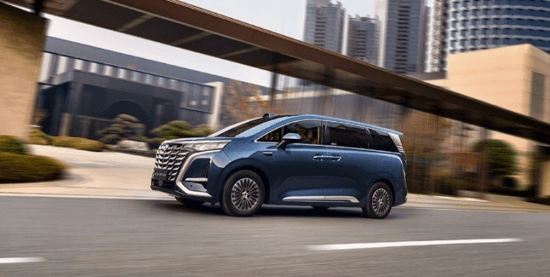
A Pivot Toward Autonomous Sophistication
BYD, the world’s leading new energy vehicle (NEV) manufacturer, has officially signaled a major technological shift by rolling out a comprehensive over-the-air (OTA) update for its premium Denza D9 multi-purpose vehicle (MPV). This update marks a significant milestone for the automaker, as it integrates an end-to-end AI driving model into the vehicle’s operating system, moving beyond traditional rule-based driver assistance systems toward a more fluid, machine-learning-driven architecture.
By leveraging end-to-end models, BYD is aligning itself with the industry’s cutting-edge trend—popularized by firms like Tesla and various autonomous driving startups—where the entire perception-to-action pipeline is processed through a single neural network. This shift is designed to improve decision-making in complex traffic scenarios, effectively bridging the gap between standard Level 2+ assistance and more autonomous capabilities.
Enhancing the Premium Experience
Beyond the backend overhaul of its driving intelligence, the update introduces a suite of enhancements to the Denza D9’s smart cockpit. For premium vehicle owners, the "smart cockpit" is increasingly becoming the primary differentiator in a crowded Chinese EV market. The update aims to refine user interface responsiveness, improve voice command integration, and optimize the overall ecosystem connectivity that defines the Denza brand’s competitive edge.
For BYD, the Denza D9 serves as a flagship case study for its software-defined vehicle strategy. As the company continues to aggressively capture market share from traditional internal combustion engine (ICE) luxury competitors, the ability to iterate on software performance remotely—without requiring a dealership visit—remains a core pillar of its customer retention and value-add strategy.
Market Implications: Why This Matters for Investors
For institutional investors and traders tracking the EV sector, this update is more than a simple feature patch; it represents the operationalization of BYD’s heavy R&D spending on intelligent driving. Historically, BYD was perceived as a hardware-dominant manufacturing giant with a secondary focus on software. This update, however, demonstrates a mature transition into a software-first development cycle.
If the end-to-end model succeeds in enhancing the D9’s safety and convenience benchmarks, it serves as a proof-of-concept for the rest of BYD’s broader portfolio. The successful deployment of this tech at scale could reduce the friction between the brand’s massive hardware volume and the high-margin software services investors expect from modern EV leaders. Traders should monitor whether this software deployment leads to a measurable uptick in Denza’s premium segment sales or a reduction in the "tech gap" often cited by analysts when comparing BYD to domestic rivals like XPeng or Nio, which have traditionally led in autonomous software development.
The Road Ahead
Looking forward, the market will be watching the adoption rates of this update and, more critically, the real-world performance data of the end-to-end driving model. As BYD continues to scale its intelligent driving capabilities, the focus will shift toward whether these features can be efficiently cascaded down to its more mass-market models.
Furthermore, as global competition intensifies, the ability to deploy sophisticated AI models via OTA updates provides BYD with a defensive moat against foreign legacy automakers who are currently struggling to match the velocity of Chinese software iteration. Investors should keep a close eye on future quarterly reports for commentary regarding software-as-a-service (SaaS) revenue potential and R&D efficiency gains stemming from this transition to unified AI architectures.