Stocks● Neutral
Bundibugyo Ebola Strain: Why This DRC Outbreak Is Different
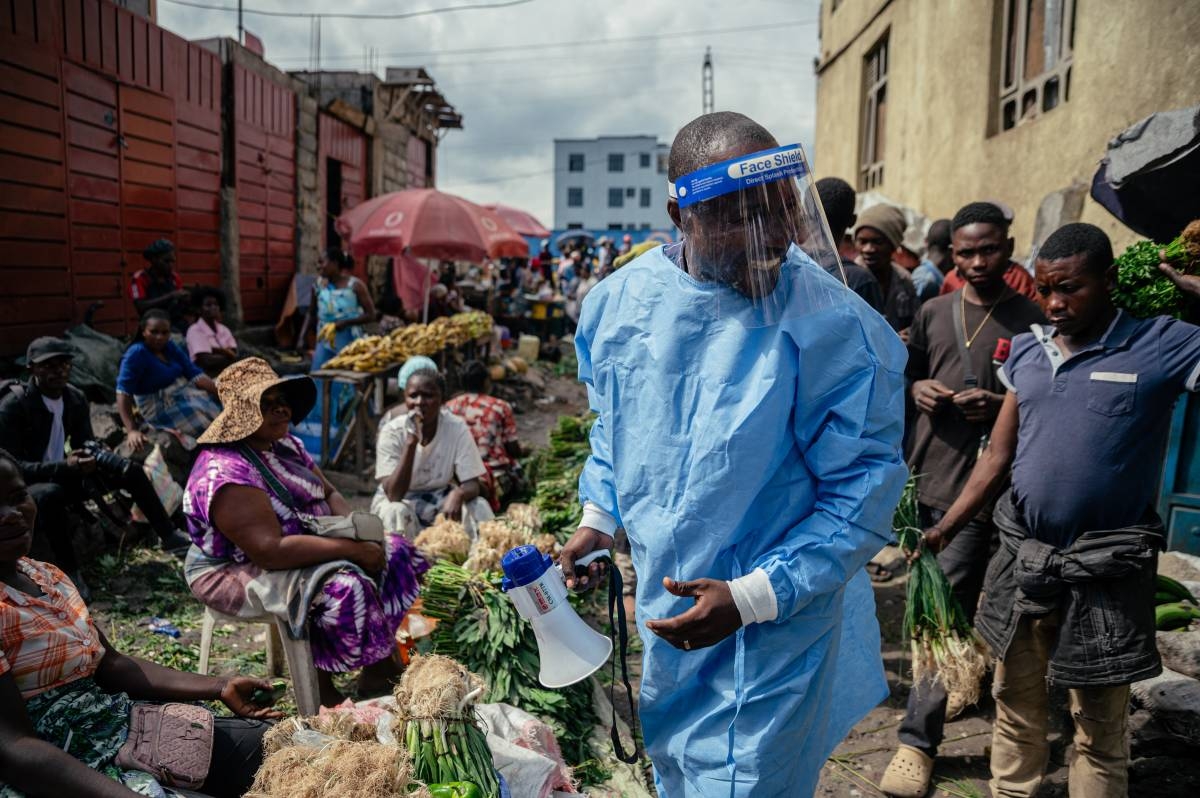
WHO director visits DRC as 1,077 Ebola cases expose Bundibugyo strain's vaccine gap; insecurity and displacement camps raise supply-chain risks for cobalt and regional trade.
Continue with
World Health Organization Director General Tedros Adhanom Ghebreyesus landed in Bunia, capital of Ituri province, the eastern Democratic Republic of Congo region hardest hit by a severe Ebola outbreak. The visit, confirmed by an AFP journalist on Saturday, signals that the outbreak has escalated beyond a routine health emergency. The Bundibugyo strain driving the epidemic has no approved vaccine or specific treatment, a gap that sets this outbreak apart from previous DRC Ebola crises.
The Catalyst: Tedros in Ituri Province
The WHO chief told reporters in Bunia that the international community is helping the DRC government cope with the outbreak, “but at the same time community ownership is important.” He added: “We are here to discuss with the community, to see how the response is running and if there are challenges to help.” The visit comes as the Africa Centres for Disease Control and Prevention reported 1,077 suspected cases and 246 deaths since the outbreak was declared on May 15. The WHO has warned the true reach is likely wider, because limited laboratory testing capacity and insecurity prevent full detection.
The outbreak already spans three eastern DRC provinces – Ituri, North Kivu, and South Kivu – and has crossed into Uganda, where nine confirmed infections and one death have been recorded. Uganda closed its border with the DRC this week and imposed a 21-day quarantine for anyone arriving from that country. On Friday, the WHO announced that a patient recovered and was discharged after two negative tests, a first in the current outbreak.
Why This Outbreak Defies the Standard Containment Playbook
Doctors Without Borders (MSF) stated that “never has an Ebola epidemic recorded so many cases in the first days after it being declared.” The number of medical experts deployed to the region remains insufficient, MSF said. The speed of transmission threatens to overwhelm the response capacity before it can ramp up.
No vaccine for the Bundibugyo strain
Previous DRC Ebola outbreaks were caused by the Zaire strain, for which Merck’s ERVEBO vaccine is licensed. The current Bundibugyo strain is antigenically distinct, meaning existing stockpiles of Zaire-targeted shots offer no cross-protection. CDC Africa said on Thursday that a vaccine should be ready by the end of the year. Until then, containment relies entirely on the standard playbook: case identification, contact tracing, isolation, and safe burial practices. All of those tools are compromised by the security environment.
Security vacuum compounds transmission risk
State services are largely absent in Ituri province. Access is hindered by Islamic State-affiliated ADF militants and other armed groups that regularly kill civilians. North Kivu and South Kivu have suffered near-continuous violence for three decades, with the Rwanda-backed M23 group controlling large swathes of territory. These conditions prevent health teams from reaching remote villages, disrupt supply chains for protective equipment, and make sustained contact tracing nearly impossible.
Displacement camps as transmission accelerators
Millions of people have fled the fighting and are living in camps with poor hygiene conditions. Nearly one million of those displaced are in Ituri province alone. Dorcas Mapenzi, a resident of the Kingonze camp on the outskirts of Bunia, said: “If Ebola comes, we'll be wiped out as we're packed like sardines.” The concentration of people in close quarters, combined with limited clean water and sanitation, creates an ideal environment for the hemorrhagic fever to spread rapidly. A single undetected case in a camp could seed a cluster that overwhelms local health facilities.
Affected Assets: DRC Sovereign Risk and Commodity Supply Chains
The DRC is the world’s largest producer of cobalt, a critical input for electric-vehicle and lithium-ion batteries. Any escalation in the health crisis that forces mine shutdowns or labor quarantines could tighten cobalt supply, amplifying price volatility already driven by geopolitical risks. While no company is named in the source, cobalt producers operating in the region face direct operational risk. Investors holding frontier-market ETFs or commodity-linked funds should watch for a flight to safety from DRC-linked assets.