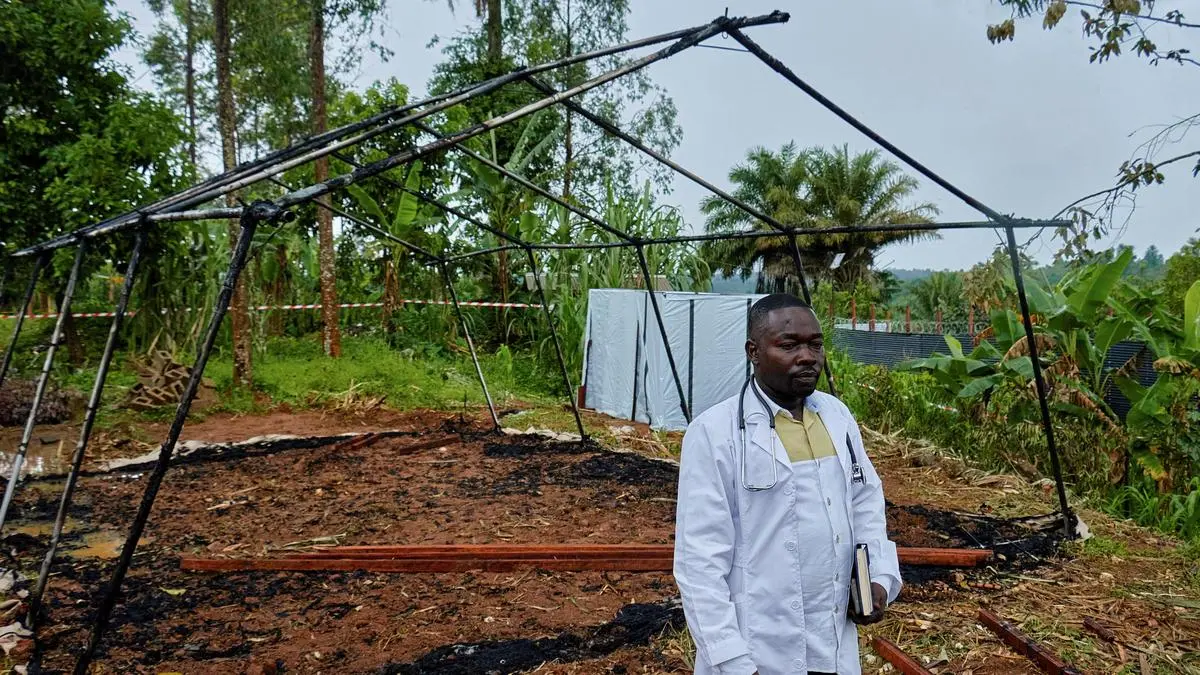
The World Health Organization has warned that the Ebola outbreak in eastern Democratic Republic of Congo is spreading faster than responders can contain it. Director-General Tedros Adhanom Ghebreyesus told African health ministers on Monday that the epidemic is outrunning containment efforts. Congo's health ministry reported 101 confirmed Ebola infections, 930 suspected cases and 221 suspected deaths across 11 health zones in Ituri, North Kivu and South Kivu provinces.
What makes this outbreak distinct from recent ones is the pathogen. The outbreak involves the Bundibugyo strain of Ebola, a rare variant with no approved vaccines or treatments. The two licensed Ebola vaccines target the Zaire strain and have not been proven effective against Bundibugyo. The WHO is now discussing experimental vaccines and clinical trials involving antiviral drugs and monoclonal antibodies. That gap is the core market catalyst.
Bundibugyo Strain Opens a Vaccine Gap
Bundibugyo was first identified in Uganda in 2007 and has caused only small outbreaks since. It is one of six known Ebola species. The absence of a licensed medical countermeasure changes the risk calculus for global health authorities. An outbreak that cannot be controlled with existing stockpiles forces emergency procurement and accelerated clinical development.
The last major Ebola outbreak in West Africa (2014‑2016) drove hundreds of millions of dollars into vaccine and drug development for Zaire ebolavirus. A Bundibugyo outbreak of this scale creates a similar R&D incentive for a different target. Investors should watch for companies with filovirus vaccine platforms that can be adapted quickly, broad‑spectrum antiviral candidates already in clinical trials, and monoclonal antibody programs with cross‑strain potential.
Bottom line for traders: The WHO's explicit call for experimental solutions against an accelerating outbreak with no approved medical countermeasure creates a high‑probability R&D catalyst. The sector does not need a named company in a press release yet; the signal is the speed of transmission and the strain's vulnerability gap.
Conflict Zone Logistics Raise the Stakes
Eastern DRC is a war zone with active militias. Treatment centers have been attacked. Reuters reported that at least 25 Ebola patients fled isolation units in Ituri after tents were burned and hospitals stormed by crowds demanding bodies for burial. One confirmed patient remains at large in the community. Armed conflict, mass displacement and distrust of authorities are complicating isolation and contact tracing. More than 2,200 contacts are being tracked across 11 health zones. Unsafe burials are accelerating transmission.
Three structural barriers differentiate this outbreak:
- Active armed conflict in the affected zones
- Community distrust of health authorities
- Velocity of transmission that Tedros described as outpacing response
The combination of a missing vaccine and a hostile operating environment increases the probability that the outbreak will expand. If it reaches a major urban center like Goma or Bukavu, the response will require military‑level logistics and massive international mobilization. That scenario would trigger multi‑billion‑dollar funding discussions from organizations like BARDA and CEPI.
The Next Catalysts for Biotech Positioning
This outbreak creates a watchlist event. The next market‑moving triggers are concrete and sequential.
- WHO announcement of a clinical trial partnership. If the WHO or CEPI names a specific vaccine or drug candidate, that company will see immediate price action.
- A first confirmed case in a neighboring country. Uganda, Rwanda or South Sudan would trigger emergency funding and travel restrictions, pressuring governments to pre‑order countermeasures.
- A U.S. or European government funding commitment. BARDA has deep pockets for Ebola. Any mention of Bundibugyo‑specific funding would be a catalyst.
What would weaken the thesis: rapid containment using non‑pharmaceutical measures such as isolation, safe burial and ring vaccination with existing stockpiles. With no approved vaccine for this strain, containment relies entirely on behavioral interventions in a conflict zone. That is a fragile assumption.
Execution Risk in Outbreak‑Driven Trades
Outbreak‑driven biotech moves are often parabolic and short‑lived. During the 2014‑2016 cycle, stocks like Tekmira Pharmaceuticals rose 10x before crashing back as trials failed or funding shifted. The market tends to price in peak panic, not the slow grind of clinical development. Traders should take partial profits if a stock doubles on outbreak news alone without trial data or a contract. Real value lies in companies with platform technology applicable to multiple pathogens, not single‑strain bets.
For ongoing sector analysis, see our stock market analysis desk. For broker selection to trade volatile biotech positions, review our guide on best stock brokers.
Also monitor related geopolitical risks in our article on Iran War and US Tariffs Threaten Nifty Heavyweights, as emerging‑market instability often compounds health crises.