The Shift from Reopening to Military Escort
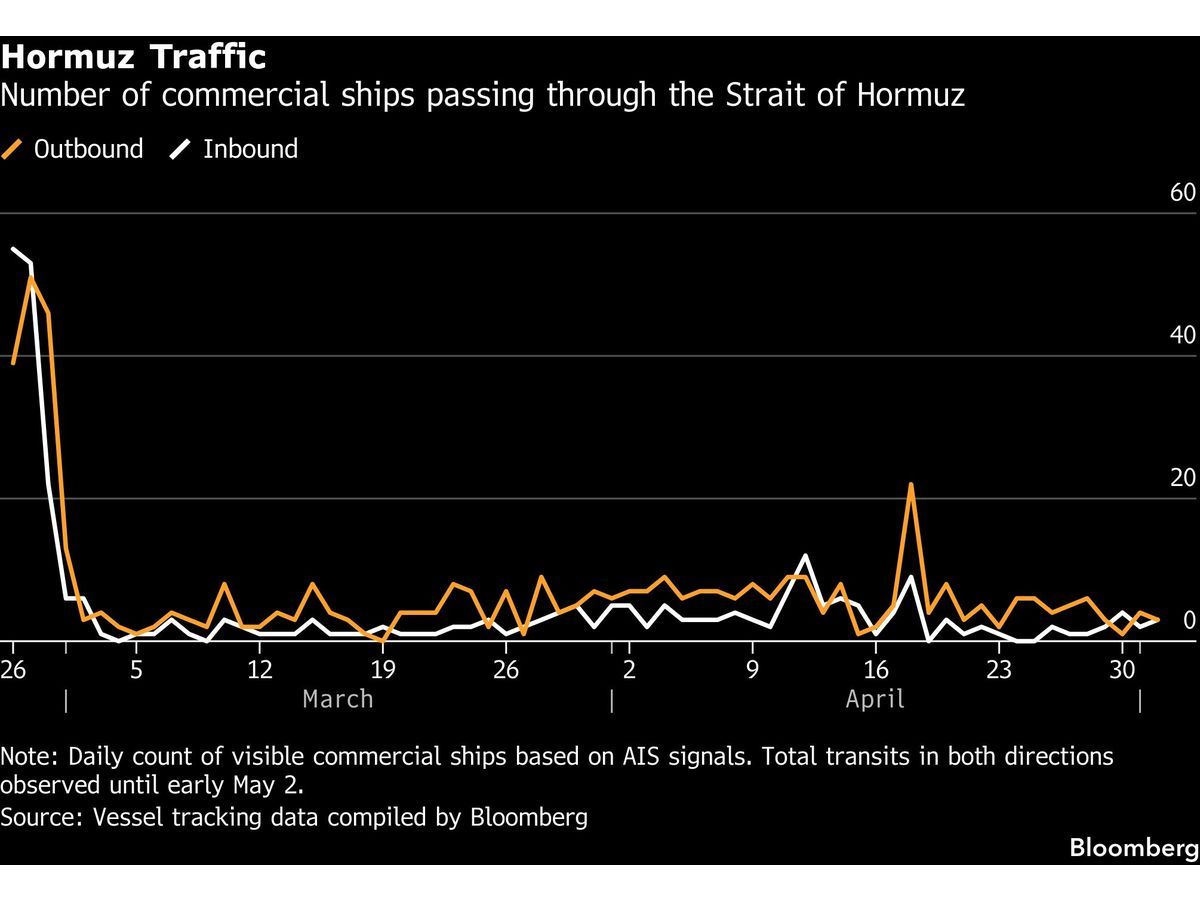
Brent crude is currently trading near $109 a barrel as the market recalibrates its expectations following the announcement of a US military-led plan to guide vessels through the Strait of Hormuz. The initial market optimism surrounding a potential diplomatic resolution to the waterway's closure has evaporated, replaced by a complex security environment that threatens to sustain the current supply disruption. The shift in tone from potential reopening to military escort operations marks a pivot point for energy traders who previously priced in a return to normalcy.
Florence Schmit, an energy strategist at Rabobank, noted that the transition from discussions about opening the strait to talks of military escorts erodes the hope for tangible diplomatic progress. This change in narrative forces a reassessment of the risk premium embedded in crude prices. The market is no longer pricing in a resolution but is instead factoring in the costs and risks associated with a protracted, militarized transit environment.
Operational Ambiguity and Shipping Risks
While the US Central Command announced plans to provide military support, including guided-missile destroyers, aircraft, and drones, the execution remains shrouded in uncertainty. Reports from the Wall Street Journal suggest that the current plan does not involve direct Navy escorts, a detail that has left shipping executives skeptical. Without concrete operational details or assurances regarding the mitigation of mine threats and Iranian aggression, commercial operators remain hesitant to resume standard transit schedules.
This operational ambiguity is compounded by ongoing security incidents. The UK Maritime Trade Operations reported that a tanker was struck by projectiles 78 nautical miles north of Fujairah, United Arab Emirates, on Sunday. Although the crew remained safe, the incident underscores the vulnerability of commercial shipping in the region. For a deeper look at how these regional tensions impact broader energy infrastructure and refining margins, traders often reference Strait of Hormuz Closure Risks and the VLO Refining Windfall.
Iranian Defiance and OPEC+ Positioning
Iran has responded to the US plan with overt hostility, labeling any American interference in the strait as a violation of the existing ceasefire. Ebrahim Azizi, head of the Iranian parliament’s National Security Commission, indicated that US forces would face attacks if they entered the waterway. This rhetoric serves as a direct counter-narrative to President Trump’s vague claims of ongoing discussions with Tehran that could lead to something positive. The market is now forced to weigh these conflicting signals, with the primary focus on whether the US military presence acts as a deterrent or a catalyst for further escalation.
Against this backdrop, OPEC+ has attempted to maintain a veneer of stability. The group recently agreed to a symbolic increase in June quota levels, aiming to project a business-as-usual stance following the departure of the United Arab Emirates. However, the market is largely ignoring this supply-side signal, as the physical chokepoint in the Strait of Hormuz remains the dominant driver of price action. For those tracking the broader implications of these supply constraints, further commodities analysis is essential to understanding the divergence between OPEC policy and actual transit realities.
Technical and Risk Assessment
Crude prices have trended upward since mid-April, driven by the realization that the strait is unlikely to reopen in the near term. Arne Lohmann Rasmussen of A/S Global Risk Management Ltd. highlighted that this is the first attempt to reopen the chokepoint through military means, making the market’s reaction to Iran’s response the most critical variable.
Traders should monitor the following indicators for confirmation or invalidation of the current price floor:
- Escort Confirmation: Any shift from general military support to active, documented Navy escorts would likely tighten the risk premium further.
- Transit Volumes: A sustained lack of commercial traffic, despite the announced US support, would confirm that the military plan is insufficient to restore market flow.
- Geopolitical Rhetoric: Any formal breakdown in the ceasefire, as hinted at by Iranian officials, would likely trigger a sharp move higher in Brent.
While financial institutions like MET stock page and WELL stock page are sensitive to broader economic growth and inflation fears, the crude market is currently tethered to the physical reality of the Strait of Hormuz. The risk of slower economic growth and higher inflation remains the primary macro-level concern, but the immediate price action is dictated by the inability of vessels to navigate the region safely.