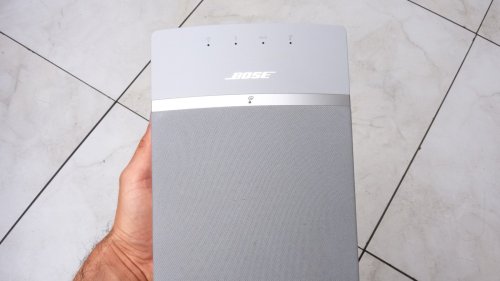
Bose confirmed it will no longer provide security and software updates for a range of older smart speakers and soundbars. The decision immediately changes the ownership calculus for anyone holding those devices, even though the hardware itself remains functional. For the broader audio-hardware market, the move creates a tangible catalyst for Sonos (SONO), the only pure-play publicly traded competitor that has built its brand on long-term software support.
Bose Ends Support for Legacy Speakers
The affected Bose products span several generations of Wi-Fi-connected speakers and soundbars. Without future patches, these devices become progressively more vulnerable to network-based exploits. The practical impact is not instant obsolescence; streaming services and basic playback will continue to work. The risk lies in the slow decay of compatibility as streaming protocols evolve and security standards tighten.
Bose framed the change as a natural lifecycle decision. The company pointed users toward newer hardware, a familiar industry pattern. The difference here is the breadth of the cutoff. Multiple product lines that still hold meaningful household penetration are now frozen in time. For a user base that paid a premium for Bose’s ecosystem, the signal is clear: the hardware outlasts the software promise.
Sonos Could Capture Displaced Users
Sonos has spent years marketing its update policy as a competitive moat. The company supports speakers for a decade or more, often issuing feature additions alongside security patches. When a rival like Bose draws a hard line on legacy support, the contrast sharpens. A household that feels burned by a frozen Bose speaker faces a straightforward replacement decision: buy another Bose device and accept the same lifecycle risk, or switch to a platform that explicitly guarantees longer software continuity.
That decision path does not require Sonos to launch a new product. It only requires a subset of Bose owners to act on the frustration of owning a device that will never receive another patch. Sonos’s entry-level Era 100 and portable Roam speakers sit at price points that overlap with Bose’s discontinued models. The switching cost is low, and the narrative around software longevity is unusually concrete right now.
No sell-side estimate yet quantifies the potential user migration. The mechanism, however, is the same one that has driven share shifts in smartphones and wearables: a support cutoff creates a forced upgrade moment, and the brand that caused the cutoff rarely wins the replacement sale. Sonos reports earnings next in early August, and any commentary around new-user acquisition trends will be the first real test of whether the Bose decision is moving the needle.
The Next Decision Point
The immediate catalyst is not a Sonos press release. It is the organic churn that starts when a Bose owner searches for a replacement and discovers the update policy gap. Retail channel checks over the next two quarters will show whether Sonos units are gaining shelf space at Bose’s expense. The August earnings call is the first formal checkpoint; any upward revision to household growth or registered-device counts would confirm that the support cutoff is converting into market-share gains. Until then, the trade is a positioning bet on a competitor’s self-inflicted wound.