Stocks● Neutral
Book Reveals S.C. Johnson's Century-Old Family Playbook
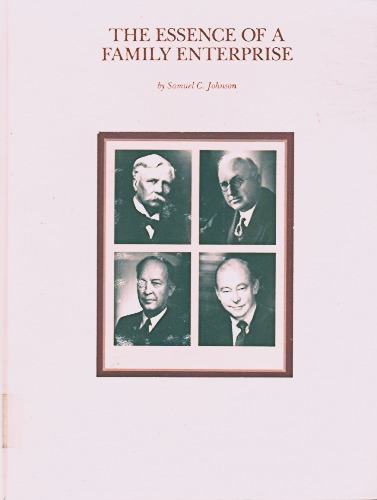
Samuel C. Johnson's book on S.C. Johnson's 100-year philosophy offers investors a framework for evaluating family-controlled public companies and long-term value creation.
Continue with
Samuel C. Johnson's "The Essence of a Family Enterprise" is a collection of essays written for the 100th anniversary of S.C. Johnson & Son, reflecting on the philosophy and principles that built the company. For investors, the book is more than a corporate history – it is a practical guide to the governance and capital allocation practices that allow family-controlled businesses to outlast generations.
The S.C. Johnson Century Playbook
The book distills tenets such as long-term thinking, product integrity, and stewardship over short-term profit maximization. These principles are embedded in S.C. Johnson’s ownership structure: the Johnson family retains control, aligning management incentives with decades-long value creation rather than quarterly earnings pressure. The essays highlight how this framework fosters innovation without sacrificing financial discipline. For public-company analysts, the playbook offers a benchmark for evaluating insider-controlled firms that behave like family enterprises.
Why the Family Enterprise Model Matters in Public Markets
In an era dominated by activist investors and earnings‑beat cycles, the family‑enterprise approach is a structural hedge. Companies that adopt similar governance – high insider ownership, conservative leverage, and multi‑generational capital plans – often exhibit lower volatility and higher cumulative returns. The book's release coincides with growing institutional interest in family-run public companies, from Ford to Mars, as a source of alpha.