India's headline CPI inflation remained below the Reserve Bank of India's 4% target in April. A Bank of Baroda report warns that the calm is fragile, with fuel price pass-through and weather shocks threatening to push FY27 inflation higher. The report does not forecast a breakout. It maps the transmission channels that would turn a benign print into a policy problem, and it names the specific pressure points traders need to watch.
Crude's War Premium Is Testing India's Inflation Insulation
India has stayed relatively insulated from global energy spikes so far, partly because of government price controls and contained demand-side pressures. Bank of Baroda's note argues that insulation is now being tested.
The Pass-Through Mechanism
The report states that "globally, food prices are showing upside risks due to elevated energy costs, making domestic inflation trends vulnerable in the coming months." That is a direct causal chain: higher energy raises fertiliser and transport costs, which then feed into food production and distribution. The pass-through to Indian consumers, the report says, "needs to be monitored closely."
"Thus, the pass-through to domestic prices needs to be monitored closely, at a time when weather-related vagaries are posing upside risk to inflation in FY27."
This is not a distant tail risk. Crude oil prices have stayed elevated, and the war premium has not dissipated. The report explicitly ties the inflation risk to geopolitics: "inflationary risks remain tilted to the upside unless the ongoing war situation eases." That is a binary catalyst. A ceasefire or de-escalation would remove the risk premium from crude and ease the pass-through concern. An expansion of hostilities would do the opposite.
Why the War Premium Matters for Equities
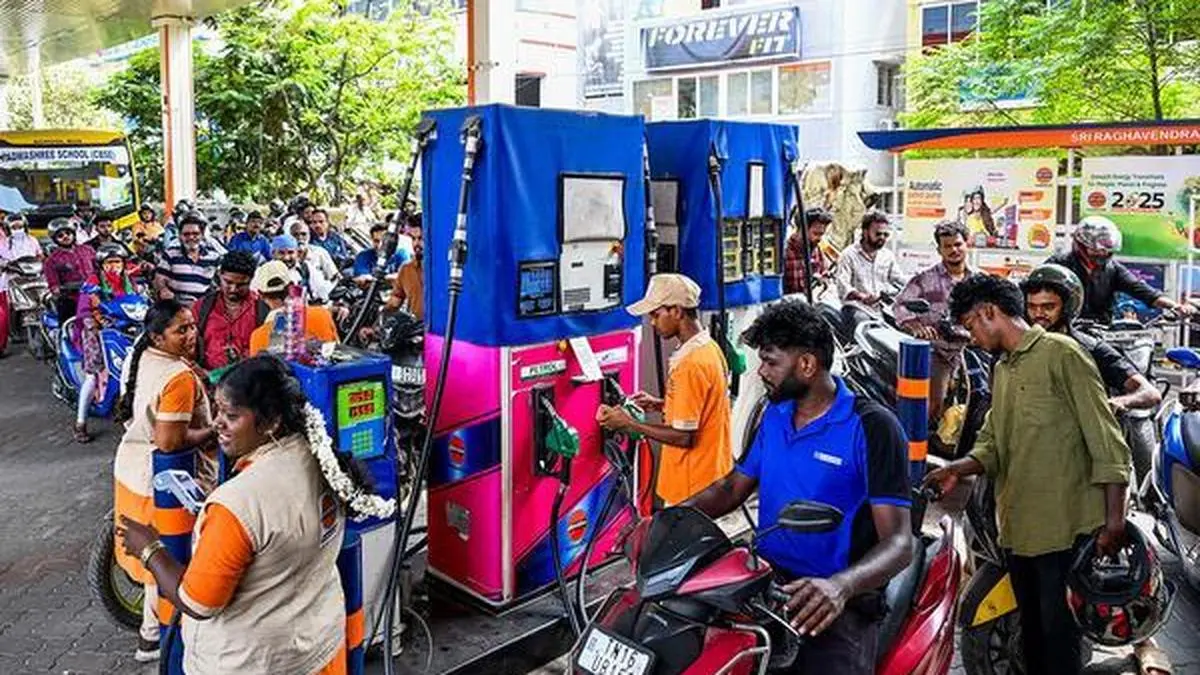
For equity traders, the energy-cost channel hits margins in manufacturing, logistics, and agriculture-linked sectors. A sustained rise in diesel and petrol prices would compress disposable income and shift consumption patterns away from discretionary goods. The Nifty 50's recent resilience has partly rested on the assumption that input costs will stay manageable. That assumption now has a visible crack. The government's fuel pricing mechanism has absorbed some of the global spike. Sustained crude above $90 would test that buffer, forcing either a pass-through to consumers or a wider fiscal deficit from higher subsidies. Both outcomes would pressure the rupee and bond yields. Traders holding energy-sensitive positions are effectively holding a war-sentiment bet, whether they intend to or not.
Weather Shocks Threaten the Food Basket
Food inflation is already the main driver of India's CPI. The Bank of Baroda report identifies a set of weather-related threats that could amplify it in FY27.
Heatwave and El Niño: The Double Threat to Kharif Output
"Monitoring is required as weather-related vagaries persist, in terms of heatwave conditions and expected El Niño. Hence, food inflation trajectory needs to be monitored closely," the report notes. Heatwaves damage standing crops, reduce labour productivity, and spike electricity demand for irrigation and cooling. An El Niño event typically weakens the Indian monsoon, which directly hits kharif crop output. The combination would tighten food supply at a time when global food prices are already rising.
The India Meteorological Department's monsoon forecast and early rainfall data will be the first real-time indicators of whether the food inflation trajectory worsens. A deficient monsoon would force the government to consider export curbs, stock limits, and import duties, all of which have direct consequences for agri-commodity stocks, fertiliser companies, and rural-facing lenders.
Vegetables, Pulses, Edible Oils: The Pressure Points
The report names the specific pressure points within the food basket:
- Vegetables: highly perishable, price-sensitive to transport costs and heat damage
- Pulses: already tight domestic supply, vulnerable to rainfall disruption
- Edible oils: import-dependent, directly exposed to global energy and war premiums
- Protein-based items: milk, eggs, meat, and fish, where feed costs are rising
These categories account for a large weight in the CPI basket and are the items households notice most. A sharp rise in any one of them can shift inflation expectations, the variable the RBI watches most closely.
BoB Consumption Index Pickup Closes the Rate-Cut Door
Bank of Baroda's in-house Economic Consumption Index (BoB ECI) showed a pickup of 1% year-on-year in May 2026, based on data available till May 11. The report frames this as a reason for "watchfulness" rather than alarm.
What the 1% YoY Rise Signals for RBI Policy
A 1% rise in a consumption index is modest. The significance is the direction. After a period of subdued demand, a turn higher in consumption, combined with supply-side food and energy pressures, would close the door on any near-term rate cuts. The RBI has held rates steady, and the market has been pricing a shallow easing cycle. The BoB ECI print suggests that demand is not collapsing, which means the central bank has less room to cut even if growth slows. The RBI's next policy review will weigh the BoB ECI's direction against the food inflation trajectory. A hawkish tilt would hit rate-sensitive stocks first, with banks and non-bank lenders facing margin pressure if rates stay higher for longer.
Core Inflation Remains Contained; Services Show Stirring
Core inflation does not currently pose a significant risk, the report notes. Lower gold prices are helping keep core contained. Restaurant and hospitality services could witness some inflationary pressure, the report cautioned, a sign that services demand is recovering. That is a mixed signal for rate-sensitive sectors like banks, real estate, and autos.
Scenarios That Would Ease or Worsen the Risk
The Bank of Baroda report maps the conditions under which the inflation risk recedes or intensifies.
What Would Reduce the Pressure
Three developments would reduce the inflation risk and support current market valuations:
- A ceasefire or de-escalation in the war that lowers crude oil and fertiliser costs
- A normal or above-normal monsoon that boosts crop output and cools food prices
- Stable or lower energy prices that prevent a second-round pass-through to transport and manufacturing
If these conditions materialise, the RBI could maintain its accommodative stance, and the Nifty's earnings multiples would look more defensible.
What Would Amplify It
The report's risk map also includes scenarios that would force a repricing of Indian assets:
- Extended heatwave and El Niño that damage kharif sowing and reduce agricultural output
- Sustained crude above $90 that forces the government to pass through costs or widen the fiscal deficit with subsidies
- A consumption pickup that outpaces supply, turning the BoB ECI's 1% rise into a trend and forcing the RBI to sound hawkish
In that scenario, rate-sensitive stocks would face a double hit: higher input costs and a delayed or reversed rate-cut cycle. The rupee would come under pressure from a wider current account deficit, adding currency risk for foreign portfolio investors.
Key insight: The sub-4% CPI print is a snapshot, not a trend. The Bank of Baroda report shows that the inflation trajectory for FY27 depends on two variables that are outside the RBI's control: the war and the weather.
India has remained relatively insulated from major inflation shocks so far, the report acknowledges. That insulation is now being tested on multiple fronts. Traders who treat the current CPI level as a reason for complacency are ignoring the transmission channels that the Bank of Baroda has laid out. Indian government bond yields would rise if inflation expectations unanchor, raising borrowing costs across the economy and compressing equity valuations. The next concrete markers are the monsoon's progress, the trajectory of crude, and any signal from the RBI that it is shifting its assessment of the inflation outlook. Until those markers resolve, the risk in Indian equities is tilted toward sectors that need low and stable input costs to sustain margins.