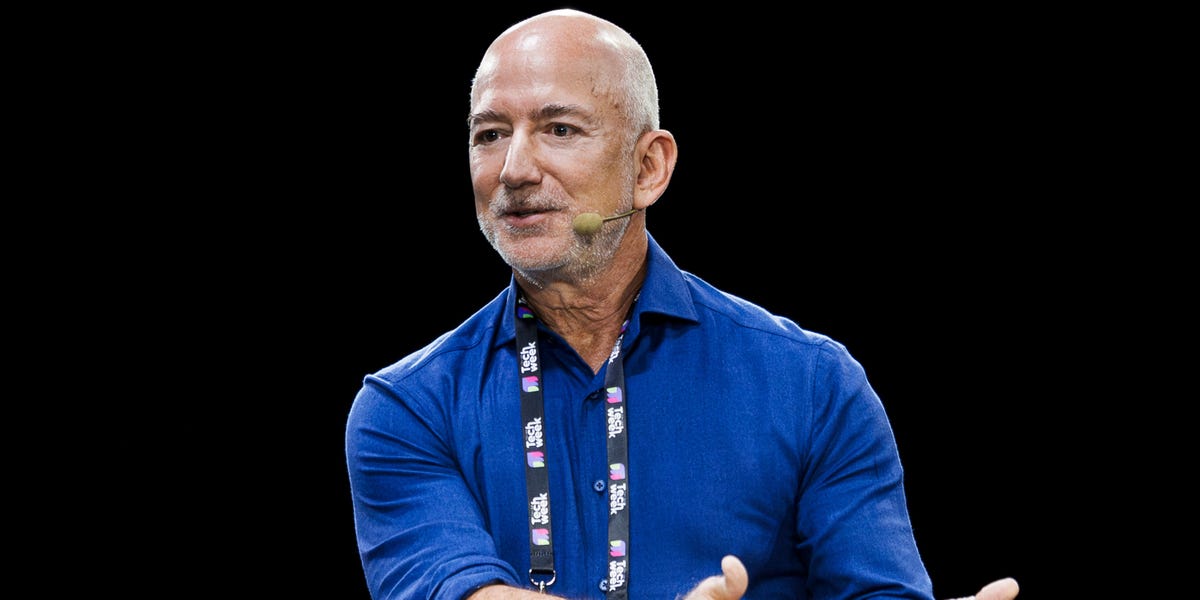
Jeff Bezos wants software engineers to stop worrying about AI replacing them. The Amazon founder compared giving AI tools to engineers to handing a bulldozer to someone digging a basement with a shovel. His advice: “Be so happy.”
The remark targets a persistent anxiety in the tech workforce. Surveys routinely show that a large share of developers fear automation will shrink headcount or make their skills obsolete. Bezos pushed the opposite view: AI will raise output per engineer, not eliminate the role.
The Bulldozer Analogy and Its Limits
The simple read is comforting. A bulldozer does not eliminate the need for the digger; it makes the digger vastly more productive. The same logic applies to AI. Code generation, debugging, and documentation are among the tasks that large-language models handle well. Engineers freed from those chores can focus on architecture, edge cases, and product judgment.
The better market read carries more nuance. A bulldozer also changes who gets hired. Fewer manual diggers are needed for the same cubic yardage. The operational question for companies like Amazon (AMZN), Microsoft, and Alphabet is whether AI-driven efficiency will reduce software engineer hiring growth or simply enable more ambitious roadmaps with the same headcount. Venture-capital-backed startups may treat AI as a force multiplier, keeping teams small. Public companies with large engineering bases, such as Amazon, may see margin improvement if they can maintain output while slowing hiring.
Why Bezos’ Opinion Carries Weight
Bezos, now focused on his space venture Blue Origin, remains a gravitational figure in tech. He oversaw Amazon Web Services, the dominant cloud platform through which many companies access AI models. He also funded large language model research at Amazon. His endorsement of AI as a tool rather than a threat signals that one of the world’s most operationally sophisticated companies views AI as additive, not subtractive.
Amazon itself is embedding AI into its e-commerce, advertising, and cloud businesses. The company’s Q developer tool is a direct example of the bulldozer concept – an assistant that writes code and answers questions. If Bezos is right, Amazon’s engineering productivity should rise, compressing project timelines and widening its moat against competitors.
The Decision Point This Story Creates
For investors, the Bezos comment is not a tradable catalyst. It is a narrative data point that shapes how the market prices AI exposure in enterprise software. The next concrete test will come when Amazon reports earnings. Watch for commentary on engineering headcount, cloud revenue mix, and margin trajectory. If the bulldozer trade works, Amazon’s operating leverage should improve without a proportional hiring slowdown.
A second read-through applies to NVIDIA (NVDA) and other AI infrastructure providers. If more companies adopt the bulldozer view, demand for AI compute rises, benefiting chip sales. A cautious take: if AI truly makes engineers more productive, the total addressable market for software may grow faster than the need for new engineers, creating a positive cycle for tech stocks that lead in AI integration.
The bottom line: Bezos offered a bullish framing for AI’s impact on human capital. Investors should track whether that optimism shows up in real-world hiring and productivity data at his former company.