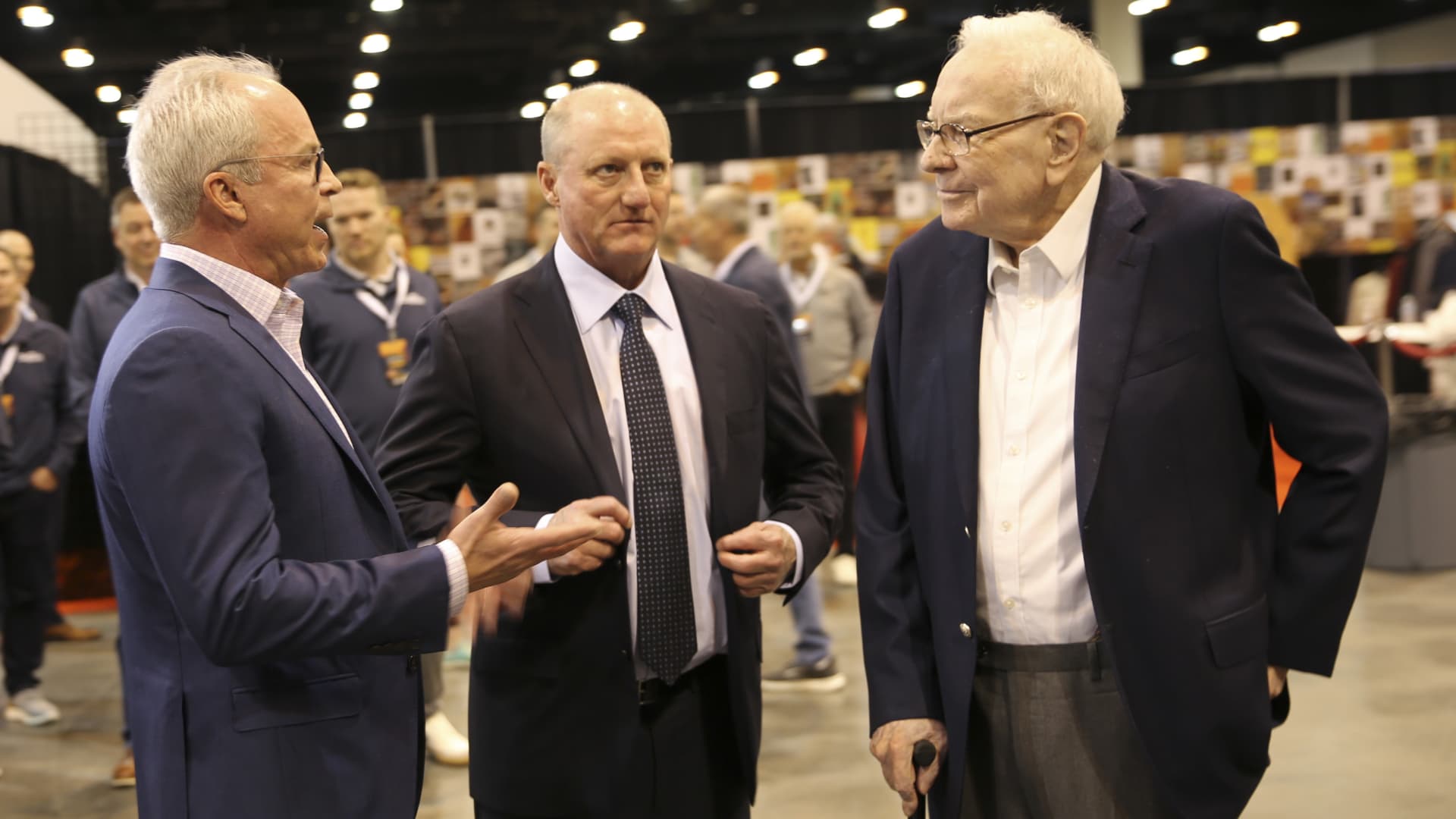
Berkshire Hathaway published its quarterly U.S. stock portfolio on Friday, the first filing under new CEO Greg Abel. The document reveals a decisive break from several pandemic-era positions and a fresh allocation to airlines and tech. Early Monday trading showed a mixed reception: Delta Air Lines rose 2.5% in premarket, Macy's gained 5%, and Alphabet slipped 0.6%. Chevron, Mastercard, and Visa traded just below flat.
The portfolio shuffle arrives as Abel takes direct oversight from Warren Buffett, who still consults daily. The execution may be less about conviction and more about housekeeping. Former investment manager Todd Combs left for JPMorgan at the end of 2025, and the positions he built are being dismantled.
Delta Re-Entry Reverses a Pandemic Exit
The $2.6 Billion Stake
Berkshire bought 39.8 million shares of Delta Air Lines, valued at $2.6 billion and ranking as the 14th-largest U.S. equity holding by March 31. The move is a sharp reversal of Buffett’s 2020 sale of Berkshire's entire airline portfolio when changed travel behavior looked permanently altered by Covid-19.
The simple read: Abel sees a travel recovery that Buffett missed. The better market read: the Delta stake may be a deliberate, smaller-scale position compared to the billion-dollar airline portfolio Berkshire once held. It is a targeted bet on a single carrier, not a sector-wide re-commitment.
What This Changes
Airlines remain capital-intensive businesses with fuel and labor cost exposure. Delta has reported strong demand but also faces rising operating expenses. The stake size – 39.8 million shares – is large enough to matter relative to Berkshire's $800 billion market cap. A modest $2.6 billion allocation is not a return to the old conviction playbook.
Key insight: This is a single-stock experiment, not a sector rotation. If Delta mirrors the broader trend and volatility stays high, expect the position to be adjusted quickly.
Alphabet Position Quadruples: Tech Returns to the Fold
A 224% Increase
Alphabet received the biggest investment by dollar allocation among existing holdings. Berkshire increased its stake to 58 million shares, a 224% jump from the prior quarter, making Alphabet the seventh-largest U.S. holding. The tech giant ended Monday down 0.6% in early trading.
The purchase comes after years of Buffett's reluctance to own high-multiple tech names without an earnings moat. Alphabet's ad revenue and cloud growth, combined with a share repurchase program, apparently satisfied the new CEO's criteria.
The Combs Connection
Todd Combs had been personally recruited by Buffett to manage part of the equity portfolio. His departure to JPMorgan at the end of 2025 triggered an unwind of positions he oversaw. Some of the new buys may simply be Abel's team closing out Combs' legacy names and replacing them with more liquid, higher-conviction holdings.
Risk to watch: If the Alphabet stake was a Combs-era position being averaged up rather than a fresh Abel conviction, the 224% increase could be a sizing decision, not a bet on search. Future filings will show whether the position stays or is trimmed.
Chevron Cut and Credit Card Exits
Selling $8 Billion in Energy
Berkshire slashed itshire slashed its Chevron holdings by 35%, which included $8 billion of shares sold during the first quarter. Chevron was a top holding under Buffett, built during the 2020-2021 energy surge. The reduction aligns with broader portfolio rebalancing and possibly lower conviction on energy price durability.
Mastercard and Visa Eliminated
Both payment stocks were sold out entirely. Mastercard and Visa had been longtime holdings, valued for their network effects and cash flow. The exit suggests the Abel-led portfolio now appears less interested in payment rails, a sector that trades at above-market multiples and faces regulatory risk from interchange fee caps.
Bottom line for traders: The exits suggest a lower exposure to consumer spending than Berkshire typically values. Investors tracking Mastercard and Visa should watch Berkshire's next filing for re-entry signals.
Amazon Exit Completes a Two-Quarter Selloff
Berkshire sold its remaining 2.3 million shares of Amazon in the first quarter, after unloading 7.7 million of its 10 million share position in the fourth quarter of 2025. Amazon was down 0.7% in premarket on Monday.
The exit underscores the portfolio's shift away from high-valuation tech outside of Alphabet. Amazon's retail margins remain thin, and its AWS growth has faced normalization. The sale may reflect a view that the risk-reward no longer fits Berkshire's portfolio construct under Abel.
The Abel-Buffett Dynamic
Abel told CNBC in March that he consults Buffett daily on decisions. "He's in the office every day, so we're talking every day if I'm in Omaha," Abel said. "If I'm traveling, like I was yesterday, I often check in just to catch up on what he's seeing, what he's hearing, what am I feeling. So if it's not every day, it's every couple days."
This does not mean Buffett is running the portfolio. It means the transition is gradual, and the Combs exit may have forced Abel's hand faster than he otherwise would have moved. The portfolio looks like a hybrid: some Buffett-era positions trimmed, some new bets placed, and aced, and a net result that is still tilted toward financials and consumer staples.
Berkshire's Alpha Score and Portfolio Fit
Berkshire Hathaway (BRK.B) carries an Alpha Score of 55/100, labeled Moderate. The score reflects a moderate risk-adjusted return profile relative to the market. The revamp introduces more volatility through airline and tech bets, which could pressure the score if those positions underperform. Conversely, the consolidation around liquid, cash-generative stocks could improve the risk profile over time.
For traders watching the portfolio, the key date is the next quarterly filing. That will show whether the Delta and Alphabet positions were a one-time rebalancing or a sustained new direction. The BRK.B stock page provides ongoing tracking. Also relevant: broader stock market analysis for sector rotation context.
Practical rule: When a CEO changes the portfolio this aggressively after a leadership transition, the first filing reveals intent; the second filing reveals conviction.
The moves made on Friday are now priced into the Monday session. The real question for Delta, Alphabet, Chevron, and Amazon is whether Berkshire shows up as a buyer or seller in the next quarter. Until that filing, the positions taken today trade on their own earnings momentum, not on Berkshire's seal of approval.