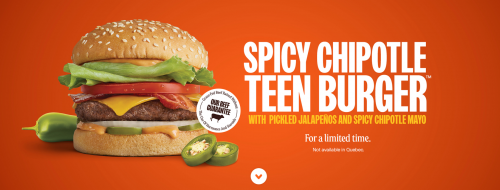
A&W Canada is mailing coupons valid until June 21, 2026, a promotion that could boost royalty income for the A&W Revenue Royalties Income Fund (AW.UN).
A&W Canada is mailing new coupons to households, with a validity window that runs through June 21, 2026. The direct-mail promotion lands at a time when the quick-service restaurant sector is fighting for traffic, and it creates a concrete, trackable catalyst for the publicly traded A&W Revenue Royalties Income Fund (AW.UN).
For a royalty fund that collects a top-line percentage of system sales, any initiative designed to lift customer visits and average cheque size matters. The coupon drop is not a one-weekend event; the extended validity gives franchisees a long runway to convert the offer into repeat visits, making the promotion a potential multi-quarter sales driver.
The mail-out follows the classic playbook of Canadian quick-service chains: physical coupons delivered to homes, redeemable at any A&W location. The June 21, 2026 expiration means the offer spans more than a year, covering multiple seasonal demand windows. That length is unusual and suggests A&W Canada is using the coupon as a persistent traffic tool rather than a short-term clearance mechanism.
Coupons typically feature bundled deals–combos, breakfast items, or family meals–that lift the average transaction size even when the discount is applied. For the royalty fund, the key metric is gross sales, not franchisee profitability. A coupon that pulls in a customer who would have otherwise skipped a visit adds incremental royalty income with no offsetting cost to the fund.
AW.UN holds the trademarks and receives a royalty equal to a percentage of sales from all A&W restaurants in Canada. The royalty rate is fixed, so the fund’s revenue moves in lockstep with system-wide same-store sales. When a promotion increases traffic, the fund captures its share immediately.
This structure makes AW.UN a pure play on A&W Canada’s top-line momentum. The fund does not bear food, labour, or occupancy costs. A coupon that compresses franchisee margins can still be accretive to the fund if it generates enough incremental sales. The mail-out’s long validity reduces the risk that the lift is front-loaded and then fades; it gives operators time to test offers and adjust operations to handle higher volumes.
Investors often underestimate how sensitive royalty income is to small changes in traffic. A 2% lift in same-store sales, sustained over several quarters, can meaningfully improve distribution coverage. The fund pays monthly distributions, and the payout ratio is watched closely. A successful coupon campaign that supports sales growth would strengthen the case for maintaining or even increasing distributions.
The next concrete data point will be A&W Canada’s quarterly same-store sales disclosure, typically released alongside the fund’s financial results. Management commentary on promotional effectiveness–whether the coupon drove traffic without cannibalizing full-price sales–will be the signal to watch.
There is no guarantee the mail-out moves the needle. Consumer spending on fast food has been uneven, and a coupon drop competes with a flood of other promotions. The fund’s unit growth also matters; new restaurant openings add to the royalty base independently of same-store sales. The coupon is one lever among many.
For traders and investors tracking AW.UN, the promotion provides a near-term narrative hook. The stock often trades on yield and distribution sustainability, so any evidence that sales are responding to the coupon could tighten the yield spread. The next quarterly report will show whether the mail-out translated into a measurable sales bump, making it the next catalyst to monitor.
Drafted by the AlphaScala research model and grounded in primary market data – live prices, fundamentals, SEC filings, hedge-fund holdings, and insider activity. Each story is checked against AlphaScala publishing rules before release. Educational coverage, not personalized advice.