Legacy car makers are stripping out product complexity as Chinese automakers gain ground. The strategy: fewer models, fewer parts, more shared underpinnings.
"A lot of automakers are taking a long, hard look at their lineups," said Sam Abuelsamid, vice president of market research at Telemetry. "The more different vehicles you have, that adds manufacturing, marketing, and engineering complexity."
Volkswagen Group, the world's second-largest car company by sales, plans to cut its global model lineup by as much as 50% by 2030. It also wants to reduce product complexity – including the number of variants and powertrain options – by as much as 75%. CFO Arno Antlitz told CNBC, "We have to tackle the complexity. On the customer side, we have too many models." The cuts come as VW now expects 2026 deliveries to slip 3% to 7%.
Toyota's new CEO, Kenta Kon, warned about rising specification counts driving up costs. "If you go to a development division, you see issues such as an increasing number of different specifications and variants being created," he told Automotive News.
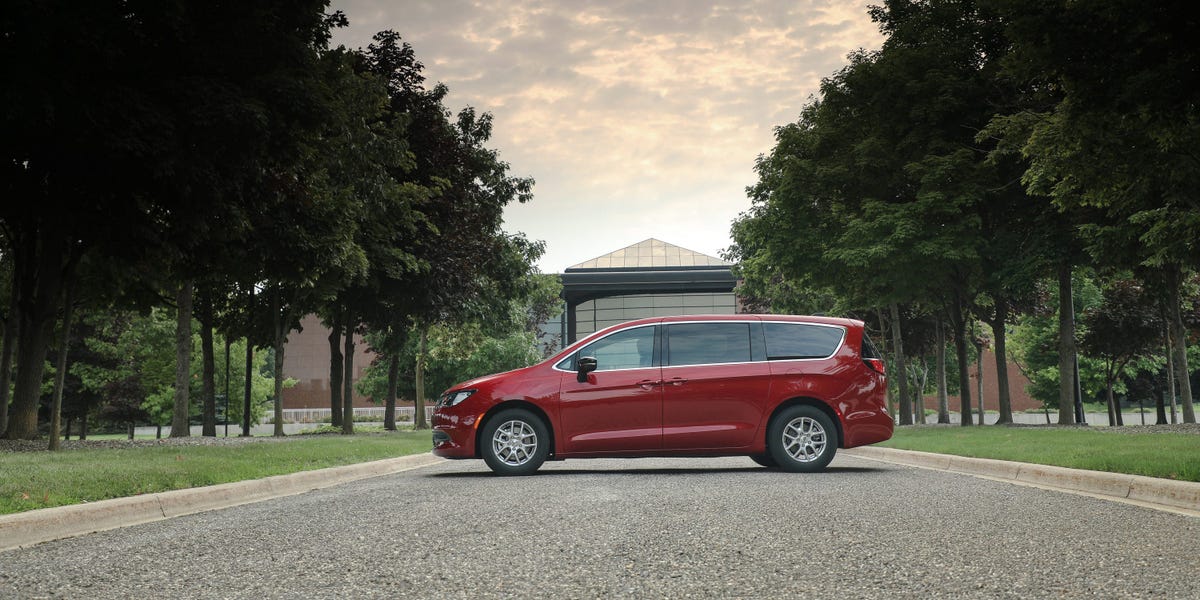
Ford is pruning its lineup too. It will discontinue the Escape while keeping the similarly sized Bronco Sport – two SUVs that overlap enough to cannibalize each other's sales, Abuelsamid said. Chrysler is axing the Voyager minivan for 2027 and keeping the nearly identical, higher-priced Pacifica.
The cost pressure is acute. Legacy automakers are absorbing billions in EV-related losses while competing with Chinese rivals that can build vehicles more cheaply. One answer: modular platforms that share components across different models.
Ford's Universal EV platform, for example, will underpin a roughly $30,000 midsize electric pickup due in 2027 and a family of follow-on vehicles. Ford says the system requires fewer parts and fewer manufacturing steps than traditional processes.
Stellantis and Nissan are developing similar modular architectures. Rivian says its new R2 platform costs substantially less to build than the original R1. Stellantis, with an AlphaScala Alpha Score of 46 – rated Mixed – is one of the companies pushing shared components across brands.
"I think automakers are likely copying Tesla and BYD," said Seth Goldstein, an equity strategist at Morningstar. "These companies are selling a lot of cars on the same platform, and they're very profitable. The legacy makers are asking, 'How can we take some of their lessons and simplify the number of parts we need on an assembly line?'"
Shared architectures do not mean identical vehicles; same platform can support sedans, SUVs, and pickups with different designs. The risk is that decluttering makes lineups more boring. Goldstein put it this way: "If automakers can offer a more affordable vehicle while getting their costs down to be able to do so profitably, I think that's still in high demand from consumers."
Ford's new EV pickup arrives in 2027. Until then, the industry's decluttering will show up in model-lineup announcements and quarterly earnings. Investors tracking stock market analysis will watch whether cost savings materialize before Chinese competition eats further share.