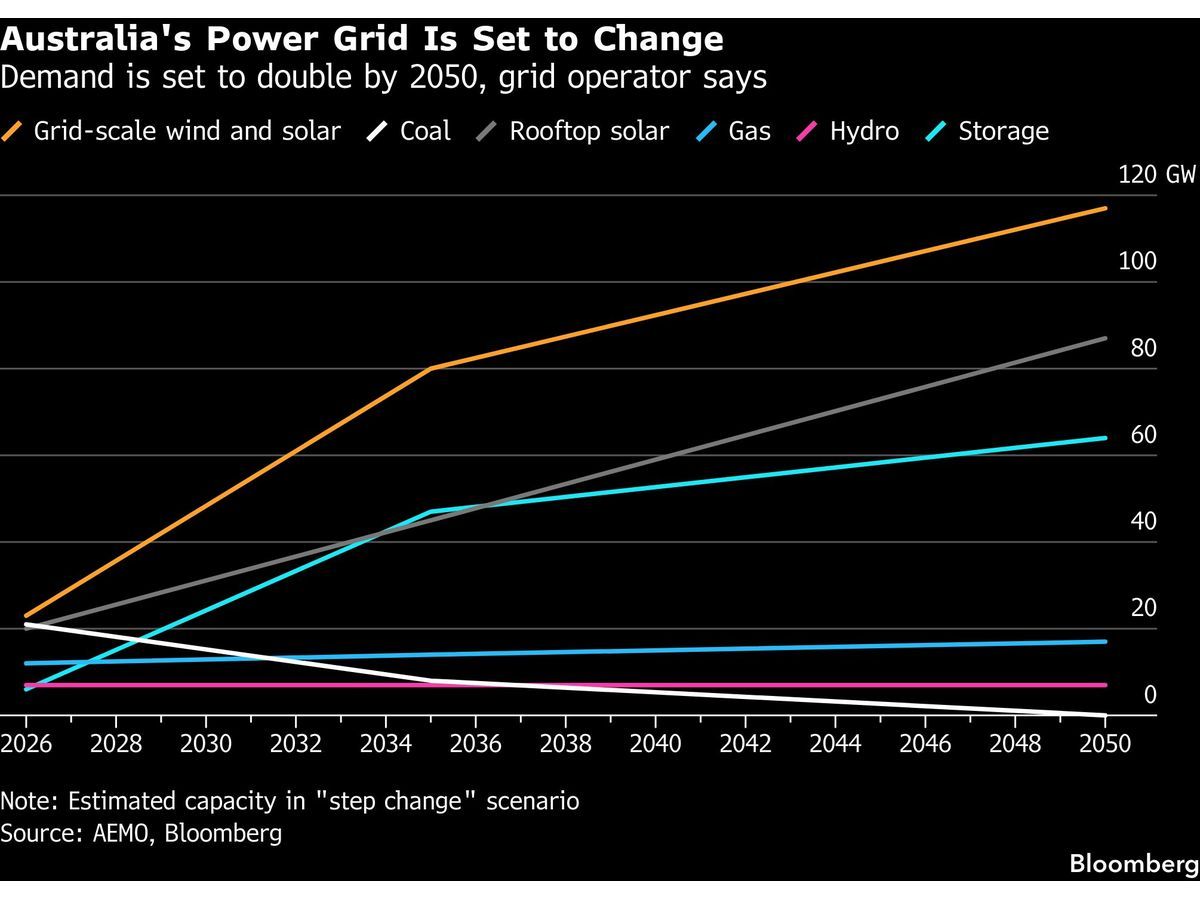
Wholesale power prices in Australia nearly halved last quarter as batteries and renewable generation displaced natural gas in the country's main grid.
Spot prices in the National Electricity Market averaged A$74 a megawatt-hour in the three months through June, down 47% from a year earlier, the Australian Energy Market Operator said in its latest Quarterly Energy Dynamics report. Gas-powered generation fell by a third to its lowest second-quarter average since 2003.
Renewables generated a record 42% of power in the NEM, which covers more than 80% of Australia's demand. Coal remained the dominant source. But the big change was on the storage side: grid-scale battery capacity more than tripled the volumes of energy shifted from daytime periods of high solar output into the evening peak, the report said.
“Batteries are increasingly usurping gas as the primary balancing technology for intraday variability in renewable generation,” said Sahaj Sood, an analyst at BloombergNEF. “However, questions remain over their suitability for balancing longer-term droughts in renewable supply.”
The drop came during the quarter that is traditionally the most costly as the southern hemisphere winter starts. The lower wholesale prices are welcome news to policymakers focused on cost of living, though the impact on consumer bills may be limited. The data will also fuel a debate on whether more gas is needed to support the grid during periods of low renewable generation as the nation shuts down its aging coal plants.
East coast wholesale gas prices averaged A$9.08 a gigajoule, down from A$12.36 a year earlier and the lowest quarterly average since the second quarter of 2021, according to the report.
The picture was different in Western Australia. Prices in the state's Wholesale Electricity Market soared 30% year on year to a record A$117 a megawatt-hour because of reduced coal and wind generation. But even there, increased use of batteries produced a sharp drop in intraday price swings.