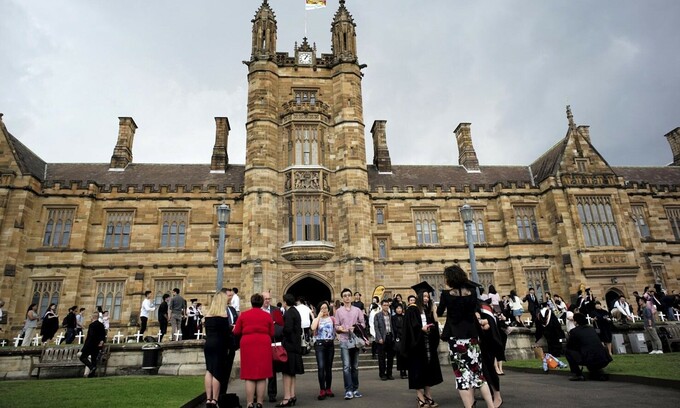
Australia will keep its 2027 international student cap unchanged from 2026, even as commencements slide 8% from a year ago and 13% below pre-pandemic levels. The National Planning Level (NPL) will hold at the same number, with public universities still taking the majority of allocations. Vocational and private higher education providers will stay near their 2026 shares.
Education Minister Jason Clare, Skills Minister Andrew Giles, and Assistant Minister Julian Hill said in a joint statement that maintaining the cap would offer "stability and certainty" for the sector. Clare said: "International education is an incredibly important export industry for Australia. We need to manage it sustainably. This is about making sure international education supports students, universities and the national interest."
Every active provider will receive at least the same student allocation in 2027 as it received in 2026, preserving the higher quotas granted to regional universities last year. TAFE students remain outside the cap under the government's "TAFE at the Heart" policy, the Department of Education said. Students from Pacific island countries, Timor-Leste, and recipients of Australian government scholarships are also exempt and will keep priority visa processing.
The decision follows a year of migration reforms that tightened visa assessment rules, raised financial requirements for applicants, and increased scrutiny of education providers. The government raised the Subclass 500 student visa fee to A$2,500 (US$1,734) – the highest among the "Big Four" study destinations. A separate A$2,050 fee for standalone English-language courses was introduced. Reduced fees apply to applicants from ASEAN countries and non-award courses, while Pacific and Timor-Leste students keep lower rates.
Actual commencements are already running below the cap. "Current tracking indicates international student commencements are on track to be below the NPL for both 2026 and 2027," the government said. Commencements in 2026 are down 8% compared with the same period in 2025, and 13% lower than 2019.
Hill said the government would not back off from managing the size and shape of the onshore international student market. "Australia continues to welcome genuine international students seeking a premium Australian education which is great for our unis, domestic students and research," he said.
International education is one of Australia's largest export industries, contributing tens of billions of dollars annually through tuition fees and student spending. Universities have warned that stricter visa policies and rising costs could push students to Canada or the U.K. instead. Universities Australia Chief Executive Officer Luke Sheehy said the government risked damaging the sector. "If the government keeps making Australia more expensive and more difficult for genuine students to choose, we're going to fall short," Sheehy said. "We're already seeing that risk emerge. That's bad for our sector and Australia. It means fewer skilled workers, weaker productivity and a $55 billion export sector supporting 250,000 jobs put at risk."