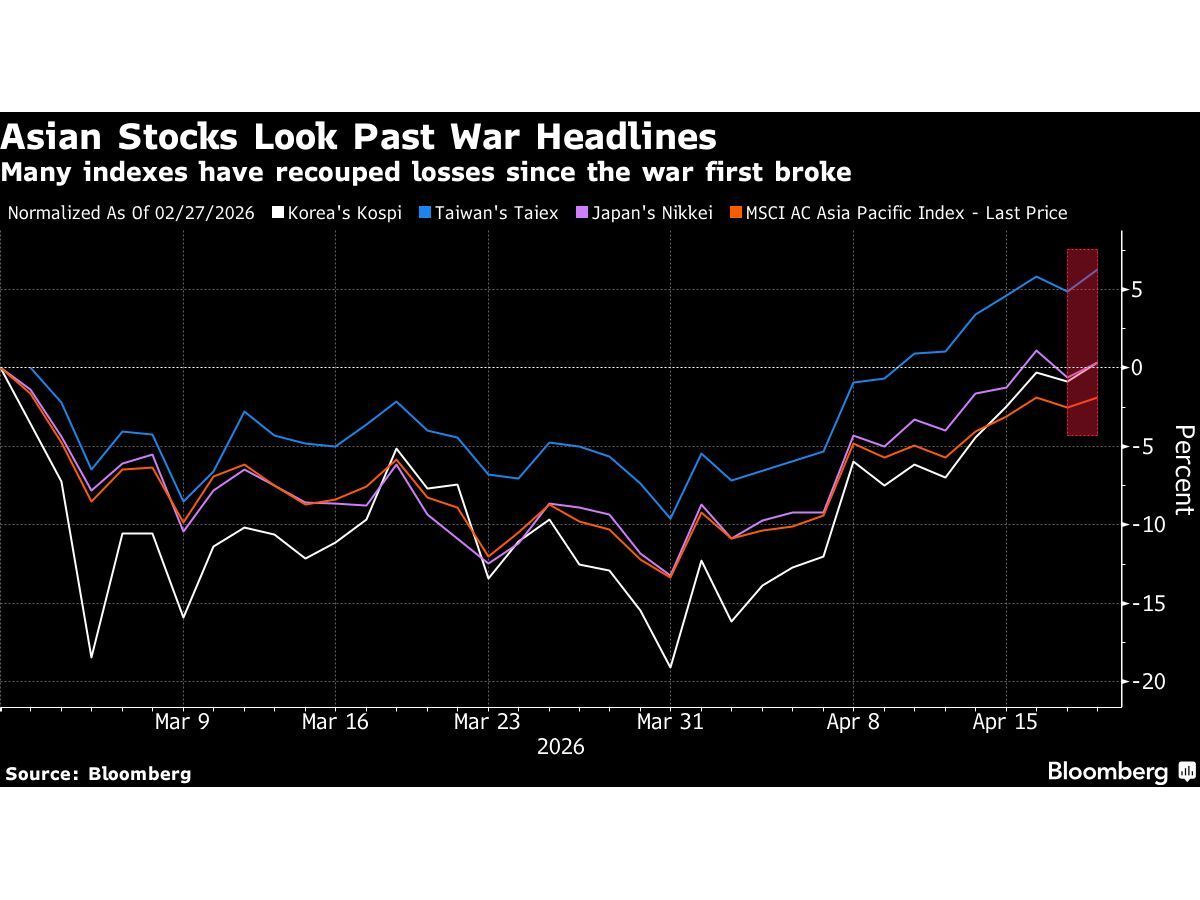
Asian equity markets opened the week with a broad rally, signaling that investors are discounting the immediate impact of weekend geopolitical developments in the Middle East. The shift in sentiment suggests a tactical move away from risk-off positioning, as capital flows return to fundamental drivers and the anticipated trajectory of regional monetary policy. This transition marks a departure from the volatility that characterized the previous session, where uncertainty dominated the pricing of major indices.
Shift in Regional Risk Appetite
The rally across Asian exchanges reflects a recalibration of risk premiums. Investors are prioritizing corporate earnings and macroeconomic data over the potential for immediate escalation in regional conflicts. By decoupling equity performance from the weekend news cycle, the market is signaling a belief that the current geopolitical environment has reached a state of peak uncertainty. This reassessment is particularly evident in the technology and consumer sectors, where price action suggests a renewed focus on long-term growth prospects rather than short-term hedging.
Market participants are now evaluating whether this stability can persist through the upcoming fiscal reporting cycle. The primary driver for this optimism is the expectation that central banks will maintain a path toward policy normalization, providing a more predictable liquidity environment. As investors look past the immediate headlines, the focus has returned to the following factors:
- The resilience of supply chains in the face of persistent logistical constraints.
- The ability of regional firms to pass on input costs to consumers without eroding demand.
- The divergence in monetary policy stances between regional central banks and global peers.
Valuation and Sectoral Read-Through
For investors, the current environment necessitates a granular approach to sector selection. While broad indices have recovered, the underlying strength of individual stocks remains tied to their specific exposure to interest rate sensitivity and domestic demand. Companies with strong balance sheets are seeing a disproportionate share of the inflows, as the market favors stability over speculative growth. This trend is consistent with broader stock market analysis that highlights the importance of fundamental health during periods of transition.
AlphaScala data currently reflects a diverse landscape for major equities. Amer Sports, Inc. (AS stock page) holds an Alpha Score of 47/100, categorized as Mixed, while Agilent Technologies, Inc. (A stock page) maintains an Alpha Score of 55/100, labeled as Moderate. These scores underscore the necessity of evaluating individual corporate performance metrics against the backdrop of broader market shifts.
The Path to Sustained Stability
The next concrete marker for this market narrative will be the release of regional inflation data and central bank commentary scheduled for the coming weeks. These updates will serve as the primary test for the current bullish sentiment. If the data confirms a cooling of inflationary pressures, it will likely reinforce the narrative that the market has successfully navigated the recent period of heightened uncertainty. Conversely, any deviation from expected policy paths could force a rapid re-evaluation of current equity valuations, potentially leading to a return of volatility. The market is now positioned to react to these specific policy signals rather than external geopolitical shocks, marking a return to a more traditional fundamental framework.